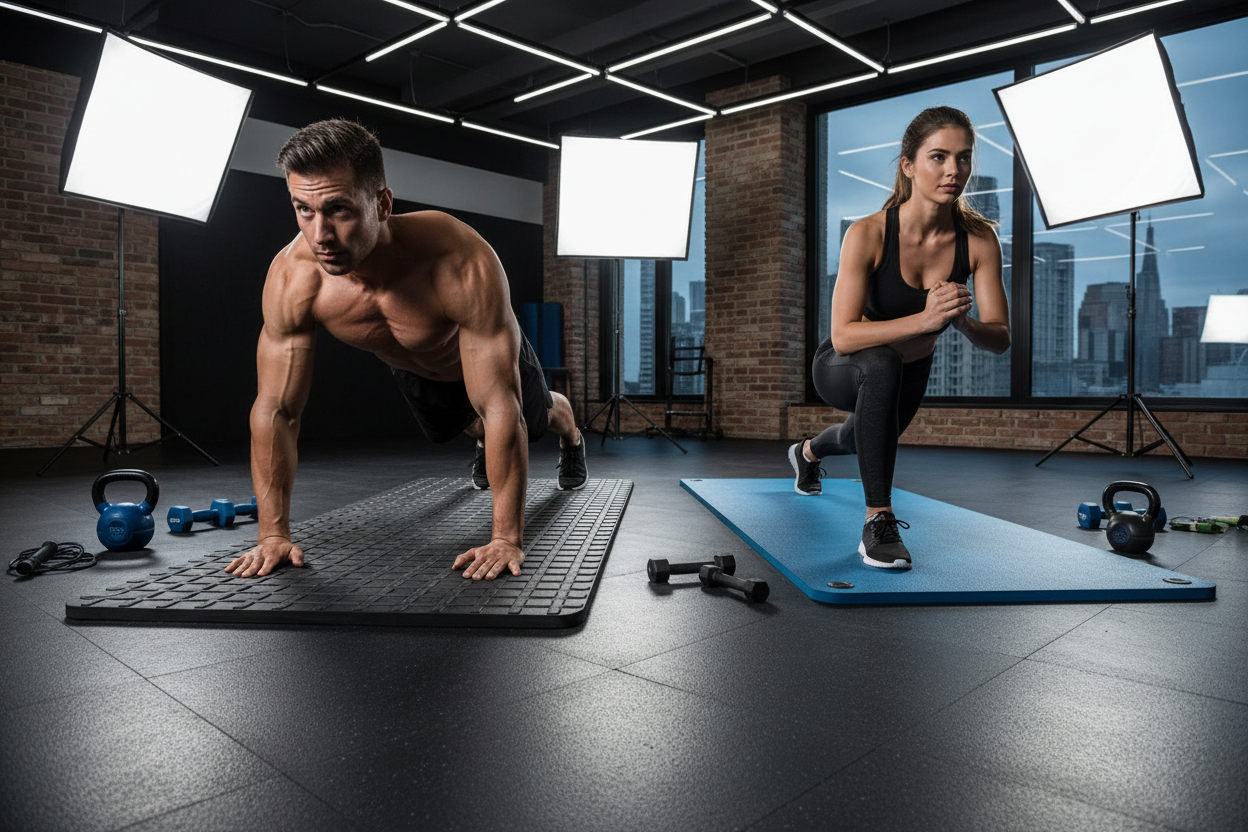
Stop Buying Cheap: How to Identify a Truly Durable Exercise Mat
You have likely been there before. You are mid-set, sweat dripping, pushing through a set of mountain climbers, and suddenly you feel the ground shifting beneath you. Worse, you look down to find small chunks of foam peeling off your gear. This is the hallmark of poor quality. If you are serious about training, upgrading to a **durable exercise mat** is not a luxury; it is a safety requirement.
Most generic mats are designed for gentle stretching, not the impact of dropped dumbbells or the friction of cross-training shoes. Finding a surface that withstands abuse requires looking past the marketing fluff and understanding material density. Let’s fix your foundation.
Key Takeaways: What Makes a Mat Last?
If you are in a rush, here are the non-negotiable features that separate a permanent piece of gear from a disposable one:
- Material Density over Thickness: A thick mat isn't always durable. Look for high-density rubber or polyurethane (PU) that resists compression.
- Closed-Cell Construction: This prevents sweat from soaking into the core, which stops the mat from rotting or smelling over time.
- Abrasion Resistance: A durable workout mat must handle shoe friction without flaking or tearing.
- Weight: If you can pick it up with two fingers, it’s likely too light to be durable. Heaviness equals stability.
The Science of Material: Why PVC Fails
The vast majority of budget mats are made from cheap PVC (Polyvinyl Chloride) or NBR (Nitrile Butadiene Rubber). These are soft and comfortable for a savasana, but they lack tensile strength.
When you apply lateral force—like in a skater lunge or a burpee—the internal structure of low-density foam stretches. Over time, these micro-tears connect, leading to that familiar flaking surface. For true longevity, you need natural rubber or high-density PU. While natural rubber is heavier, its molecular structure snaps back into place rather than tearing under pressure.
Thickness vs. Density: The Common Trap
A common misconception is that a thicker mat is a stronger mat. This is rarely true. A half-inch thick NBR mat feels like a cloud, but it creates instability during heavy lifts. When your foot sinks into a soft mat, your ankles have to work overtime to stabilize, increasing injury risk.
A truly durable mat is often thinner (around 3mm to 5mm) but significantly denser. This density provides a stable platform for lifting while still offering enough shock absorption to protect your joints during plyometrics. You want the mat to absorb the shock, not swallow your foot.
Texture and Grip Longevity
Durability isn't just about the mat staying in one piece; it's about the grip remaining consistent after 500 sessions. Many cheap mats use a chemical coating to create initial stickiness. Once you sweat through that layer (usually within a month), the mat becomes a slip-and-slide.
Look for mats that rely on the texture of the material itself. Open-pored rubber surfaces offer incredible grip that actually improves with a bit of moisture. However, if you sweat heavily, ensure the mat has an antimicrobial additive or a closed-cell base layer, otherwise, that durable rubber will become a bacteria trap.
My Training Log: Real Talk
I need to be honest about the transition to high-end gear. I used to burn through those $20 department store mats every three months. The breaking point for me wasn't just the money—it was the "black confetti."
I was doing a high-intensity interval session in my garage. About ten minutes in, I was sweating profusely. During a set of burpees, my sneakers caught the surface of the foam mat. It didn't just scuff; it gouged. I finished the workout with tiny black flecks of foam stuck to my sweaty forearms and shins. It was gross, and cleaning it up was a hassle.
When I finally bought a heavy-duty rubber mat (originally meant for horse stalls, actually, before dedicated fitness brands caught up), the first thing I noticed was the smell. Real rubber smells like a tire shop for a week. But the second thing I noticed was the stability. When I planted my foot for a lunge, the ground didn't move. Seven years later, that same mat is in my home gym. It looks worn, but it hasn't lost a single chunk of material.
Conclusion
Your equipment should never be the limiting factor in your workout. If you are worried about slipping or ripping your gear, you aren't focused on your form. Investing in a heavy-duty mat might cost more upfront, but it pays dividends in safety and longevity. Stop buying disposable foam and get a foundation that respects the work you put in.
Frequently Asked Questions
Can I wear shoes on a durable exercise mat?
Yes, but only if the mat is designed for it. Look for mats specified as "cross-training" or "high-density." Standard yoga mats will tear under the friction of rubber shoe soles, regardless of price.
How do I clean a heavy-duty rubber mat?
Avoid harsh chemicals or vinegar, which can degrade rubber over time. Use a mixture of water and a mild, pH-neutral dish soap. Wipe it down and let it air dry completely out of direct sunlight to prevent UV damage.
Is a thicker mat always better for joints?
Not necessarily. While thickness provides cushioning, density provides protection. A dense 5mm mat often protects knees and elbows better than a soft 10mm mat because you don't "bottom out" against the hard floor beneath it.