Is the Assisted Weight Machine Actually Effective? The Honest Truth
You walk into the gym, head toward the pull-up bar, and hesitate. Maybe you aren't ready for strict reps yet, or maybe you're burnt out from a heavy deadlift session. Then you see the tower in the corner: the assisted weight machine.
For years, gym bros have labeled this piece of equipment as a crutch. They claim if you aren't lifting your full body weight, you aren't working hard enough. That is a massive misconception. When used correctly, this machine is not about making exercise easier; it is about making volume and hypertrophy accessible. It allows you to train movement patterns with precision that fatigue usually makes impossible.
Key Takeaways
- Progressive Overload: The machine allows you to micro-load progress, gradually reducing assistance as you get stronger.
- Hypertrophy Focus: It removes stability constraints, allowing you to isolate the lats or triceps near failure safely.
- Eccentric Control: You can safely practice the lowering phase (negative) of a movement, which is a primary driver of muscle growth.
- Injury Prevention: It maintains strict form when your stabilizer muscles are too fatigued for free-standing bodyweight reps.
The Mechanics: How It Actually Works
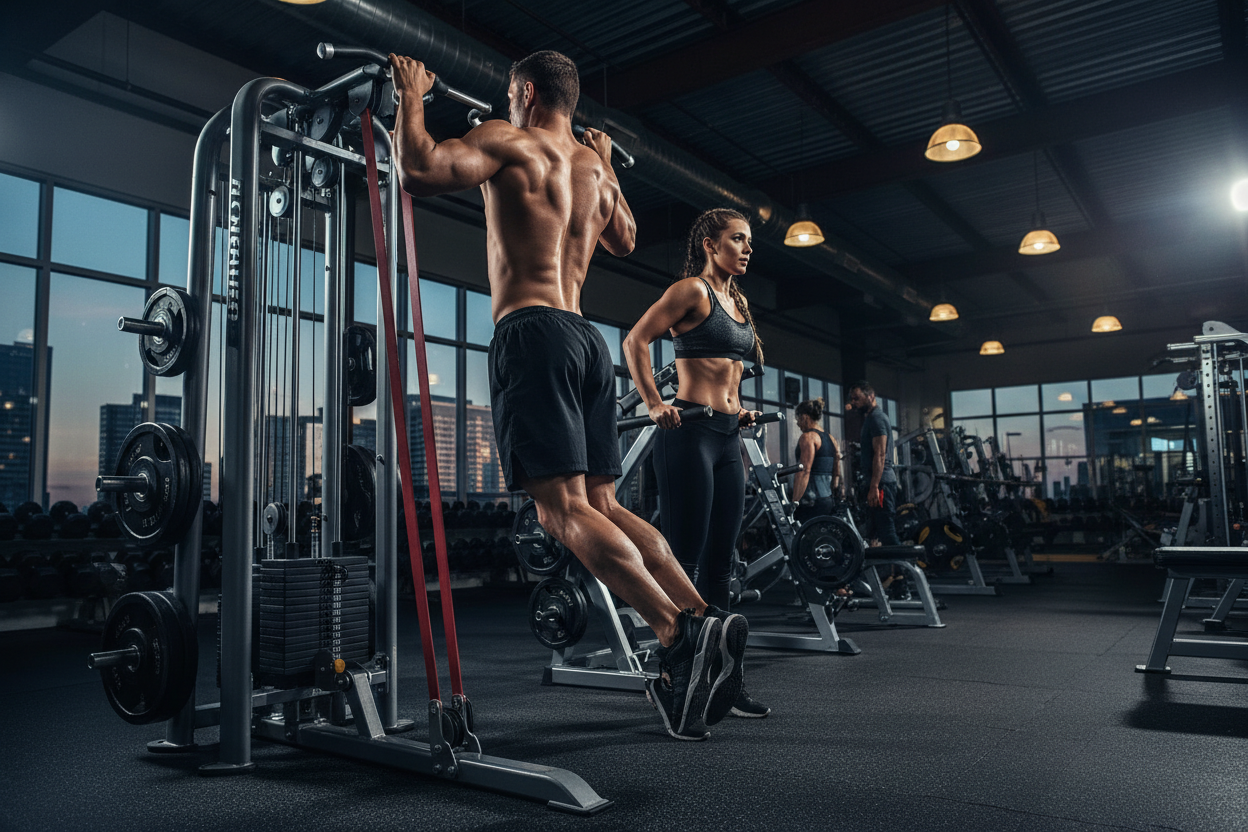
To understand the value here, we have to look at the physics. An assisted weight lifting machine operates on a counterweight system. Unlike a lat pulldown where adding weight makes the lift harder, here, adding weight makes it lighter.
This counter-balance reduces the load your muscles must move against gravity. This is crucial for one specific reason: mechanical tension. If you can only do one strict pull-up, your muscles are under tension for maybe four seconds. That isn't enough time to signal significant growth. By using assistance to push that set to 10 or 12 reps, you increase the time under tension significantly, driving better results than flailing on a bar for a single rep.
Mastering the Setup for Maximum Growth
Most people hop on, pin a random weight, and bounce up and down. That is a waste of time. Here is how to treat this like a serious compound lift.
1. The Setup
Adjust the knee pad so that when you are at the top of the movement (chin over bar or arms locked in a dip), the weights aren't slamming into the top of the stack. You want constant tension. If the pad is too low, you lose tension at the bottom. If it's too high, you can't get a full stretch.
2. The Eccentric Focus
This is the secret sauce. The machine stabilizes your body, meaning you don't have to worry about swinging. Use this to your advantage. Pull or push yourself up explosively (1 second), hold the peak contraction, and then take a full 3 to 4 seconds to lower yourself. This slow eccentric phase creates micro-tears in the muscle fiber which repair stronger.
3. The Dismount
It sounds trivial, but this is where people get hurt. Never take one knee off while the platform is weighted down. The platform will shoot up aggressively. Step up until the weight stack touches, then step off.
Common Mistakes That Kill Gains
Even with assistance, form breakdown is possible. Watch out for these errors:
- Using Momentum: Bouncing at the bottom of the rep utilizes the machine's springs, not your muscles. Pause for a split second at the bottom to kill momentum.
- Shrugging Shoulders: During assisted pull-ups, keep your shoulders depressed (down and away from ears). If you shrug, you are shifting the load from your lats to your upper traps.
- Too Much Help: If you are banging out 20 reps while scrolling on your phone, the assistance is too high. Aim for a weight that allows you to fail mechanically between 8 and 12 reps.
My Training Log: Real Talk
I want to be transparent about my history with this machine. Early in my lifting career, I avoided the assisted dip station because I thought it looked "weak." I paid the price with a nagging shoulder impingement from trying to force bodyweight dips before I had the requisite strength.
When I finally swallowed my pride and used the machine, the first thing I noticed wasn't the ease of the rep—it was the wobble. Not the machine wobbling, but my knees on the pad. The specific texture of that vinyl pad gets incredibly slippery if you're sweating, and I remember having to constantly wipe it down with my towel between sets to stop my knees from sliding outward.
I also recall the distinct, jarring "clank" of the weight stack when I lost control on the eccentric phase. It was embarrassing, but it was immediate feedback. That sound taught me more about controlling the negative portion of a lift than any coach ever did. Once I learned to keep the stack silent, my tricep growth exploded.
Conclusion
The assisted weight machine isn't a shortcut; it is a bridge. It bridges the gap between where you are and where you want to be. Whether you are rehabilitating an injury, learning a new movement pattern, or trying to add volume at the end of a workout, this tool is invaluable. Stop worrying about how it looks and start focusing on how it feels.
Frequently Asked Questions
Can you build muscle with an assisted machine?
Absolutely. Your muscles do not know the difference between free weights and machines; they only detect tension. As long as you are applying progressive overload and nearing failure in the 8-12 rep range, hypertrophy will occur.
How do I transition from assisted to bodyweight?
Use the "5% Rule." Once you can perform 3 sets of 12 reps with good form at a certain assistance weight, reduce the assistance by roughly 5-10 lbs (or one plate on the stack). Repeat this process until the assistance is minimal, then attempt bodyweight reps.
Is the assisted machine better than resistance bands?
It depends on the goal. Bands provide variable resistance (harder at the bottom, easier at the top), while the machine provides constant resistance throughout the movement. For pure hypertrophy and learning strict form, the machine is generally superior because it removes the instability of the band.