Stop Buying a Smart Rower Machine Until You Read This
The home fitness market is loud right now. Every other ad on your feed promises that a sleek, connected piece of equipment will finally be the thing that makes you love cardio. If you are looking at a smart rower machine, you are likely trying to decide if the hefty price tag justifies the technology, or if you are just paying for a fancy tablet attached to a flywheel.
As someone who has spent years analyzing fitness tech, I can tell you that the gap between "useful innovation" and "marketing gimmick" is wide. Let’s strip away the glossy advertising and look at what actually matters when you bring intelligent rowing into your living room.
Key Takeaways
- Dynamic Resistance: True smart rowers adjust drag automatically based on the instructor's cues or your power output.
- Form Correction: High-end models use AI sensors to detect rounded backs or early knee bends, acting as a virtual coach.
- The Ecosystem Cost: The hardware is often useless without the monthly subscription; factor this ongoing cost into your budget.
- Space vs. Stability: Smart rowers tend to have larger footprints due to integrated screens; ensure your floor plan can handle the rail length.
The Reality of Connected Fitness
The term "smart" gets thrown around loosely. In the context of rowing, it usually implies connectivity, but there is a hierarchy to this technology. You have basic models that simply Bluetooth your stroke rate to a phone app, and then you have fully integrated systems.
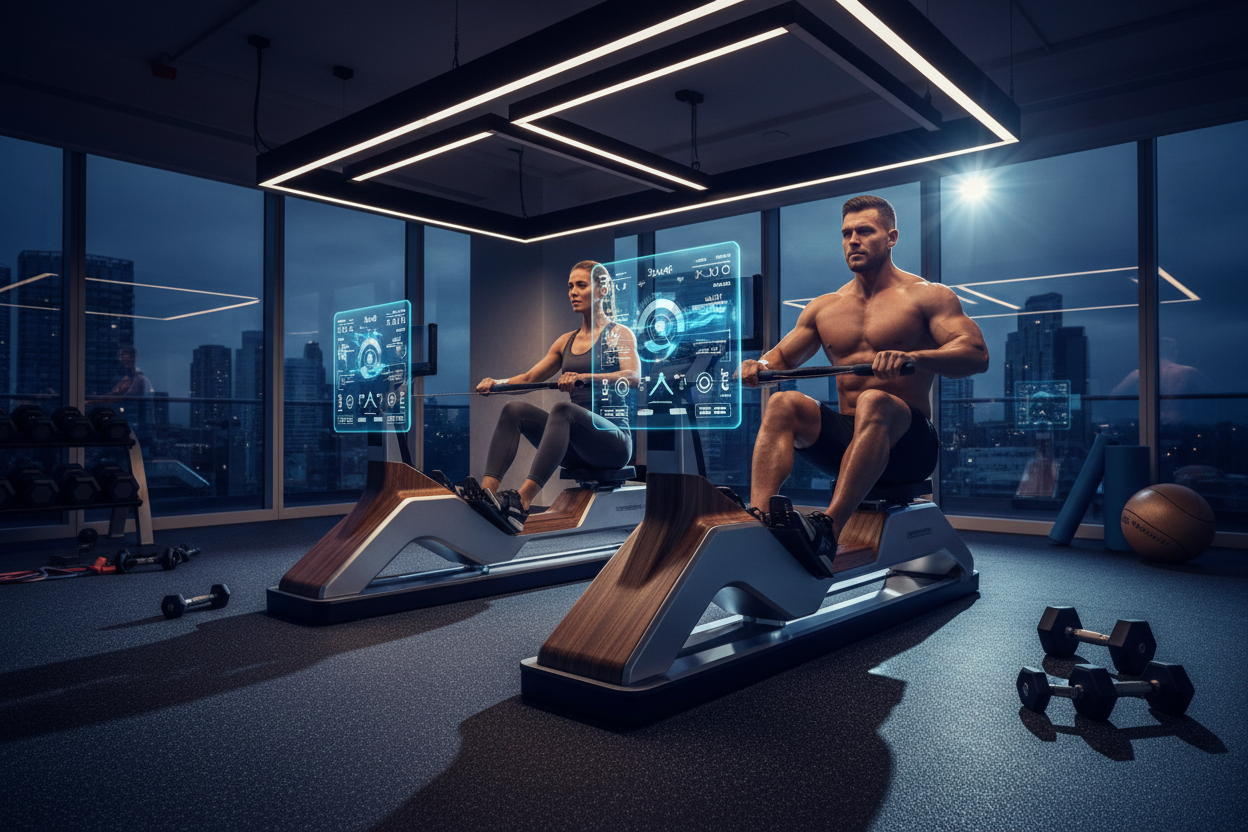
The latter is where the industry is heading. We are seeing machines that don't just record what you do; they dictate it. This is the difference between a passive workout and an active training session. If the machine isn't providing real-time feedback or automatically adjusting resistance to match a virtual river current, it’s not smart—it’s just connected.
The Subscription Trap
Here is where most buyers get blindsided. When you buy smart rowers, you aren't just buying hardware; you are marrying a software ecosystem. Companies like Hydrow or Peloton operate on a recurring revenue model.
Before you commit, ask yourself: Is the machine functional if I stop paying the $40 monthly fee? In many cases, the answer is no. You are left with a very expensive, manual resistance rower with a blank screen. If you aren't motivated by leaderboards or live shout-outs, the smart features might become a financial burden rather than a training asset.
Mechanics vs. Electronics
A common mistake is prioritizing the screen resolution over the catch mechanism. A 24-inch 4K swivel screen looks beautiful, but it doesn't change the physics of the stroke.
Smart rowers generally utilize magnetic resistance or a hybrid of air and magnetism. This allows for the silent operation required for hearing the instructors, but it often lacks the dynamic "bite" of a traditional air rower (like a Concept2). The smart element here is how the magnets interact with the software. The best machines smooth out the recovery phase, preventing that jerky chain feeling, but you lose some of the raw feedback that tells you if your drive was actually powerful.
Form Feedback: The Killer Feature
If there is one reason to invest in this tech, it is AI form correction. Rowing is technical. It is easy to hurt your lower back if you initiate the drive with your hips too early.
Newer generations of these machines use computer vision to track your skeletal points. If you are hunching or rushing the slide, the screen flashes a correction. This is the closest thing to having a coxswain yelling at you in the boat. For a beginner, this feature alone is worth the premium because it prevents injury and ensures you are actually targeting the posterior chain.
My Personal Experience with smart rower machine
Let’s talk about something the spec sheets never mention: the sweat factor on touchscreens. I remember testing a high-end magnetic rower for a month-long block. The machine was whisper-quiet, and the content was engaging, but the user interface drove me crazy during high-intensity intervals.
I was in the middle of a 500m sprint interval, gasping for air, hands completely slick with sweat. The instructor called for a resistance change, and I reached out to tap the slider on the screen. Because my fingers were wet and I was shaking from the effort, the capacitive screen wouldn't register the touch. I had to stop rowing, wipe my hand on my shorts, and tap it again. By then, my split time was ruined.
It’s a small, gritty detail, but it highlights a flaw in the design. Physical buttons or handle-based controls are always superior to touchscreens when you are in the pain cave. That unpolished reality of trying to navigate a sleek UI while dripping sweat is something you only understand once you're three kilometers deep into a session.
Conclusion
A smart rower machine can be a phenomenal tool for engagement. If you need gamification or a community to keep you consistent, the investment pays off in health dividends. However, do not buy one assuming the tech replaces the work. The machine can measure your wattage, but it can't pull the handle for you. Assess your budget, check the subscription terms, and ensure you are okay with a machine that requires a Wi-Fi signal to function at its peak.
Frequently Asked Questions
Is a smart rower machine worth the extra cost compared to a standard rower?
It depends on your motivation style. If you need live classes, leaderboards, and visual distractions to finish a workout, the extra cost is justified by the increased consistency. If you prefer listening to podcasts and just doing the work, a standard rower is a better financial decision.
Can I use smart rowers without a subscription?
Most smart rowers have a "just row" mode that works without a subscription, but you will lose access to the automated resistance changes, data tracking history, and instructional content. Essentially, you lose the features that made it "smart" in the first place.
Do smart rowers require a stable internet connection?
Yes. Since the content is streamed and data is synced to the cloud, a weak Wi-Fi signal can cause buffering during classes or failure to save your workout data. Always test your Wi-Fi strength in the room where you plan to keep the machine.