Stop Blaming Your Age: Better Exercises for Seniors Over 60
I recently talked to a guy in his early 60s who had completely stopped squatting because his doctor told him his knees were 'shot.' He was resigned to the leg extension machine, which, ironically, was making his patellar tendon scream. This is the classic trap: we are told to stop moving the moment a joint clicks or aches. But when it comes to exercises for seniors over 60, avoiding the weight rack is usually the fastest way to ensure you never get that mobility back.
- Strength training is the only way to combat sarcopenia (muscle loss).
- Joint pain often stems from weakness in supporting muscles, not the bone itself.
- Your environment dictates your consistency; don't train on bare concrete.
- Focus on 'big' movements that mimic real-life actions like carrying groceries or standing up.
Why Your 'Bone on Bone' Diagnosis Shouldn't Stop You
The phrase 'bone on bone' is often used as a scare tactic that keeps people from pursuing fitness for over 60. Think of your joints like a sponge. To get nutrients in and waste out, that sponge needs to be squeezed. Movement is the WD-40 for your skeletal system. When you engage in a smart over 60s workout, you're actually lubricating the joint capsule, not grinding it down. Avoiding movement leads to stagnation, which makes the joint stiffer and more prone to injury.
Fitness after sixty isn't about chasing a bodybuilding stage; it's about maintaining the hardware you've got. If you stop loading your frame, your body decides it doesn't need to maintain bone density. I've seen 'bone on bone' clients regain significant function simply by strengthening the quads and glutes to take the load off the knee joint. You aren't fragile; you're just under-trained.
Your Basement Floor Is Making It Worse (Fix Your Setup)
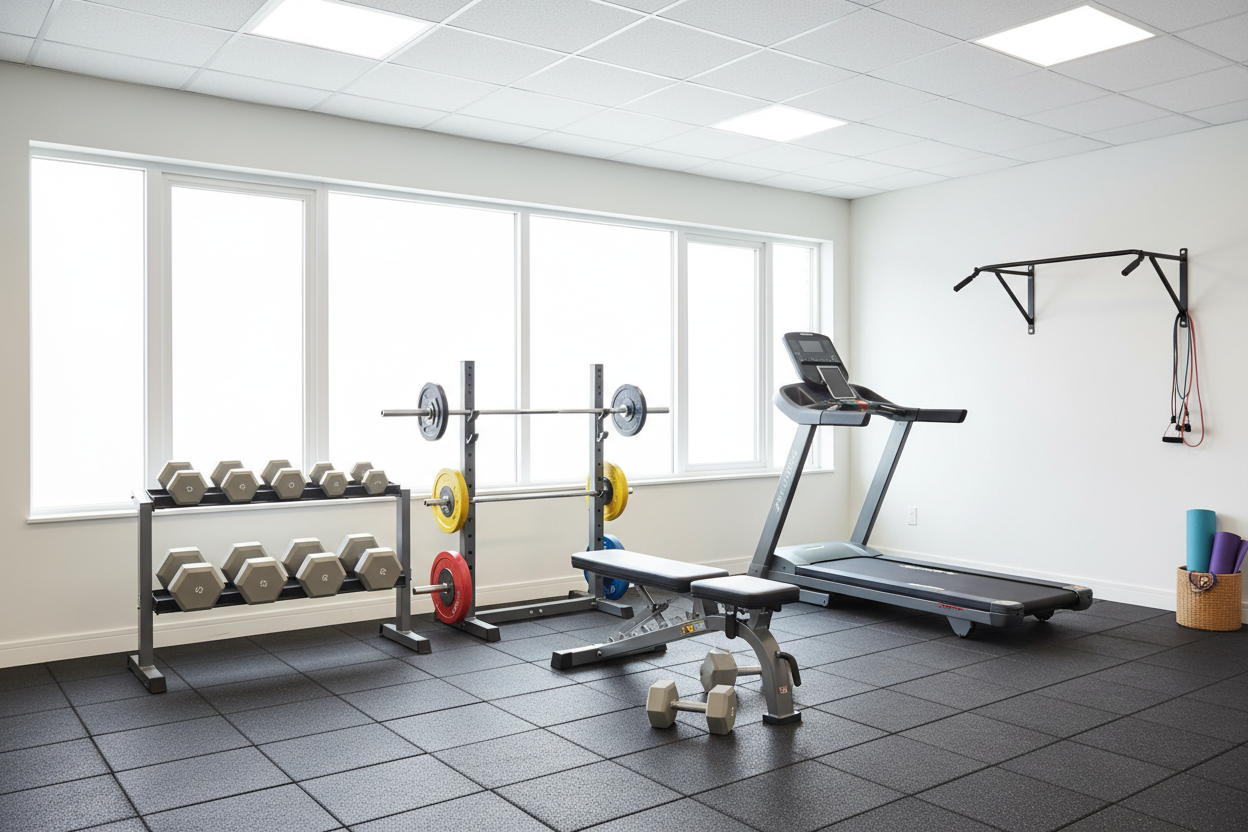
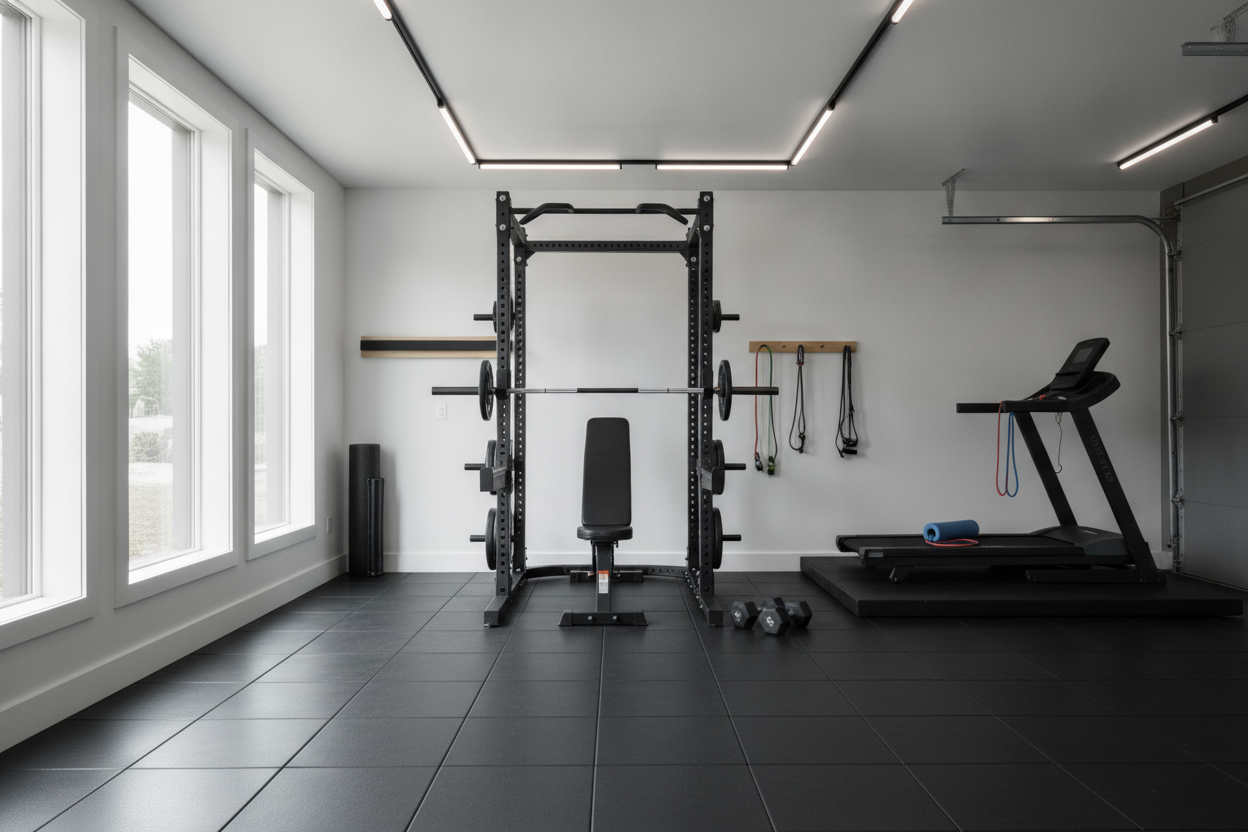
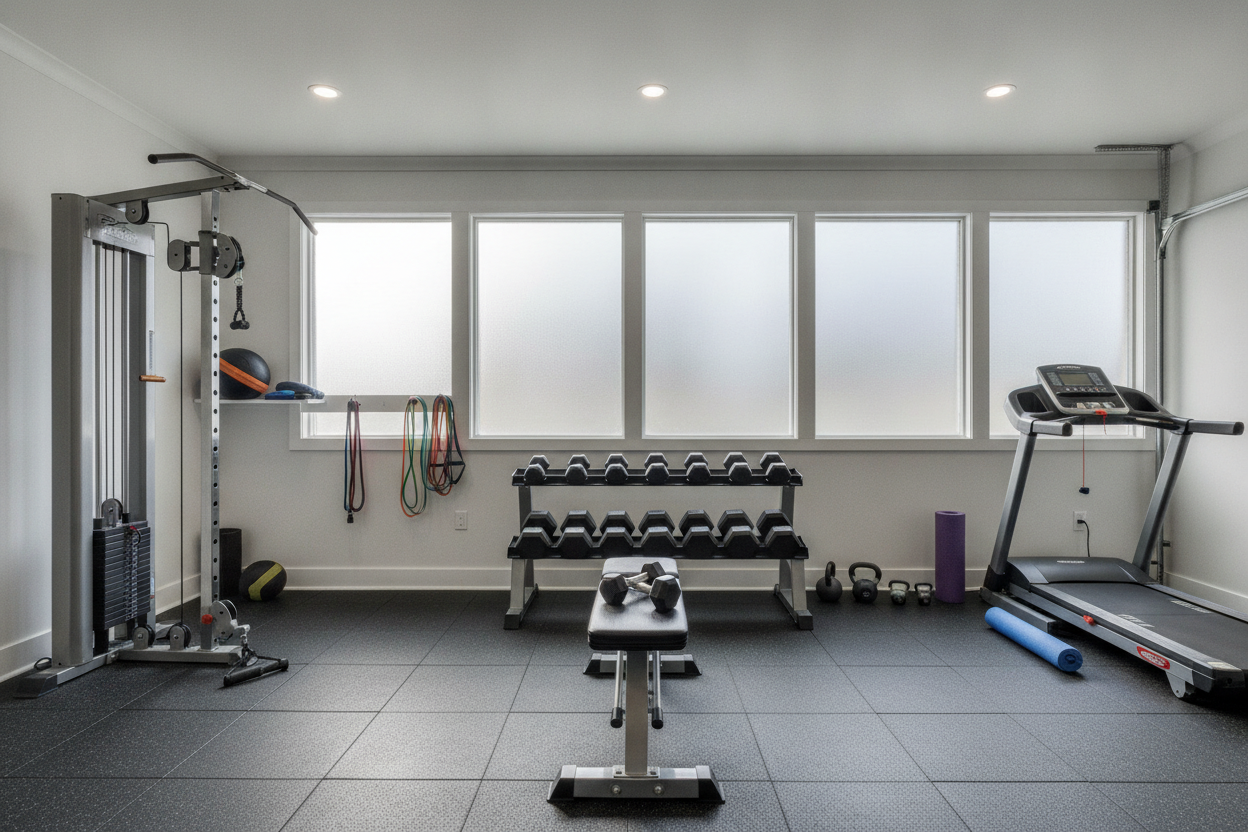
Most home gyms for the over 60 workout crowd are relegated to a basement or a garage. If you're trying to do mobility drills or lunges on a cold, hard concrete slab, you're going to quit within a week. Concrete has zero give. Every time you step, that force travels straight into your ankles and hips. Even thin living room carpet isn't enough to protect your joints during floor-to-stand transitions.
You need a dedicated space with real shock absorption. I always recommend laying down a large exercise mat for home gym use to create a 'safe zone.' A 7mm or 8mm thick high-density foam surface changes the entire physics of the workout. It allows you to drop to a knee or sit on the floor without the bruising that makes working out at 60 feel like a chore. If the floor is comfortable, you'll actually use it.
Three Movements You Actually Need to Master
Forget the fancy machines that isolate one muscle at a time. To stay independent, you need to skip the gym machines and focus on compound movements. These exercises for sixty year olds build 'functional' strength—the kind that helps you get out of a low car or carry a heavy box into the attic.
The Floor-to-Stand (Without Using the Couch)
This is the ultimate test of fitness for 60-year olds. Can you get down to the ground and back up without grabbing a piece of furniture? It requires core stability, hip mobility, and leg drive. To practice this safely, I suggest using a 6x8ft exercise mat. Having that extra real estate means you can sprawl out or lose your balance slightly without hitting the hard floor. Start by using one hand for support on a bench, then slowly transition to using zero hands.
The Heavy Farmer's Carry
If you want a rock-solid exercise program for men over 60, look no further than the carry. Grab two dumbbells—heavier than you think you can handle—and walk for 40 steps. This builds grip strength, which is a massive predictor of longevity, and forces your core to stabilize under load. It’s one of the best exercises for male over 60 because it hits the traps, forearms, and core all at once without any complex technical 'lifting' involved.
The Supported Goblet Squat
Squatting isn't optional; we do it every time we sit on the toilet. To make it joint-friendly, hold a single weight at your chest. This acts as a counterbalance, allowing you to sit back into your hips without falling over. Use a chair or a weight bench behind you as a 'safety' so you know exactly how deep to go. This is a staple in any over 60 exercise program because it builds the legs while keeping the spine upright and safe.
Putting It Together Without Overtraining
The biggest mistake I see in fitness over 60 men and women is trying to train like they're 22. Your muscles can still grow, but your recovery capacity has a ceiling. A full body workout for over 60 should happen three times a week, max. On the off days, walk or do light mobility work. If you're feeling crushed, you're doing too much.
Consistency beats intensity every single time. You don't need to hit a personal best every Monday. You just need to show up and move the needle slightly. If you want a done-for-you template, I suggest following a weekly exercise plan for women over 60 or a similar structured routine that builds in mandatory rest. Your 'gains' happen while you sleep, not while you're sweating.
Personal Experience: The 'Too Much, Too Soon' Lesson
A few years ago, I tried to put my father on a standard 5-day lifting split. He was 64 at the time. By week three, his elbows were inflamed and he was too tired to enjoy his golf game. We realized that for an over 60 fitness plan, we had to prioritize quality over quantity. We switched to two heavy days and one 'active recovery' day. His strength actually went up because he wasn't constantly digging himself into a recovery hole. Don't let your ego dictate your volume.
FAQ
Is it safe to lift weights if I have arthritis?
Yes. In fact, it's often the best treatment. Strengthening the muscles around an arthritic joint reduces the load the joint has to carry. Just start with light weights and prioritize a full range of motion.
How heavy should the weights be?
You should use a weight that feels difficult by the 10th or 12th rep, but not so heavy that your form breaks down. If you're shaking or holding your breath, it's too heavy.
Do I need a gym membership?
Not at all. A set of adjustable dumbbells and a high-quality floor mat are all you need for an effective over sixty workout at home. Most people find they're more consistent when the 'gym' is just ten feet from their bed.