Squats Using Weights: The Definitive Guide to Strength (2025)
You can do air squats until the sun goes down, but if you want to build serious muscle density and functional power, you eventually have to grab some iron. The transition to squats using weights is the single most important milestone in a lifter's journey. It shifts your training from simple endurance to mechanical tension—the primary driver of hypertrophy.
However, adding load isn't just about making the exercise harder; it changes the biomechanics entirely. Your center of gravity shifts, your core requirements skyrocket, and the margin for error shrinks. This guide cuts through the noise to help you load the movement safely and effectively.
Quick Summary: The Essentials
- Progressive Overload: Adding weight is the most efficient way to force muscle adaptation, far superior to just increasing rep counts.
- Equipment Choice: Dumbbells (Goblet style) are best for learning mechanics; Barbells are superior for maximum strength potential.
- Bracing is Non-Negotiable: Unlike bodyweight reps, weighted versions require high intra-abdominal pressure to protect the spine.
- Depth Check: Do not sacrifice range of motion for ego. Hitting parallel is more effective than a heavy quarter-squat.
Why Resistance Changes the Equation
When you introduce weights and squats to the same workout, you aren't just working the quadriceps. You are engaging the entire posterior chain and turning the movement into a full-body structural test.
The science here relies on 'mechanical tension.' When you place a heavy load on the spine (axial loading) or hold it in front of you (anterior loading), your nervous system recruits high-threshold motor units that bodyweight training leaves dormant. This is why a set of 5 heavy reps often yields more growth than a set of 50 unweighted reps.
Choosing Your Implement: Dumbbells vs. Barbells
Not all loads are created equal. The position of the weight dictates how your body balances.
The Goblet Squat (Dumbbells/Kettlebells)
If you are new to weights with squats, start here. Holding a single weight at chest height acts as a counterweight. It forces you to keep your chest upright and allows you to sink deeper into the hips without falling backward. It is the ultimate tool for fixing form before going heavy.
The Barbell Back Squat
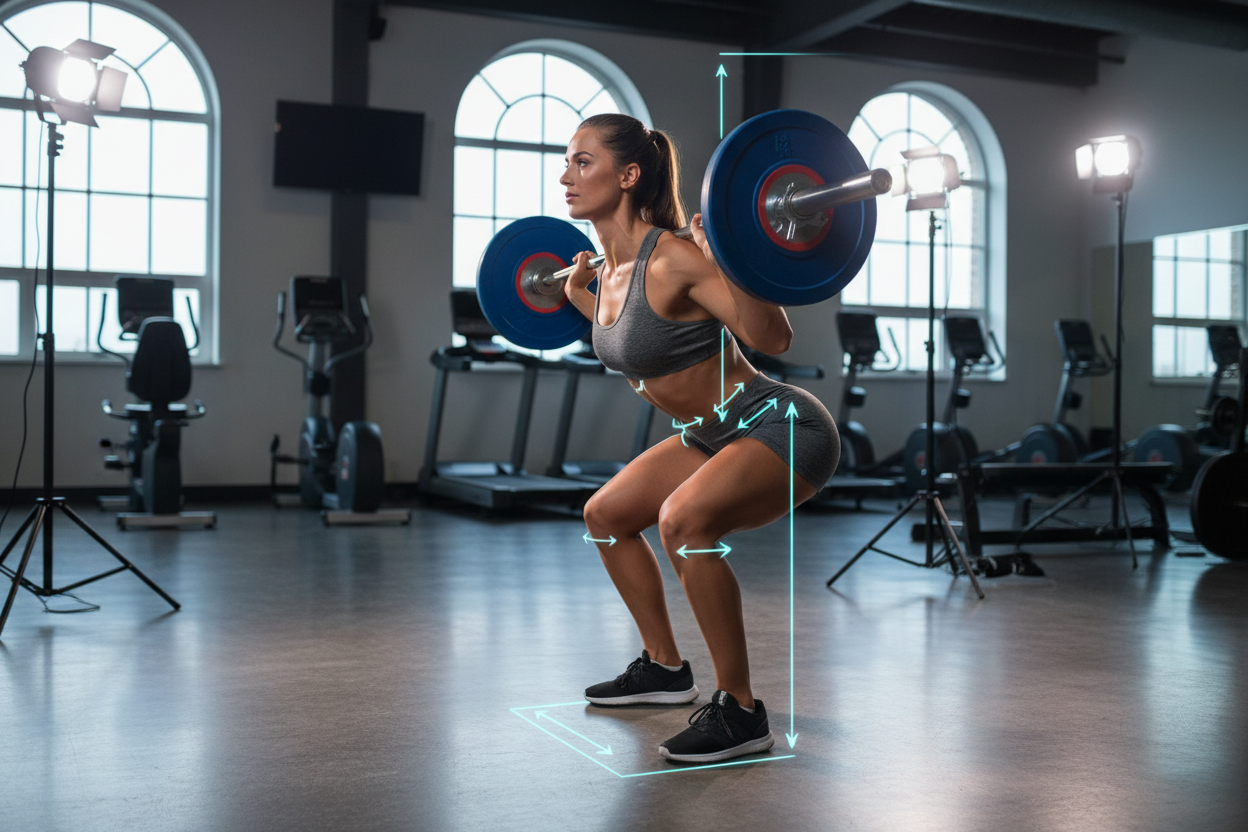
This is the gold standard. By placing the bar across the upper back (traps), you can move the most weight possible. However, it demands shoulder mobility and significant core stability. The load is compressive on the spine, meaning your bracing technique must be flawless.
Execution: The Cues That Matter
Forget generic advice like 'keep your back straight.' That is too vague when you have 200 pounds on your shoulders.
Focus on 'creating a shelf' with your upper back muscles to support the bar. Before you descend, take a massive breath into your belly, not your chest, and push out against your abdominal wall. This creates a natural weight belt.
As you descend, focus on spreading the floor apart with your feet. This engages the glutes and prevents your knees from caving inward (valgus collapse), a common issue when fatigue sets in.
My Training Log: Real Talk
I want to share a specific detail about squats using weights that textbooks usually skip. It’s about the 'walkout' panic.
I remember clearly when I finally moved from a comfortable 225lbs to 315lbs. I unracked the bar, and the first thing I noticed wasn't the leg pain—it was the compression. I felt the knurling (the rough grip pattern on the bar) actually biting into the skin of my traps. It wasn't painful, but it was uncomfortable enough to be distracting.
When I took that first step back, the weight caused a slight 'wobble' in my midsection that I hadn't felt at lighter weights. It was a visceral reminder that the bar controls you if you don't control it first. That specific feeling—the bar settling into the groove of your back and the momentary hesitation before the descent—is where the mental battle is won. If you ever feel that wobble, don't descend yet. Reset your breath, tighten your lats, and wait until you are rock solid. I learned the hard way that if you start a rep unstable, you will finish it ugly.
Conclusion
Integrating external load into your leg training is a game-changer. Whether you are using a kettlebell or a loaded barbell, the principles remain the same: respect the weight, brace your core, and prioritize depth over ego. Start lighter than you think you need to, master the pattern, and the strength will follow.
Frequently Asked Questions
How much weight should I start with?
Start with a weight that allows you to perform 10-12 reps with perfect technique and 2 reps 'in reserve' (meaning you could have done 2 more). For many, a simple 20lb dumbbell is the perfect starting point to learn the balance.
Are squats with weights bad for your knees?
Generally, no. When performed correctly, they actually strengthen the tendons and ligaments surrounding the knee capsule. Knee pain usually stems from poor mobility or the knees caving inward, not the weight itself.
Should I wear a lifting belt?
You do not need a belt for light or moderate loads. It is better to learn how to brace your core naturally first. Save the belt for sets where you are lifting near 85% or more of your one-rep max.