Multi Station Gym For Home: Is It Actually Worth The Space?
Building a comprehensive workout space often feels like a game of Tetris. You want a cable crossover, a lat pulldown, a leg press, and a chest press, but your two-car garage or basement only has so much square footage. If you are tired of compromising on your workout variety due to space constraints, a multi station gym for home might be the ultimate problem solver.
But let's be real: these massive units are a significant investment. In this guide, we are going to break down exactly what you need to look for, how to measure your space correctly, and whether consolidating your gear into one footprint is the right move for your training goals.
Key Takeaways
- Space Efficiency: Consolidates 5+ commercial machines into a single 8x10 foot footprint.
- Cost-to-Value: While upfront costs are higher, it is generally cheaper than buying standalone machines for each muscle group.
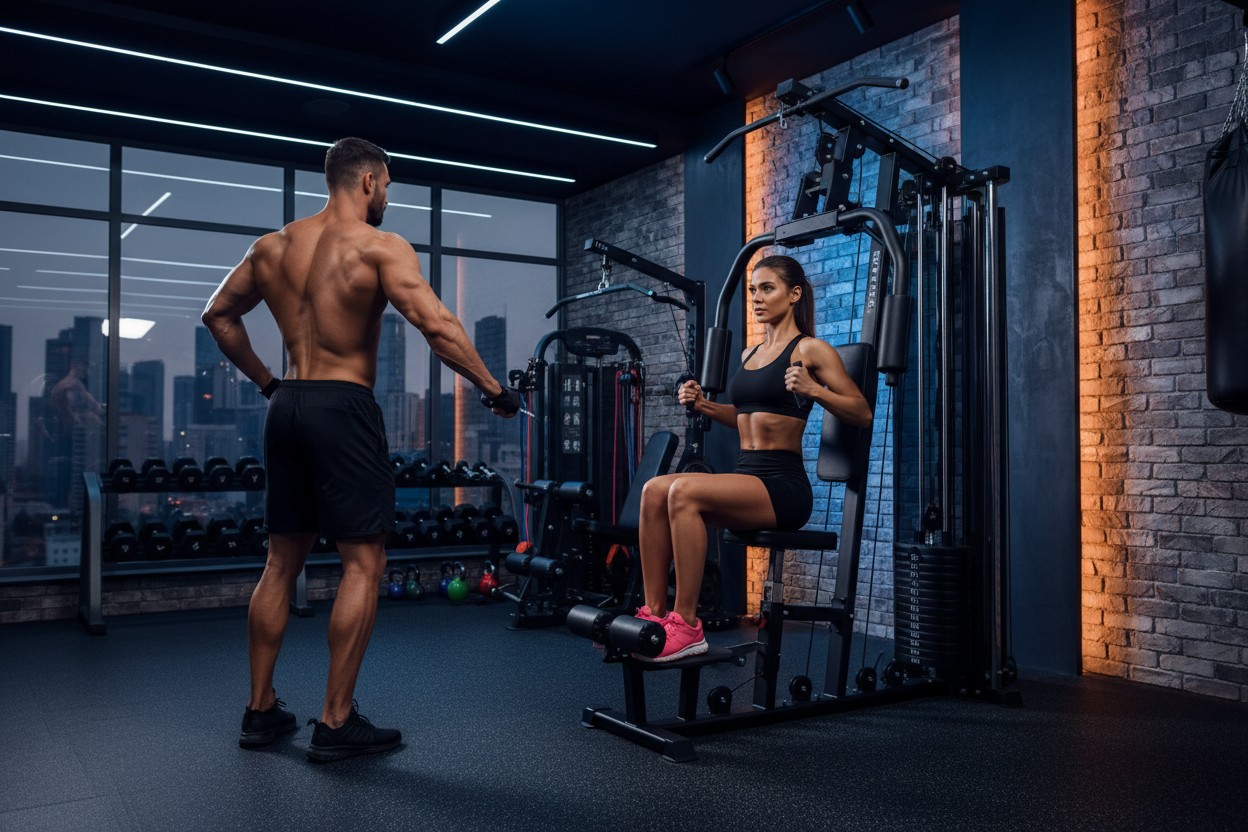
- Multi-User Capability: True multi gym stations allow 2-3 people to train simultaneously without interfering with each other.
- Weight Stack Considerations: Look for at least a 200lb stack per station with a 1:1 or 2:1 cable ratio for adequate resistance.
Space Planning: Will It Actually Fit?
The biggest mistake buyers make with a gym machine multi station is only measuring the static footprint. A machine might measure 8 feet by 8 feet, but you have to account for the dynamic working space.
Measuring Your True Clearance
For basement setups, ceiling height is your primary enemy. Most high-end multi-station gym equipment requires at least an 84-inch ceiling just to clear the top pulley housing. Furthermore, you need a minimum of 3 feet of clearance on all active sides. If your multi purpose gym equipment features a leg extension or a functional trainer arm, you need room to fully extend your limbs without kicking a wall or a workbench.
Decoding the Specs: What Separates the Best from the Rest
Not all multi-station gym machines are created equal. Entry-level models often use cheap nylon pulleys and unsealed bearings, leading to a jerky, frustrating lifting experience that degrades over time.
Weight Stacks vs. Plate Loaded
Commercial-grade setups usually feature dual or triple selectorized weight stacks. This allows for seamless drop sets and immediate weight changes. If you are on a tighter budget, plate-loaded multi station gym equipments offer the same versatility but utilize your existing Olympic plates for resistance, saving you hundreds of dollars on shipping heavy cast-iron stacks to your door.
From Our Gym: Honest Take
Over the last year, I've logged over 200 workouts on a premium 3-stack unit in my own garage gym. The convenience of supersetting lat pulldowns directly into triceps pushdowns without walking across a room or changing attachments is incredible. The aluminum pulleys and sealed bearings provide a buttery-smooth pull that genuinely rivals the standalone machines at my old commercial gym.
However, it's not perfect. At 6'2', I found the built-in leg press station on most of these combined units to be slightly cramped. My knees track a bit higher than I'd like at the bottom of the movement. If you are over 6 feet tall, I highly recommend testing the leg press module specifically, or opting for a unit that prioritizes upper body cable versatility instead.
Frequently Asked Questions
Is a multi station gym for home worth the investment?
Yes, if you prioritize machine-based hypertrophy training, isolation movements, and supersets. It is highly cost-effective compared to buying individual lat pulldowns, low rows, and cable crossovers.
Can two people work out at the same time?
Absolutely. As long as the unit has independent weight stacks (typically 2 to 4 stacks), multiple users can train simultaneously on different sides of the equipment without any cable interference.
Are they difficult to assemble?
Assembly is manageable but time-consuming. Expect to spend 6 to 10 hours on installation. We highly recommend having two people and a dedicated socket wrench set, as the included tools are rarely sufficient for tightening the heavy-duty frame bolts.