Second Skin Gym Flooring: The Truth Before You Upgrade
If you have ever tripped over the curling edge of a cheap rubber mat or watched your sweat pool on bare concrete, you know that your gym's foundation dictates your entire workout experience. Upgrading to second skin gym flooring is often the turning point where a makeshift workout room becomes a legitimate, high-performance training sanctuary.
But before you rip up your current setup, it is crucial to understand what this seamless flooring actually is, how it performs under heavy loads, and whether it is the right fit for your specific space and budget.
Key Takeaways
- Seamless protection: Pours or rolls out to create an edge-to-edge, waterproof barrier.
- High-impact resistance: Ideal for deadlifts and heavy drops without damaging the subfloor.
- Easy maintenance: No gaps or seams means dirt, sweat, and chalk cannot get trapped.
- Prep is critical: Requires a clean, level, and prepped surface for proper adhesion and longevity.
Understanding the Second Skin Advantage
Unlike traditional interlocking tiles or heavy horse stall mats, second skin flooring acts exactly as the name implies—a continuous, protective layer that bonds directly to your subfloor. This creates a unified surface that will not shift during dynamic movements like burpees, Olympic lifts, or heavy sled pushes.
The Material Breakdown
Most premium options utilize a polyurea or high-grade polyurethane base, often mixed with rubber granules for texture and shock absorption. This combination offers industrial-grade tensile strength while maintaining enough give to protect your joints during plyometrics and heavy lifting sessions.
Thickness and Impact Rating
For a standard North American garage gym, a thickness of 8mm to 10mm is the sweet spot. If your routine consists heavily of Olympic weightlifting, you might still want a dedicated drop pad, but for general powerlifting and CrossFit-style workouts, a quality 10mm application will easily handle dropped bumper plates.
Space Planning and Installation
One of the biggest selling points of this flooring style is its adaptability to weirdly shaped rooms. Whether you have support beams in your basement or a sloped garage floor for drainage, a seamless application molds to your exact footprint.
Garage vs. Basement Considerations
If you are installing in a garage, temperature fluctuations are your biggest enemy. Ensure the product you choose is UV-stable if you train with the garage door open, and check its expansion rate. For basements, moisture mitigation is key. Always run a moisture test on your concrete before applying any bonded flooring to prevent bubbling down the road.
From Our Gym: Honest Take
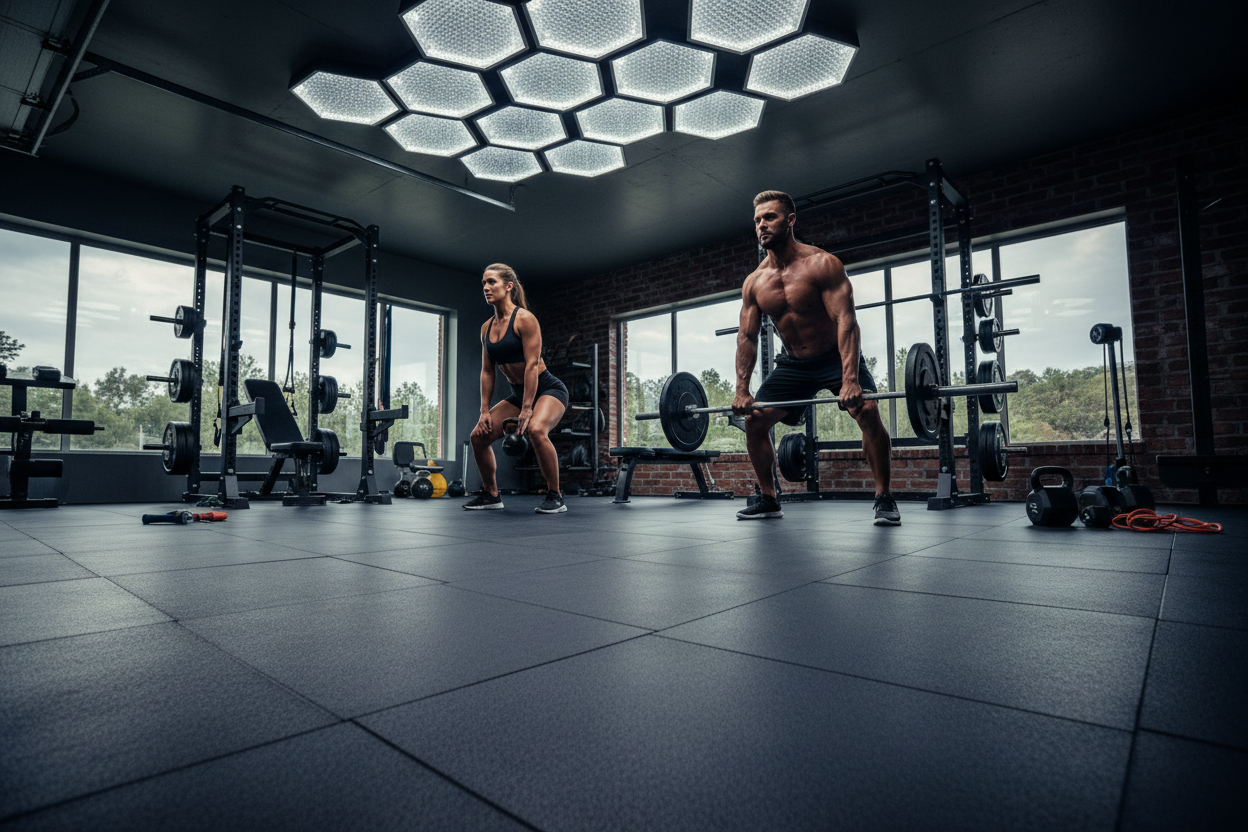
We recently applied a commercial-grade second skin system to our 400-square-foot testing facility, replacing a patchwork of heavy rubber mats. The immediate difference was the grip. During heavy low-bar squats, my lifters felt completely locked into the floor—no micro-shifting beneath our feet, even under 400+ pound loads.
Maintenance is an absolute breeze; a quick pass with a mop clears up chalk and sweat in minutes. However, I will be honest about the installation: the prep work was brutal. We spent two full days diamond-grinding the concrete and filling hairline cracks before we could even start the application. If you skip the prep, you are throwing your money away. But once it is cured? It is the most professional surface I have ever trained on.
Frequently Asked Questions
Is second skin gym flooring worth the investment?
Yes, if you own your home and want a permanent, high-performance training space. It eliminates tripping hazards, protects your foundation, and significantly increases the aesthetic appeal of your gym. If you are renting, stick to portable mats.
Can I install it over existing concrete?
Absolutely, but the concrete must be properly prepped. It needs to be fully cured, structurally sound, and free of any sealers, oils, or significant moisture issues to ensure the flooring bonds correctly.
How does it handle heavy equipment?
Exceptionally well. Because it bonds directly to the subfloor without air pockets, heavy power racks and functional trainers will not compress or dent the flooring the way they do with cheap foam or low-density rubber tiles.