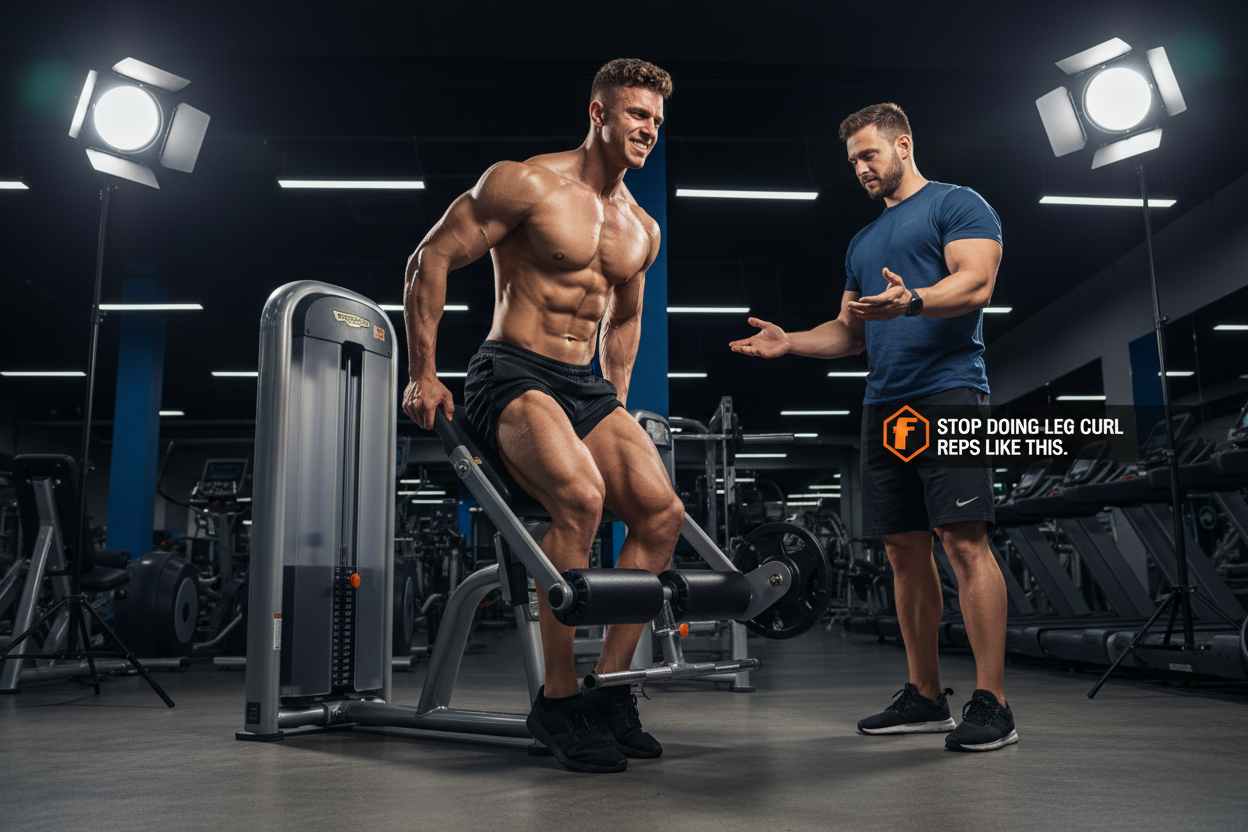
Stop Doing Leg Curl Hamstring Machine Reps Like This
Most lifters treat their posterior chain as an afterthought. You finish your heavy squats, maybe do a few rushed deadlifts, and then hop on the leg curl hamstring machine to check a box before heading home. That is a mistake.
If you want legs that look impressive from the side and back—and knees that stay healthy during heavy lifting—you need to respect this machine. It isn't just a finisher; when executed with precision, it is the primary driver for knee flexion hypertrophy. Let’s fix your mechanics and turn this movement into a mass builder.
Key Takeaways: Quick Form Guide
- Check Your Hips: If your hips rise off the pad during the contraction, you are using momentum, not muscle. Keep them glued down.
- Dorsiflex Your Feet: Pulling your toes toward your shins (dorsiflexion) engages the calf slightly but allows for a harder hamstring contraction for many lifters.
- Control the Eccentric: The lowering phase builds the most muscle. Take a full 3 seconds to return the weight to the start.
- Pad Placement Matters: The ankle pad should sit just above the heel on the Achilles tendon, not high up on the calf.
Why the Hamstring Leg Machine is Non-Negotiable
Anatomically, the hamstrings have two main functions: hip extension (think deadlifts) and knee flexion (bending the leg). Most compound movements hammer hip extension but leave knee flexion relatively untouched.
This is where the hamstring leg machine fills the gap. It isolates the short head of the biceps femoris, a muscle that deadlifts barely touch. If you skip this, you are leaving half your hamstring development on the table.
Seated vs. Lying: Which is Better?
You will usually see two variations in the gym. Here is the science on which one you should prioritize:
The Seated Leg Curl: This is generally superior for hypertrophy. Because your hips are flexed (you are sitting up), the hamstrings are in a stretched position at the start of the rep. Muscles produce more force and grow faster when trained at long muscle lengths.
The Lying Leg Curl: This offers a better peak contraction. It is still effective, but if you only have time for one, the seated variation usually wins on the biomechanical charts.
Common Mistakes Killing Your Gains
The "Hip Heave"
Watch someone go heavy on a lying leg curl. As the weight comes up, their butt shoots into the air. This shortens the distance the hamstrings have to work and shifts the load to the lower back. If your hips move, the set doesn't count. Drive your pelvis into the pad as if you are trying to break it.
The "Half-Rep" Syndrome
Hamstrings are prone to shortening. If you don't let the leg fully straighten at the bottom of the rep, you lose the most valuable part of the movement: the stretch. Stop cutting your reps short. Let the weight stack almost touch, pause for a split second, and then contract.
Ignoring Tempo
The hamstrings are fast-twitch dominant, meaning they respond well to explosive concentric (upward) movements. However, they are also highly susceptible to damage during the eccentric (lowering) phase. Explode up, but fight the weight on the way down. If the weight stack clangs down, you are going too fast.
My Training Log: Real Talk with the Leg Curl
I want to be honest about the relationship I have with this machine. For years, I hated the lying leg curl specifically because of the ankle pad. I have high calf insertions, and most generic gym machines have a pad that rolls up my leg halfway through the rep. It feels less like a muscle workout and more like a skin burn.
The game-changer for me wasn't a new program; it was adjusting the machine until it felt "wrong" initially. I started setting the arm length shorter than I thought I needed. This placed the pad right on the sweet spot of my Achilles tendon. The first rep felt awkward, but the pad stopped rolling.
Another thing the textbooks don't mention is the specific "cramp" you get when you point your toes (plantarflexion). I tried the "ballerina toes" method because an influencer said it isolates the hamstrings better by disengaging the calves. The result? My hamstrings cramped so hard I had to roll off the machine in the middle of a busy gym. It was embarrassing, but I learned a lesson: don't force biomechanics that don't fit your anatomy. Now, I keep my feet neutral. It’s less fancy, but I can actually finish the set.
Conclusion
The leg curl hamstring machine is not a place to rest between squat sets. It is a precise tool for building the back of your legs. Drop the ego, lower the weight, lock your hips into the pad, and focus on the stretch. Your knees will feel better, and your legs will finally fill out those pant legs.
Frequently Asked Questions
1. How often should I use the leg curl hamstring machine?
Since the hamstrings take a beating during leg days, 2 times per week is usually the sweet spot. One session can focus on heavy, low reps (6–8), and the second session can focus on metabolic stress with higher reps (12–15).
2. Can I replace this machine with dumbbells?
You can do dumbbell leg curls lying on a bench, but the resistance curve is inferior. With a dumbbell, there is zero tension at the bottom of the movement (when legs are straight). The machine provides constant tension throughout the entire range of motion, making it the better choice for growth.
3. Why do I feel pain behind my knee?
This often happens if the axis of rotation (the machine's pivot point) isn't aligned with your knee joint. Make sure your knee lines up perfectly with the red dot or bolt on the side of the machine. If you are too far forward or back, you place shearing force on the knee joint rather than the muscle.