Seated Hip Adduction: The Secret to Stronger Squats & Healthy Hips
Walk into any commercial gym, and you’ll see the seated hip adduction machine gathering dust in the corner, or perhaps being used exclusively for high-rep toning work. For years, serious lifters labeled this the "sus" machine or the "good girl" machine, dismissing it as purely aesthetic.
That is a massive mistake.
If you want a deeper squat, better pelvic stability, and protection against groin strains, you need to stop ignoring your inner thighs. This movement isolates the adductor group in a way free weights simply can't match, providing stability that translates directly to your big compound lifts.
Key Takeaways
- Primary Target: Isolates the Adductor Magnus, Longus, and Brevis (inner thigh muscles).
- Squat Carryover: A strong adductor magnus acts as a secondary hip extensor, helping you blast out of the hole in a squat.
- Injury Prevention: Strengthening these muscles balances the hip complex, reducing the risk of groin strains during athletic movements.
- Tempo Matters: Avoid momentum; use a slow eccentric (opening phase) to maximize hypertrophy.
Why the Seated Adductor Machine Isn't Just for Aesthetics
Let's cut through the noise. The seated adductor isn't just about shaping the inner thigh. It is a functional powerhouse.
The largest muscle in this group, the Adductor Magnus, is massive. Biomechanically, it assists with hip extension (the motion of standing up from a squat) just as much as your glutes and hamstrings do once your hips are flexed. If you have weak adductors, your knees act unstable, your squat strength plateaus, and your hips feel "tight" regardless of how much you stretch.
The Stability Factor
Think of your pelvis as a suspension bridge. Your abductors (outer glutes) pull one way, and your adductors pull the other. If you only train glutes and ignore the seated hip adduction machine, you create an imbalance. This imbalance often manifests as knee pain or lower back tightness because the pelvis lacks stabilization from the inside.
How to Perform Seated Hip Adduction Correctly
Using the seated adduction machine seems intuitive, but most people get the setup wrong. Here is how to lock it in.
1. The Setup
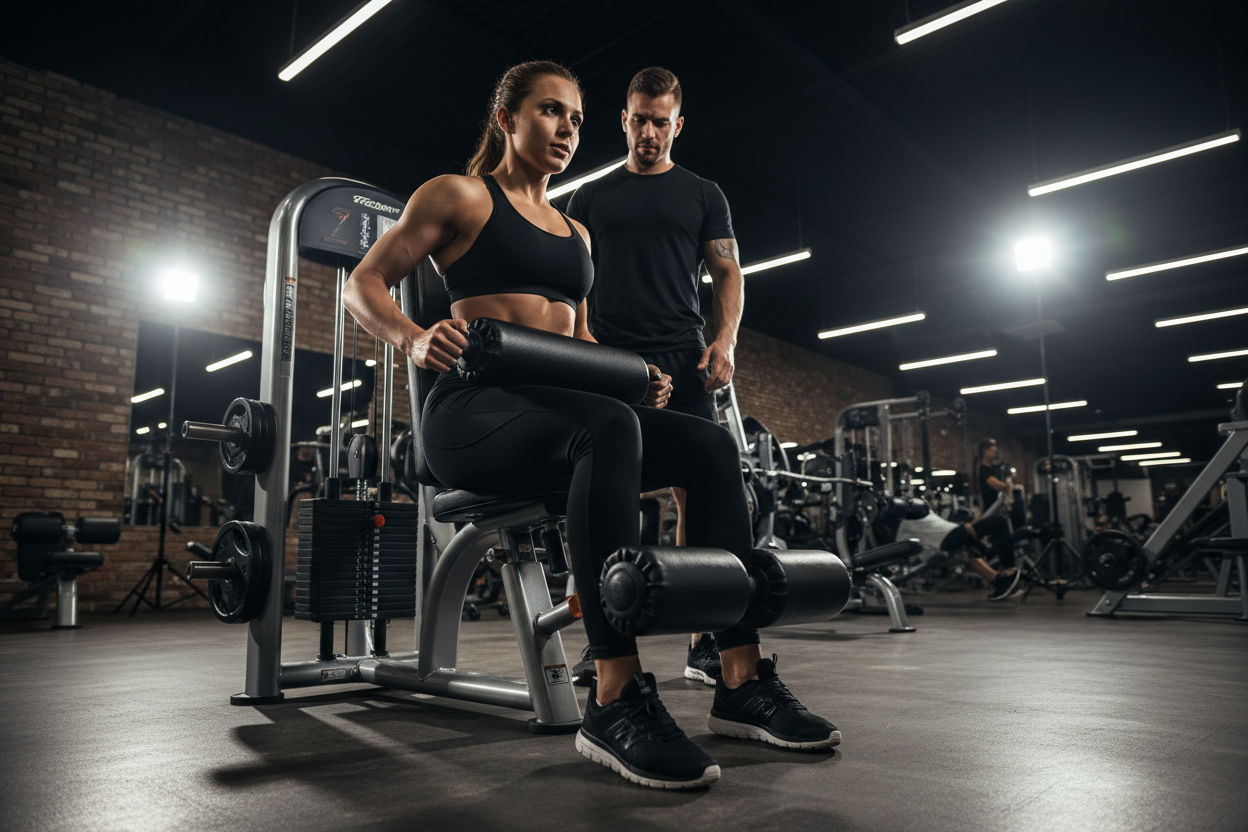
Sit down and adjust the pads so they rest comfortably against the inside of your knees. The critical adjustment is the starting width. You want the pads wide enough to feel a slight stretch in your groin, but not so wide that your hips lift off the seat to get there. If you have to contort your body just to get your legs into the pads, bring the width in one notch.
2. Posture and Bracing
Grab the handles on the side of the seat. Pull yourself down into the chair. Do not let your lower back round. Keep your chest up. This anchors your pelvis, ensuring the tension goes to the muscles, not your lumbar spine.
3. The Execution
Squeeze your legs together until the pads touch (or come as close as the machine allows). Hold this peak contraction for one hard second. Then, and this is crucial, take three seconds to return to the starting position. Do not let the weight stack slam down.
Common Mistakes to Avoid
Using Momentum
If you are swinging your knees in and out rapidly, you are wasting your time. The adductors respond best to time under tension. If you bounce out of the stretched position, you are risking a tear and minimizing growth.
Lifting Too Heavy (Ego Lifting)
This is an isolation movement, not a max-effort powerlift. If you load the whole stack but can only move the pads three inches, drop the weight. You need a full range of motion to stimulate the muscle fibers effectively.
My Training Log: Real Talk
I used to be one of those lifters who skipped this machine entirely. I thought squats and sumo deadlifts were enough.
Then I strained my groin warming up for a heavy squat session. My physio humbled me quickly, pointing out that my outer hips were bulletproof, but my inner thighs were weak.
I started adding seated hip adduction twice a week. The first thing I noticed wasn't the strength—it was the specific, brutal DOMS (delayed onset muscle soreness). It’s a unique kind of waddle-inducing soreness where your thighs rub together painfully when you walk. I also remember the specific machine at my old gym had worn-out foam on the knee pads. If I went too heavy, the metal arm inside the pad would bruise the inside of my knee joint. I learned specifically to wear track pants or bring a small towel to cushion that contact point.
Six weeks later? My knee cave on heavy squats vanished. The stability I felt coming out of the hole was night and day.
Conclusion
The seated hip adduction machine deserves a spot in your leg day rotation. It’s not about spot-reducing fat (which isn't possible) or just aesthetics. It is about building a bulletproof lower body that can handle heavy loads and athletic movement. Stop worrying about how it looks to use the machine and start worrying about the gains you are leaving on the table by skipping it.
Frequently Asked Questions
Does seated hip adduction burn inner thigh fat?
No. You cannot spot-reduce fat. This exercise builds muscle in the inner thigh area, which can make the legs look firmer and more shaped, but it will not directly burn the fat covering the muscle. That requires a caloric deficit.
How often should I train adductors?
The adductors can be surprisingly resilient, but they also get sore easily. Start with twice a week, performing 3 sets of 12–15 reps. Because they assist in squats, avoid frying them the day before a heavy leg session.
Is the machine better than cable adductions?
For raw hypertrophy and strength, yes. The machine offers more stability, allowing you to load more weight safely without worrying about balance. Cables are great for mobility and fine-tuning, but the seated machine is the king for mass.