How to Build Total Body Power With Just a Fitness Row Machine
Walk into any commercial gym, and you will likely see a row of treadmills occupied, while the lonely ergometer sits in the corner. This is a mistake. The fitness row machine is arguably the most efficient piece of equipment for simultaneously developing cardiovascular endurance and muscular power.
Many people avoid it because they view it as an "upper body" workout, or they simply find the technique intimidating. But once you understand the mechanics, this machine becomes a powerhouse for burning calories without the high impact of running.
Key Takeaways: Why You Should Row
- Full-Body Engagement: Unlike cycling, rowing recruits 86% of your muscles, including legs, core, and back.
- Low Impact: It saves your knees and ankles while allowing for high-intensity interval training (HIIT).
- Posterior Chain Focus: It combats the "desk slump" posture by strengthening the upper back and glutes.
- Variable Resistance: You control the intensity based on how hard you drive, not just a button you press.
The Mechanics: It’s Not Just About Arms
The biggest misconception about the fit rowing machine is that you pull with your arms. If your biceps are burning before your legs, your form is off. The stroke is actually 60% legs, 20% core, and only 20% arms.
Think of the rowing and exercise machine as a horizontal deadlift. You are driving through your heels to generate force. The handle is merely the connection point that transfers that leg power to the flywheel.
The Four Phases of the Stroke
To get the most out of your rowing machine for exercise, you need to master the sequence:
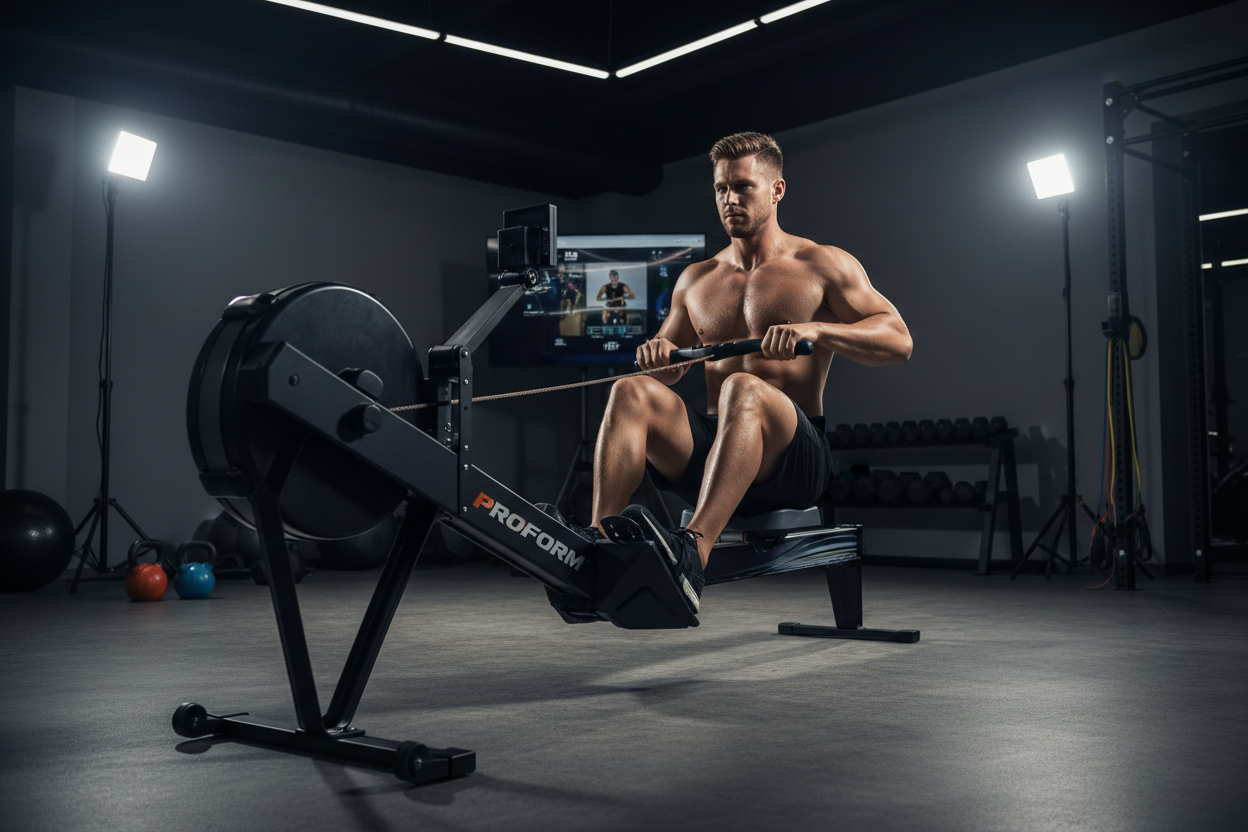
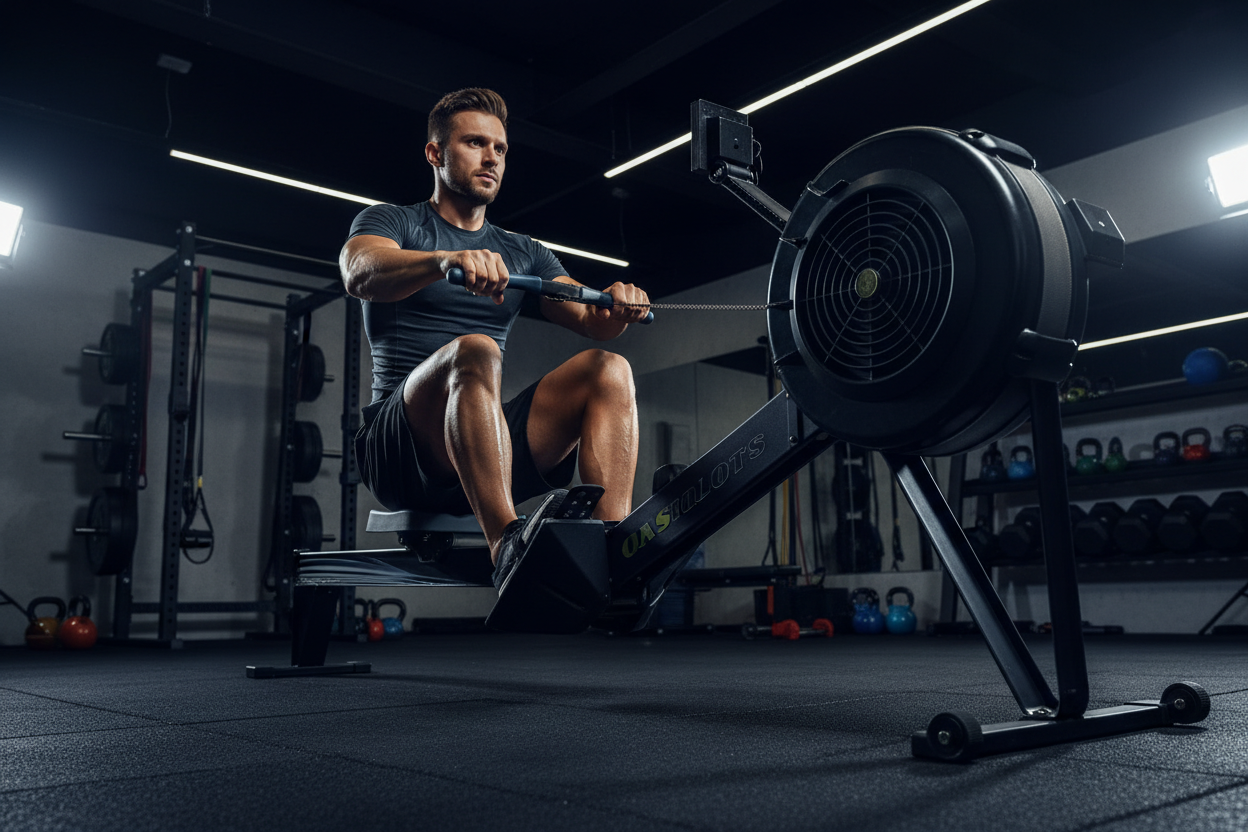
- The Catch: Your shins are vertical, arms extended, and body leaning slightly forward (11 o'clock position).
- The Drive: Explode with the legs first. Keep the arms straight until the legs are almost fully extended.
- The Finish: Lean back slightly (1 o'clock position) and pull the handle to your lower ribs.
- The Recovery: Extend arms, lean forward, and then bend the knees to slide back.
Choosing the Right Resistance
Whether you are using a water rower or an air-based rowing training machine, resistance management is crucial. On air rowers, this is often controlled by a damper setting (usually 1-10).
A common error is cranking the damper to 10, thinking it equals a better workout. It doesn't. Setting it to 10 is like riding a bike in the hardest gear uphill; your muscles fail before your lungs do. For cardiovascular conditioning on an exercise rower machine, keep the damper between 3 and 5. This mimics the drag of a sleek boat on water and allows for a higher stroke rate.
Why It Beats Other Cardio Machines
The rowing exerciser offers a unique advantage: it demands mental engagement. You cannot zone out like you can on an elliptical. You must constantly monitor your stroke rate (spm) and split time.
Furthermore, regarding rower machine exercise equipment, the injury risk is significantly lower than running. Because your feet are fixed and you aren't fighting gravity with impact, you can train at max heart rate with minimal stress on your joints. This makes rowing exercise equipment ideal for athletes recovering from injuries or older adults looking to maintain bone density through resistance.
My Personal Experience with Fitness Row Machine
I want to be real about what happens when you commit to the rower fitness machine. The specs look great on paper, but the reality is gritty.
The first time I attempted a 2,000-meter time trial, the thing that broke me wasn't my lungs—it was my grip and my forearms. Around the 1,500-meter mark, sweat makes that handle incredibly slippery. I remember vividly trying to hook my fingers just right so the handle wouldn't fly out of my hands, which caused my form to break down.
Another detail manuals don't tell you: the "rower's rash." If you don't position yourself perfectly on the seat, you get a very specific chafing at the top of the glutes where the waistband of your shorts grinds against the seat during the 'drive' phase. It stings in the shower afterward. But, despite the blisters and the sweat-slicked handle, the post-row endorphin rush is cleaner and heavier than anything I've felt on a treadmill.
Conclusion
The fitness row machine is not just for warm-ups. It is a comprehensive tool that builds grit, power, and endurance. By focusing on the leg drive and maintaining a lower drag factor, you can transform your physique and your engine. Stop looking at it as a backup option and start making it the centerpiece of your training.
Frequently Asked Questions
Can I lose belly fat using a rowing machine?
Yes. Because rowing recruits so many muscle groups, it burns a high number of calories per minute. Combined with a caloric deficit, this metabolic demand is excellent for fat loss.
Is it okay to row every day?
Generally, yes, because it is low impact. However, listen to your lower back. If your form degrades, your lower back will take the load. It is often better to alternate rowing days with other forms of activity or rest.
How long should a beginner row for?
Start with time, not distance. Try rowing for 5 to 10 minutes focusing strictly on technique. Once your form holds up, try interval training, such as 1 minute of work followed by 1 minute of rest, for 15 minutes total.