Seated Hip Abduction: The Definitive Guide for Glute Growth
Walk into any commercial gym, and you will likely see the abduction machine gathering dust or being used while someone scrolls through Instagram. This is a massive missed opportunity. The seated hip abduction is arguably one of the most isolated ways to target the lateral glutes without loading the spine, yet it is constantly performed with poor intent and ineffective ranges of motion.
If you want to build the upper shelf of the glutes or improve your squat stability, you cannot rely solely on heavy compounds. You need specific isolation work. This guide breaks down the mechanics, the muscle recruitment, and the subtle form tweaks that turn this movement from a 'rest break' into a hypertrophy powerhouse.
Key Takeaways: Quick Summary
- Primary Target: Isolates the Gluteus Medius, Gluteus Minimus, and the Tensor Fasciae Latae (TFL).
- The "Lean" Matters: Leaning forward while performing the movement increases Gluteus Maximus recruitment compared to sitting upright.
- Tempo is Critical: Avoid using momentum to swing the weight out; control the eccentric (closing) phase to maximize time under tension.
- Volume Driver: This exercise responds best to higher rep ranges (15–25) due to the metabolic stress capacity of the glute muscles.
The Anatomy: What Muscles Are We Actually Working?
Understanding the seated hip abduction muscles is the first step to better connection. While many assume this is just an "outer thigh" exercise, the mechanics are rooted in the hip joint.
The Gluteus Medius and Minimus
These are the primary movers during seated abductions. Located under and above the larger Gluteus Maximus, these muscles are responsible for moving the leg away from the midline of the body. Weakness here often translates to knee valgus (knees caving in) during squats.
The Gluteus Maximus (Upper Fibers)
Here is where form dictates function. During hip abduction in sitting, if you maintain a strict upright posture, you bias the TFL and smaller glute muscles. However, by introducing hip flexion (leaning forward), you stretch the Gluteus Maximus, allowing its upper fibers to assist in the abduction. This creates a more comprehensive glute builder.
How to Perform the Seated Hip Abduction Correctly
Most lifters hop on, pin the stack, and start flailing. To get the most out of the seated hip abduction exercise, you need deliberate setup.
1. Machine Setup
Adjust the pads so they rest comfortably against the outside of your knees. Start with the pads as close together as your flexibility allows. You want the range of motion to start from a stretched position, not a neutral one.
2. Foot Placement
Place your feet on the pegs or bars. Some lifters prefer seated leg abduction with feet floating to remove leverage, but keeping feet planted usually allows for greater force production. Ensure your heels are driving the movement, not your toes.
3. The Execution
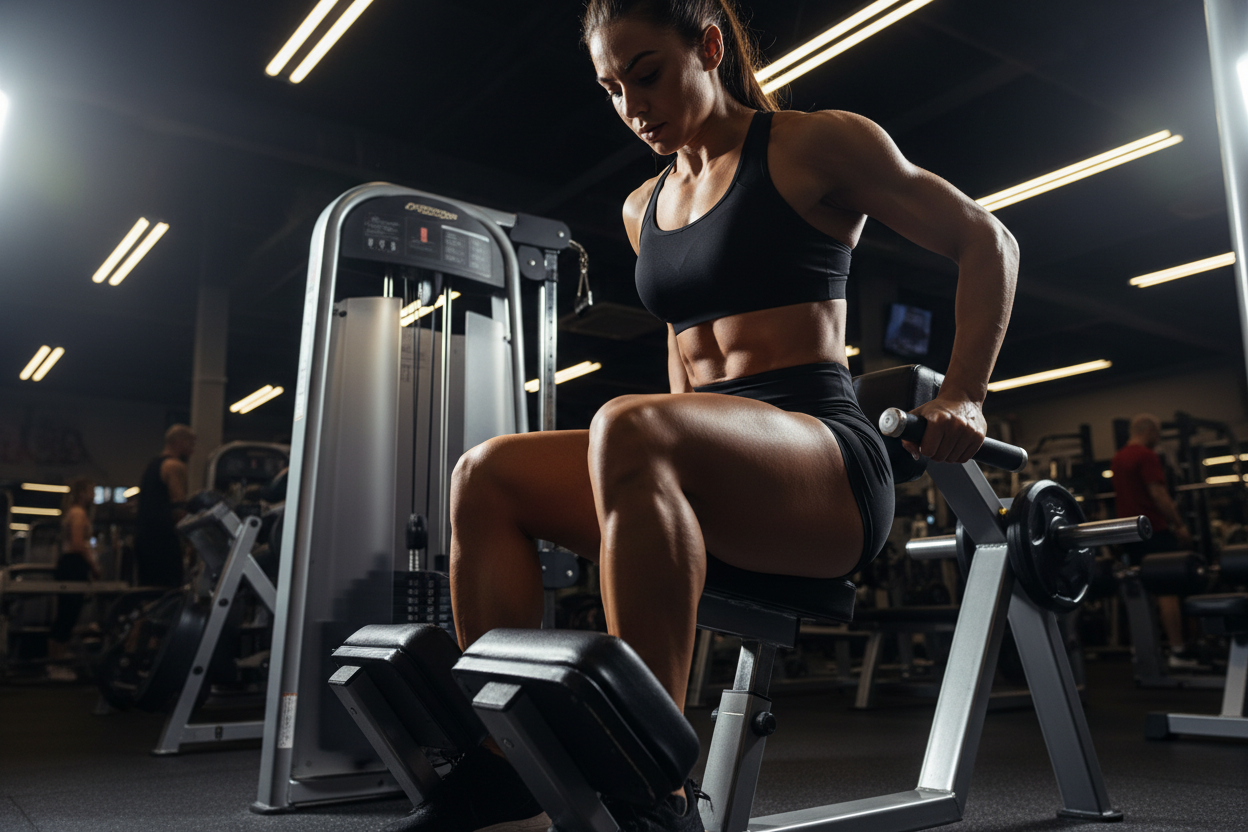
Drive your knees outward against the pads. Do not think about moving your feet; think about pushing your knees to the walls. Pause for a full second at peak contraction. Slowly return to the starting position, resisting the weight the entire way. Do not let the weight stack slam.
Advanced Technique: The "Lean Forward" Method
You may have seen bodybuilders performing sitting hip abduction while hunched over the machine. This isn't laziness; it's physics. By leaning forward at the hips (not rounding the spine), you place the glutes in a lengthened position.
This pre-stretch allows for a stronger contraction of the Gluteus Maximus. If your goal is pure hypertrophy (size), try performing your first 10 reps leaning forward, and your last 10 reps sitting upright to burn out the Gluteus Medius. This mechanical drop-set is brutal but effective.
Common Mistakes to Avoid
Even though it is a machine-based movement, hip abduction seated can be messed up.
- Ego Lifting: Using so much weight that you have to jerk your body to start the rep. This shifts tension to the lower back and hip flexors.
- Partial Reps: Stopping the movement halfway in. You need to open the hips as wide as the machine allows to fully shorten the muscle fibers.
- Ignoring the Eccentric: Letting the pads snap back together. You are missing half the growth potential if you don't control the closing phase.
My Training Log: Real Talk
I want to be transparent about my experience with this machine. The first time I actually took seated hip abduction seriously—treating it like a squat rather than a phone break—I couldn't walk right for two days.
But here is the specific detail most guides won't tell you: The pinch.
When you really grind out those last few reps with heavy weight, the rotating pads on most commercial machines tend to stick to your skin while the metal arm keeps moving. If you are wearing short shorts, it can pinch the skin on your outer thigh aggressively. I’ve learned to actually place a small towel or wear compression liners specifically on leg days to avoid that friction burn. Also, the "cramp" you feel isn't like a quad pump; it feels like a deep ache right inside the hip socket. That deep ache is exactly what you are chasing. If you just feel it in your TFL (the front pocket area), you are likely sitting too upright or using too much weight.
Conclusion
The seated abductor machine is not just a coaster for your water bottle. It is a targeted tool for hip health, pelvic stability, and glute aesthetics. Stop swinging the weight and start controlling the contraction. Add this to the end of your leg day for 3 sets of 20, and watch your squat numbers—and your glute development—improve.
Frequently Asked Questions
Does seated hip abduction make your hips wider?
It can create the illusion of wider hips by building the Gluteus Medius and Minimus. Hypertrophy in these muscles adds curvature to the upper/side portion of the glutes, contributing to an "hourglass" physique, though it cannot change your actual pelvic bone structure.
Can I do this exercise without a machine?
Yes. You can perform seated abductions using a resistance band. Sit on a bench with a heavy loop band around your knees (just above the joint). Keep your feet shoulder-width apart and drive your knees outward against the band tension.
How often should I perform seated hip abductions?
Because the glutes are large, fatigue-resistant muscles, they recover relatively quickly. You can safely perform this exercise 2 to 3 times per week, ideally at the end of your lower-body sessions as a finisher.