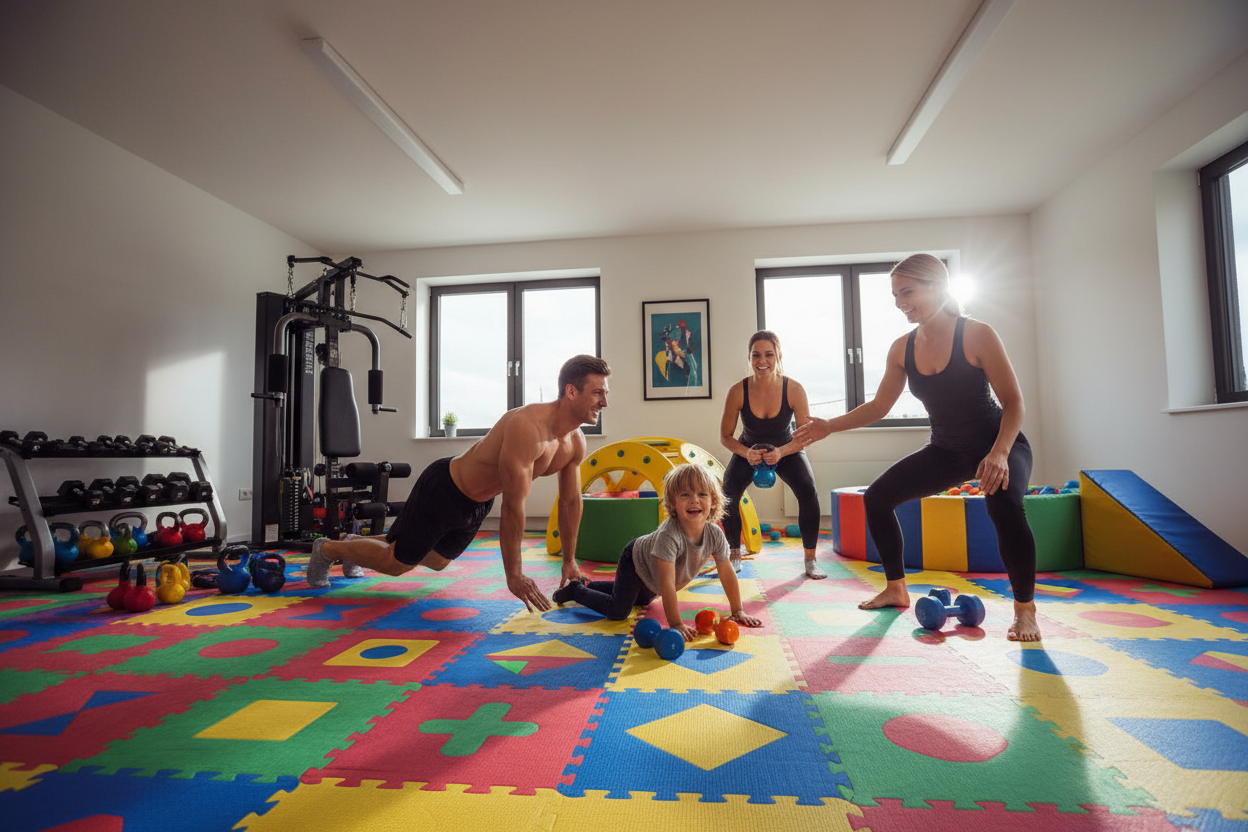
Childrens Playroom Mat: Why Most Parents Get It Wrong
If you have ever winced watching your toddler take a hard tumble on a concrete basement floor, you already know the stakes. As fitness equipment specialists, we spend our days analyzing impact absorption, foam density, and traction for heavy lifting. But lately, our most frequent question isn't about deadlift platforms—it is about how to build safe, active "mini gyms" for kids. Finding the right childrens playroom mat is the critical first step to transforming a hard, unforgiving room into a space where kids can wrestle, tumble, and burn off energy safely.
Unfortunately, many parents default to cheap, flimsy aesthetic rugs that offer zero real protection. Whether you are carving out a corner of your own garage gym or dedicating a spare bedroom to active play, you need flooring that bridges the gap between commercial gym durability and child-safe materials. Here is everything you need to know before you buy.
Key Takeaways
- Thickness is non-negotiable: Aim for at least 0.5 to 1 inch of high-density foam for active play and tumbling.
- Material safety matters: Always verify that your mats are free from BPA, phthalates, and lead.
- Interlocking vs. Folding: Interlocking tiles are best for custom wall-to-wall setups, while folding mats excel for gymnastics and easy storage.
- Durability and traction: A good mat should resist punctures from dropped toys while providing enough grip to prevent slipping during sprints.
Choosing the Right Material and Thickness
When evaluating mats for playroom setups, thickness and material density are the two specs that dictate performance. Just like a home gym floor needs to handle dropped kettlebells, a playroom floor needs to handle jumping off the couch.
EVA Foam vs. PU Leather
High-density EVA foam is the industry standard for interlocking tiles. It is lightweight, highly shock-absorbent, and budget-friendly. However, if your kids are practicing martial arts or gymnastics, a folding mat wrapped in PU (polyurethane) leather over EPE foam offers a smoother surface that prevents carpet burns and is significantly easier to sanitize after a sweaty play session.
Space Planning for Active Play Areas
Integrating a play zone into a North American home—especially if it shares space with your home gym—requires strategic planning. You need to account for door clearances, baseboards, and equipment overlap.
Customizing with Interlocking Tiles
If you have an irregular basement layout, a modular playroom floor mat is your best friend. Standard 24x24-inch interlocking tiles allow you to build around structural columns or heavy gym racks. Pro tip: Always order 10% more tiles than your square footage dictates. You will need the extra pieces to cut flush edges against your walls for a clean, professional look.
Durability: Surviving the Daily Grind
Kids are incredibly tough on gear. While standard yoga mats will shred under the friction of plastic toys and shoes, a commercial-grade active play mat is built differently. Look for mats with a heat-sealed top layer. This prevents peeling at the edges and stops spilled liquids from seeping into the foam core, which can lead to mold over time.
From Our Gym: Honest Take
When I built a dedicated active corner for my kids right next to my garage power rack, I initially bought a cheap set of alphabet puzzle mats from a big-box store. It was a mistake. Within three months, the edges were curling, and the letters were constantly popping out during wrestling matches. I upgraded to 1-inch thick, gym-quality EVA foam tiles. The difference was night and day. When my 6-year-old practices tumbling, the foam absorbs the impact perfectly. I will admit one minor caveat: the aggressively textured grip on these heavier-duty mats can be slightly tough to wipe clean when a juice box inevitably spills, but the trade-off in safety and joint protection is 100% worth it.
Frequently Asked Questions
What is the best thickness for a childrens playroom mat?
For general play and crawling, 0.5 inches is sufficient. However, if your kids are jumping, wrestling, or practicing gymnastics, you should upgrade to a 1-inch thick mat to ensure proper joint protection and impact absorption.
Are interlocking mats for playroom setups safe for babies?
Yes, provided you purchase mats specifically labeled as non-toxic, BPA-free, and EVA-certified. Avoid industrial anti-fatigue mats meant for workshops, as they often contain harsh chemicals not suited for prolonged skin contact.
How do I clean foam floor mats playroom setups?
For daily maintenance, a simple sweep or vacuum (without the beater brush engaged) works perfectly. For deeper cleans, use a mixture of warm water and mild dish soap with a damp mop or cloth. Avoid harsh bleach or abrasive scrubbers, which can degrade the foam's protective surface.