Sculpt Stronger Legs: The Ultimate Total Gym Lower Body Guide
Building a powerful lower body doesn't always require heavy barbells or a crowded weight room. In fact, one of the most effective tools for developing functional leg strength sits in many living rooms gathering dust. A total gym leg workout offers a unique advantage that static machines cannot match: the ability to move your body weight against gravity while maintaining a safe, supported spinal position. By adjusting the incline level, you can instantly change the resistance, making it suitable for rehabilitation or high-intensity muscle building.
The Total Gym shines because it forces your stabilizer muscles to fire constantly. Unlike a traditional leg press machine where the weight moves on a fixed track, the glide board requires you to control the movement path. This translates to better balance and real-world strength. Whether you are looking to bulk up your quads or tone your inner thighs, this equipment provides a versatile platform for comprehensive lower body training.
The Mechanics of the Total Gym Leg Press
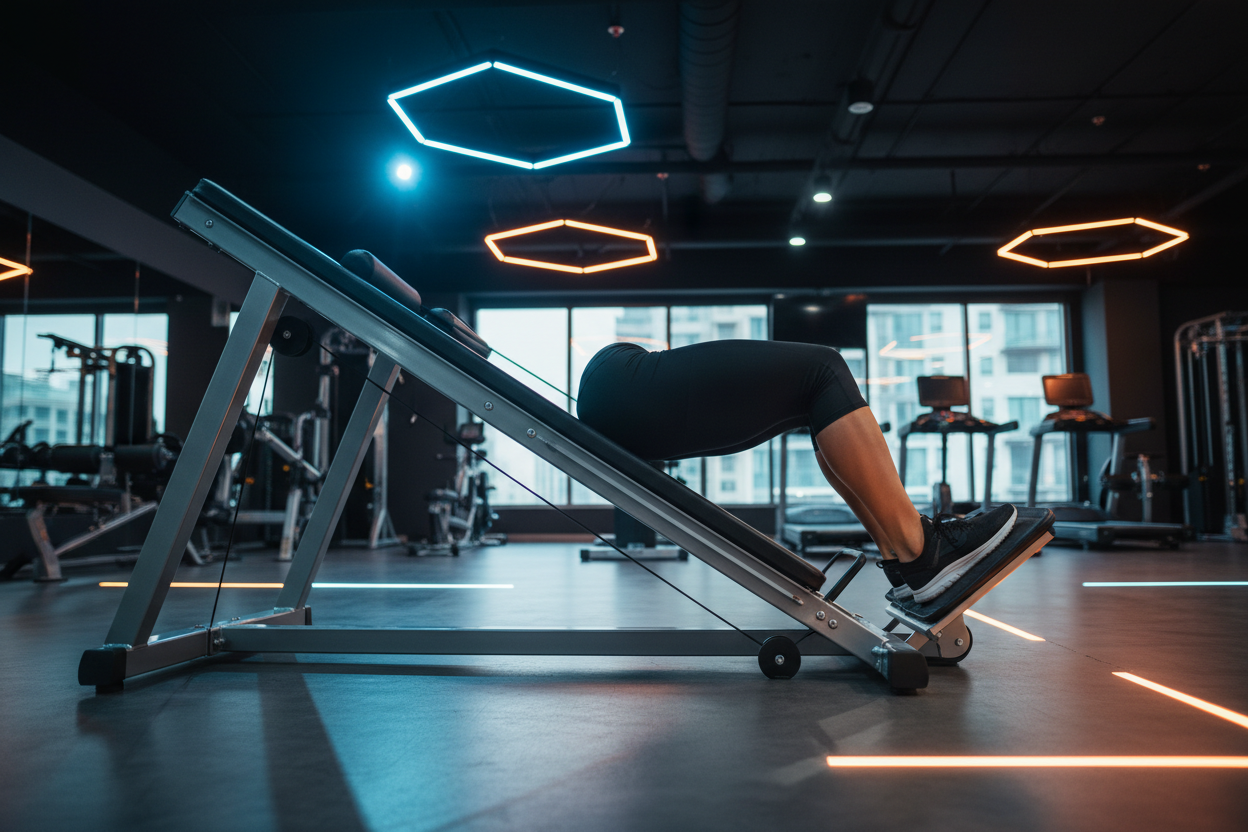
The cornerstone of any total gym lower body workout is the squat, often referred to as the leg press on this machine. To perform this, you attach the squat stand to the bottom of the rails. This setup allows you to lie on your back and push yourself up the rails.
Because your back is fully supported by the glide board, spinal compression is virtually eliminated. This makes the leg press on total gym an incredible option for anyone with lower back issues who still wants to squat heavy. You can place your feet high on the stand to target the glutes and hamstrings, or position them lower to shift the focus to the quadriceps. For those looking to add an explosive element, the machine handles plyometric jumps exceptionally well. You simply push off with enough force to lift the board, land softly, and immediately descend into the next rep.
Personal Experience: Saving My Knees
A few years ago, I tweaked my knee running on pavement. Heavy squats were out of the question; the sheer vertical load was too painful. That is when I rediscovered the total gym for legs. I started on a low incline, focusing purely on range of motion and tracking my knee alignment. Because the glide board moves so smoothly, there was zero jarring impact. Over three months, I slowly raised the incline level. Not only did my knee heal, but I also developed significant definition in my vastus medialis (the teardrop muscle above the knee) that I hadn't managed to achieve with free weights alone. The constant tension provided by the incline creates a burn that feels different—deeper and more controlled.
Essential Total Gym Quad Exercises
To really target the front of the thigh, you need to manipulate your foot placement. Standard two-legged squats are great, but total gym quad exercises become much more potent when you switch to single-leg variations. Unilateral training prevents your dominant leg from taking over and fixes muscle imbalances.
Try the single-leg squat. Center one foot on the squat stand and let the other leg hover or rest gently on the bottom edge of the board. Lower yourself until your knee is at a 90-degree angle. You will find that you cannot use as much weight as you think; the instability of the board forces your quad to work overtime to keep you steady. This is one of the most humbling leg exercises on total gym equipment.
Targeting the Inner and Outer Thighs
Most home gyms neglect lateral movement, but the Total Gym excels here using the cable system. Total gym inner thigh exercises are vital for hip stability and aesthetics. Remove the squat stand and attach the cables. Lie sideways on the glide board. Attach the handle or ankle strap to your top leg for outer thigh work (abduction) or the bottom leg for inner thigh work (adduction).
For a killer total gym inner thigh workout, place your foot in the handle harness while lying on your side. Let the weight of the glide board pull your leg up (abduction), then squeeze your inner thigh to pull the board back up the rails. This movement isolates the adductors without putting stress on the knee joint. It is far more effective than the seated machines at the gym because your core must engage to keep you from rolling off the board.
Hamstrings and Glutes: The Posterior Chain
You cannot have a complete total gym leg day without hitting the back of the legs. While the high-stance squat hits the glutes, you can get more specific. The bridge squat is a fantastic variation. Lie on the glide board, place your heels on the top edge of the squat stand, and lift your hips off the board into a bridge position. Maintain this bridge while you perform the squatting motion. This keeps the glutes under constant tension throughout the set.
Another option for total gym legs training involves lunges. Stand at the bottom of the machine, facing away from it. Place one foot back onto the glide board. As you lower into a lunge with your front leg, the back leg slides up the rails. This stretches the hip flexor while hammering the glute and hamstring of the stationary leg. It is a dynamic movement that improves flexibility and strength simultaneously.
Sample Total Gym Lower Body Workout Routine
Ready to put it all together? Here is a routine designed to hit every angle of the lower body. Perform this circuit 2-3 times with minimal rest between exercises.
- Warm-up: 5 minutes of light jogging or low-incline two-legged squats.
- Standard Squats: 15-20 reps (Medium to high incline). Focus on depth.
- Single-Leg Squats: 10-12 reps per leg. This is a premier leg workout on total gym for isolation.
- Lying Hamstring Curls: 15 reps. (If you have the wing attachment or by performing bridge squats).
- Side-Lying Inner Thigh Pulls: 12-15 reps per leg. Essential total gym thigh exercises.
- Plyometric Jump Squats: 15 reps. Explosive power to finish.
This routine covers the basics of total gym workouts for legs while ensuring you hit the stabilizers and major muscle groups.
Maximizing Your Total Gym with Leg Press
If you own a total gym with leg press capabilities (the squat stand attachment), you have a complete gym in one footprint. The key to progress is progressive overload. Since you cannot add external plates easily, you must increase the incline, slow down the tempo, or increase the volume.
Slowing down the eccentric phase (the lowering part) of your total gym leg exercises can stimulate more muscle growth than simply banging out fast reps. Try lowering yourself for a count of four, pausing at the bottom, and exploding up. This time-under-tension technique makes even the lower incline levels feel incredibly heavy.
Why Choose Total Gym Lower Body Exercises?
Consistency wins over intensity in the long run. Total gym lower body exercises are joint-friendly, which means you can train legs more frequently without the systemic fatigue caused by heavy barbell squats. Whether you are a senior looking to maintain mobility or an athlete recovering from injury, leg workouts on total gym provide a scalable, safe, and effective path to stronger legs.
Frequently Asked Questions
Can you build muscle mass on a Total Gym?
Yes, you can build muscle mass by using high incline levels to maximize resistance and performing exercises until failure. Utilizing single-leg variations effectively doubles the resistance on the working muscle, providing enough stimulus for hypertrophy.
Is the Total Gym good for bad knees?
The Total Gym is excellent for bad knees because it is a closed-chain exercise platform with low impact. The glide board absorbs much of the shock, and the ability to adjust the incline allows you to train with a load that is comfortable for your joints while still strengthening the surrounding muscles.
How often should I do a leg workout on the Total Gym?
Since the Total Gym is lower impact than heavy weightlifting, you can typically train legs 2 to 3 times per week. Ensure you have at least one rest day between sessions to allow for muscle recovery and growth.