Sculpt Power: The Ultimate Lower Body Routine to Transform Your Physique
Building a lower body that performs as well as it looks requires more than just random squats or endless hours on the stair climber. To truly shape your physique, you need a structured approach centered on progressive overload and compound movements. A effective routine prioritizes heavy lifting to build density in the glutes and hamstrings while using isolation movements to refine shape. If you want real results, you should aim to train your lower body twice a week, focusing on movements like hip thrusts, Romanian deadlifts, and split squats with moderate to heavy resistance.
I remember walking into the free weight section for the first time, clutching a printed routine I found online. I was terrified of picking up anything heavier than a 10-pound dumbbell because I believed the myth that heavy weights would make me look bulky overnight. For months, I spun my wheels doing high-reps with tiny weights. It wasn't until I started tracking my lifts and pushing for strength gains that my body actually changed shape. That fear of "bigness" was replaced by a love for feeling strong, and ironically, that’s when I finally achieved the lean, athletic look I had been chasing for years.
The Anatomy of a Perfect Leg Day
Understanding which muscles you are targeting helps establish the mind-muscle connection necessary for growth. A comprehensive legs and glutes workout for women needs to hit the posterior chain (glutes and hamstrings) and the anterior chain (quads). Many generic routines overemphasize the quads because squats and lunges are dominant movements. To get that balanced, lifted look, you usually need to shift the focus toward the posterior chain.
Your glutes are composed of three main muscles: the gluteus maximus (the main power generator), the gluteus medius (upper/side glute), and the gluteus minimus. Neglecting the smaller glute muscles often leads to "flat" hips. A well-rounded session incorporates a vertical hip extension (like a squat), a horizontal hip extension (like a bridge), and an abduction movement (moving the leg away from the body).
Core Compound Movements
The foundation of your training should be multi-joint movements. These recruit the most muscle fibers and trigger the hormonal response needed for muscle growth. When you enter the weight room, these are the lifts you should prioritize while you have the most energy.
The Barbell Hip Thrust
This is arguably the king of glute development. Unlike squats, where the glutes are under the most tension at the bottom of the movement (the stretch), hip thrusts place maximum tension on the glutes at the top (the contraction). For a leg and glute workout gym female lifters can rely on, the hip thrust is non-negotiable. Set up a bench just below your shoulder blades, roll a padded barbell over your hips, and drive upward through your heels. Keep your chin tucked to protect your lower back.
Romanian Deadlifts (RDLs)
RDLs are essential for hamstring development and the "glute-ham tie-in." The movement is a hinge, not a squat. Imagine trying to close a car door behind you with your butt. Keep your shins vertical and slide the bar down your thighs until you feel a deep stretch in your hamstrings, then drive your hips forward to return to the starting position.
Unilateral Training for Balance
We all have a dominant side. If you only do barbell work, your stronger leg will compensate for the weaker one, leading to imbalances in strength and size. Unilateral exercises fix this issue and increase core engagement.
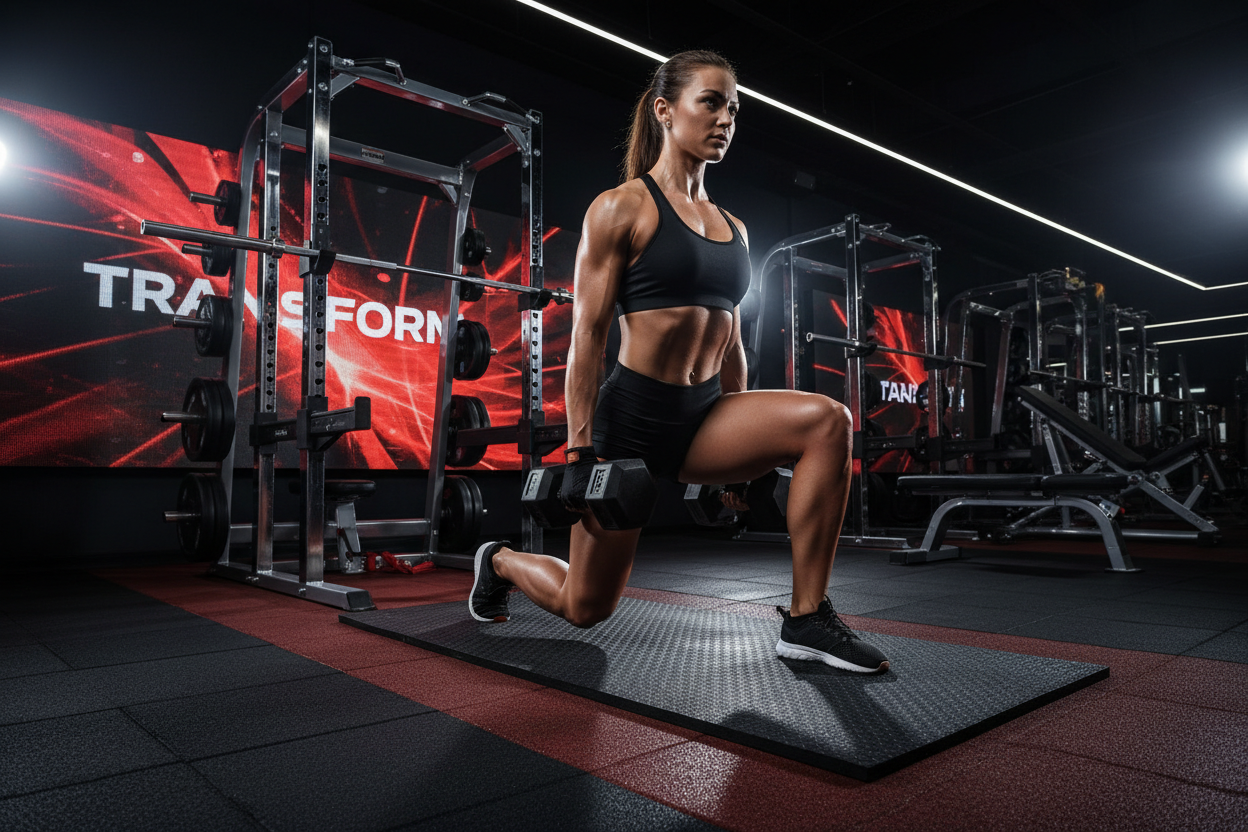
Bulgarian Split Squats are the exercise everyone loves to hate, but they deliver incredible results. By elevating your back foot and squatting with the front leg, you place immense load on the glute and quad of the working leg. This is one of the most effective leg and glute exercises for women looking to fix imbalances. Lean your torso slightly forward to bias the glutes, or stay upright to target the quads more heavily.
Sample Routine: Hypertrophy Focus
This routine is designed to be performed in a gym setting. Ensure you warm up with 5-10 minutes of dynamic stretching before starting.
- Barbell Hip Thrust: 4 sets of 8-10 reps (Heavy focus)
- Dumbbell Romanian Deadlifts: 3 sets of 10-12 reps (Focus on the stretch)
- Bulgarian Split Squats: 3 sets of 8 reps per leg
- Leg Press (Feet high and wide): 3 sets of 12-15 reps
- Cable Glute Kickbacks: 3 sets of 15-20 reps (Burnout finisher)
Rest for 90 seconds to 2 minutes between compound sets. You need to recover fully to lift heavy enough to stimulate change.
Common Mistakes to Avoid
Progress often stalls not because of the exercises selected, but because of how they are executed. One major pitfall is failing to apply progressive overload. You cannot use the same 15-pound dumbbells for six months and expect your body to change. You must increase the weight, reps, or improve your form every week or two.
Another issue is "junk volume." Doing fifty reps of unweighted donkey kicks might make you feel a burn, but it does very little for muscle growth. A structured legs and glutes workout for woman lifters should focus on mechanical tension—heavy weights moving through a full range of motion—rather than just chasing a burning sensation.
Fueling Your Growth
You cannot build a house without bricks. If you are tearing down muscle fibers in the gym but not eating enough protein and calories to repair them, you will simply stay the same size or lose muscle. Focus on consuming high-quality protein sources like chicken, fish, tofu, or lean beef. Carbohydrates are also your friend here; they provide the glycogen needed to power through a heavy legs and glutes workout for women without crashing halfway through.
Hydration also plays a massive role in muscle function. Dehydrated muscles cramp easily and fatigue quickly. Aim to drink plenty of water before, during, and after your session.
Consistency Over Intensity
One perfect workout won't change your body, but fifty average workouts done consistently will. The key to the legs and glutes workout women need is sustainability. If you destroy your legs so badly that you can't walk for four days, you can't train them again that week. Train hard, but train smart enough to recover.
Listen to your body. Some weeks you will hit personal bests, and other weeks you will just be going through the motions. Both are valuable parts of the process. Keep showing up, prioritize your form, and the results will follow.
Frequently Asked Questions
How often should I train legs and glutes?
For most women, training legs 2 to 3 times per week is the sweet spot. This frequency allows you to accumulate enough volume to stimulate growth while providing roughly 48 hours of rest between sessions for muscle recovery.
Can I get results without heavy weights?
While you can improve muscle endurance with light weights, building significant shape and definition (hypertrophy) generally requires moderate to heavy resistance. You need to challenge the muscles enough to force them to adapt, which is difficult to do with bodyweight alone over the long term.
What if I only feel squats in my quads and not my glutes?
This is common as squats are naturally quad-dominant. To engage the glutes more, try widening your stance slightly and pointing your toes out. Alternatively, pre-exhaust your glutes with isolation exercises like glute bridges before you start squatting to improve muscle activation.