Runner Rubber Mat Explained: What to Know Before You Buy
Setting up a home gym is exciting until you realize the toll heavy equipment and constant foot traffic take on your floors. Scuffs, scratches, and impact damage can quickly ruin your basement or garage setup. That is where a high-quality runner rubber mat comes in.
Whether you are trying to protect your underlying concrete, reduce the clanking noise of dropped weights, or create a safe, slip-resistant walkway between machines, a dedicated rubber runner is one of the smartest investments you can make for your training space. In this guide, we will break down exactly what you need to look for to find the perfect fit.
Key Takeaways
- A dedicated rubber runner mat protects subfloors from heavy impact and high foot traffic.
- You can easily buy a rubber runner mat by the foot to perfectly customize your gym layout.
- Black rubber runners are the industry standard for hiding chalk, dirt, and scuff marks.
- Installation is incredibly simple—just unroll your rubber runner roll and secure the edges.
How Rubber Runners Transform Your Home Gym
Unmatched Floor Protection
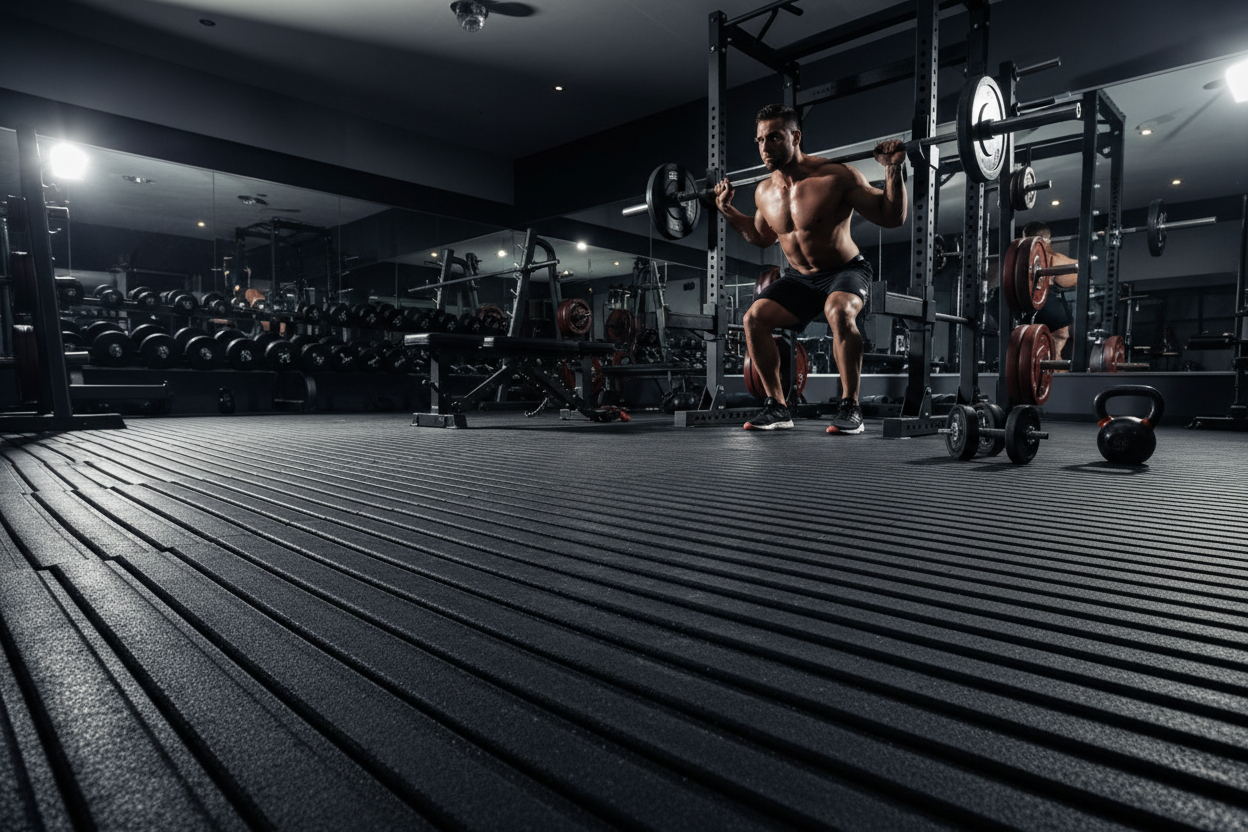
Whether you are dragging a bench or dropping kettlebells, your floors need a shield. Utilizing rubber runners for floors creates a durable barrier between heavy iron and delicate wood or concrete. Unlike standard foam puzzle tiles, a commercial-grade rubber floor runner absorbs shock, dampens noise, and prevents structural damage to your home.
Versatility Across Training Spaces
One of the biggest advantages is layout flexibility. Need a walkway between your power rack and cardio machines? A rubber carpet runner works beautifully to protect the flooring underneath. Planning an exterior workout zone? Grabbing an outdoor rubber runner by the foot ensures your pathway can withstand rain, snow, and UV exposure without degrading.
Buying Guide: Choosing the Right Rubber Floor Runners
Sizing and Dimensions
Most home gyms are not perfectly square, and navigating around support columns or staircases can be tricky. That is why ordering rubber floor runners by the foot is a game-changer. You only pay for what you need, whether it is a 15-foot stretch for a sled track or a simple 4-foot rubber runner rug to place under your dumbbell rack.
Thickness and Material Density
Not all rubber runners are created equal. For heavy lifting zones where plates might be dropped, you want at least a 3/8-inch thickness. If you simply need a standard rubber floor runner mat to prevent slipping in a high-traffic corridor, a 1/4-inch thickness will easily suffice and save you some money.
From Our Gym: Honest Take
We recently overhauled the free-weight section of our testing facility and installed a 25-foot black rubber runner straight down the middle aisle. The grip is phenomenal—even during sweaty, high-intensity metcons, nobody is slipping. I also love how easy it is to sweep chalk off the textured surface compared to our old stall mats. However, a quick warning: when we first unboxed our rubber runner roll, the 'new tire' smell was potent. We had to leave the garage door open with an industrial fan running for about three days before the odor dissipated. Once it aired out, though, it has been absolutely bulletproof.
Frequently Asked Questions
Can I place a rubber carpet runner over my existing carpet?
Yes, but with a caveat. While you can lay a rubber runner over low-pile carpet to protect it from sweat and dirt, it may shift during lateral movements. We highly recommend using double-sided carpet tape to keep it securely anchored to the floor.
How do I clean and maintain a black rubber runner?
Maintenance is incredibly simple. Sweep or vacuum daily to remove dust and chalk. For a deeper clean, mop the rubber runner mat with a mixture of warm water and a pH-neutral cleaner. Avoid harsh chemicals like bleach or ammonia, which can dry out and degrade the material over time.
Are rubber runners for floors suitable for outdoor use?
Absolutely. If you purchase a specialized outdoor rubber runner by the foot, it is typically vulcanized to resist weather, UV rays, and extreme temperature fluctuations. This makes them perfect for patio gyms, garage driveways, or outdoor stretching areas.