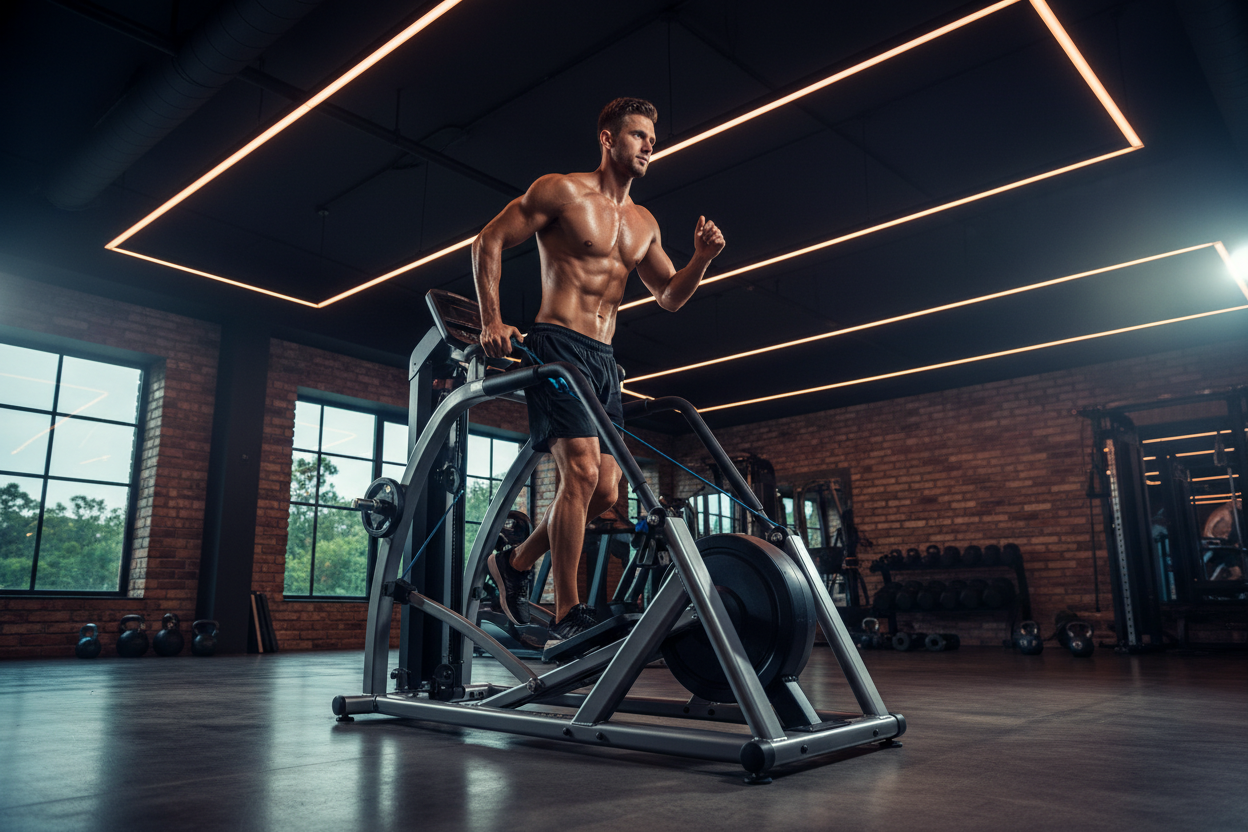
Runner Exercise Machine Explained: What to Know
If you are tired of the monotonous hum of a traditional treadmill or hitting a plateau with your indoor cardio, you aren't alone. Many home gym owners struggle to find cardio equipment that matches the intensity of outdoor sprinting without taking over the entire garage. Enter the runner exercise machine.
Unlike standard flat treadmills, these curved, motorless belts run entirely on your own power. In this guide, we will break down exactly what makes this equipment unique, how to fit it into your home setup, and whether it is the right investment for your training goals.
Key Takeaways
- Self-powered design: A runner exercise machine has no motor; your stride dictates the speed, making it instantly responsive.
- Higher calorie burn: Studies show curved manual treadmills can burn up to 30% more calories than motorized options.
- Form correction: The curved deck naturally encourages a mid-foot to forefoot strike, reducing joint impact.
- Durability: Fewer moving electrical parts mean lower maintenance and a longer lifespan for your home gym.
Why Upgrade to a Runner Machine?
Traditional treadmills are great for steady-state logging, but they do the work of pulling your foot backward. A runner machine forces your posterior chain—specifically your hamstrings and glutes—to physically drive the belt. This fundamental shift changes the entire dynamic of your workout, bridging the gap between cardio and strength endurance.
The Mechanics of the Curve
The signature curved deck isn't just for aesthetics. By stepping further up the front curve, you accelerate. Dropping back toward the middle slows you down. This makes it the ultimate tool for High-Intensity Interval Training (HIIT). You can transition from a dead sprint to a walking recovery instantly, without jabbing at console buttons.
Fitting It Into Your North American Home Gym
Before pulling the trigger on a runner gym machine, you need to measure your space carefully. These units are notoriously heavy and bulky, often arriving fully assembled or in massive wooden crates.
Clearance and Placement Tips
A typical commercial-grade runner is about 70 to 80 inches long and over 30 inches wide. More importantly, the curved deck elevates your running height. If you are setting this up in a basement with standard 7-foot ceilings and you are over 6 feet tall, you might find your head uncomfortably close to the rafters. Always factor in an extra 15 to 20 inches of vertical clearance above the deck's highest point.
From Our Gym: Honest Take
We've had a premium runner exercise machine in our facility's conditioning corner for over a year now. The first thing I noticed was the aggressive grip of the rubber slats—my shoes felt locked in during heavy sprint intervals, unlike the slight slip you sometimes get on a standard nylon belt.
However, there is a learning curve. During my first week of testing, my calves and Achilles were incredibly sore because the machine forces a strict forefoot strike. I also have to mention the weight; at nearly 350 pounds, moving it across our rubber gym flooring took three of us. It is built like a tank with zero electrical maintenance required, but make sure you know exactly where you want it before delivery day.
Frequently Asked Questions
Is a runner exercise machine good for beginners?
Yes, but it requires an adjustment period. Because you power the belt, beginners should start with walking and light jogging to get used to the balance and the curved deck before attempting full sprints.
Can you run long distances on a runner gym machine?
While you certainly can, most users find it more taxing than a motorized treadmill. It is generally favored for interval training, sprints, and distance runs under 5 miles due to the higher energy expenditure.
Does a runner machine require electricity?
No. The vast majority of these machines are completely motorless and self-powered. The only battery required is usually a small one for the LCD display console to track your metrics.