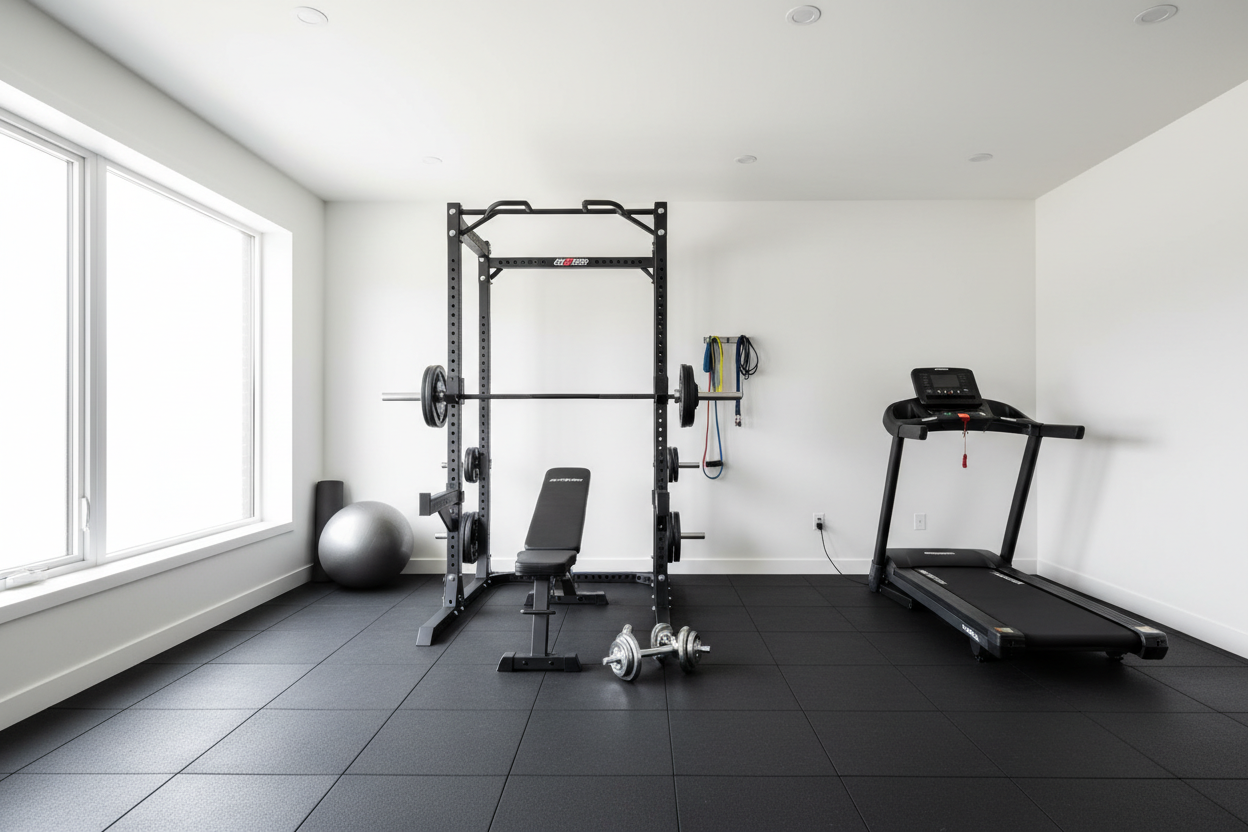
Rubber Mat Essentials: What to Know Before Upgrading
There is nothing quite like the panic of dropping a heavy barbell and hearing the unmistakable crunch of your subfloor cracking. Whether you are building a basement sanctuary or a garage lifting haven, securing a high-quality rubber mat is the single most important insurance policy for your home gym.
But not all flooring is created equal. From cheap rubber matting that tears under a bench press to a heavy duty rubber floor mat that smells like a tire factory for months, making the wrong choice can ruin your training space. In this guide, we will break down exactly what you need to know to find durable floor mats that fit your space, budget, and workout style.
Key Takeaways
- Thickness matters: Aim for at least 3/8-inch to 1/2-inch thick rubber mats for general strength training, and 3/4-inch for heavy Olympic lifting.
- Size and layout: A large rubber mat or interlocking rubber floor mats for home use will minimize seams and prevent tripping hazards.
- Material quality: Vulcanized rubber offers a smooth rubber mat finish that is less porous and easier to clean than standard recycled crumb rubber.
- Odor control: Indoor rubber floor mats specifically treated for home use will off-gas much faster than agricultural stall mats.
Choosing the Right Rubber Flooring for Your Space
Sizing: From Single Stations to Full Rooms
When planning your layout, you have to decide between a standalone extra large rubber mat for a specific machine, or wall-to-wall coverage. If you just need a protective zone under a power rack, a big rubber mat measuring 4x6 feet is often sufficient. However, for dynamic workouts, you will want large rubber floor mats that interlock seamlessly. If you have an awkward space, buying a rubber mat by the foot from a rolled spool is the most customizable option.
Thickness and Durability
Your training style dictates your flooring. If you are doing yoga or light dumbbell work, an indoor rubber mat at 1/4-inch thickness or a simple floor rubber carpet might suffice. But if you are dropping kettlebells or deadlifting, you need a heavy duty rubber floor mat. Thick rubber flooring (3/4-inch) absorbs shock, protects your concrete or wood base, and significantly dampens acoustic vibrations. Investing in durable rubber mats upfront prevents costly subfloor repairs later.
Budgeting and Where to Buy
Balancing Cost and Quality
We often get asked, "where can i buy rubber matting without breaking the bank?" It is tempting to search for cheap rubber floor mats nearby, but beware of low-density foam masquerading as rubber. True rubber mesh matting or solid black rubber mats for flooring will have substantial weight to them. If you are outfitting a massive garage gym, looking into wholesale rubber mats or a bulk rubber mat supplier is the most cost-effective route.
From Our Gym: Honest Take
Over the last five years, I have tested everything from decorative rubber floor mats to giant rubber mat rolls in our facility. One crucial lesson I learned: do not cheap out on the drop zone. I once used a 1/2-inch thick flat rubber mat over a concrete garage floor. During a heavy deadlift session, I dropped 405 lbs, and while the mat looked fine, the concrete underneath developed a hairline fracture.
We immediately upgraded to 3/4-inch heavy rubber floor mats. The grip is phenomenal—my lifting shoes held solid, and my feet stayed planted even during sweaty metcons. The only minor caveat? Moving these large thick rubber mats is a two-person job. They weigh roughly 100 lbs each, so once they are down, you won't want to move them. Also, keep in mind that fresh vulcanized rubber does have a distinct smell for the first week, so keep your garage doors open to let it air out.
Frequently Asked Questions
Can I put a rubber mat over carpet?
Yes, but with caveats. Using a rubber mat for carpet works best if the carpet is low-pile. For high-pile carpets, place a rigid piece of plywood under the rubber floor rug to create a stable, flat surface and prevent your equipment from sinking or wobbling.
How do I clean indoor rubber mats?
Maintenance is simple. Sweep or vacuum your indoor rubber floor mats regularly to remove chalk and dust. For a deeper clean, use a damp mop with a pH-neutral cleaner. Avoid harsh chemicals like bleach, which can degrade the matte rubber finish over time.
Where to buy rubber mat options locally?
If you are looking for a rubber floor mat nearby, farm supply stores often sell heavy-duty agricultural mats, while specialty fitness retailers offer refined, low-odor rubber area mat options. For the best variety of extra large rubber floor mats, online fitness equipment suppliers usually offer the best freight shipping deals.