Rubber Floor Rolls for Gym Explained: Read Before You Buy
There is nothing quite like the panic of dropping a loaded barbell and hearing the sickening crack of bare concrete. Whether you are battling a noisy garage setup, struggling with joint pain during plyometrics, or simply tired of your equipment sliding around, laying down the right foundation is non-negotiable.
Investing in high-quality rubber floor rolls for gym spaces is the single most effective way to protect your home's foundation, extend the life of your plates, and dampen acoustic shock. But with endless thickness options and material densities on the market, choosing the right roll can feel overwhelming. This guide will walk you through exactly what you need to know to build a bulletproof training space.
Key Takeaways
- Thickness matters: 8mm is standard for general fitness, while 3/8-inch or 1/2-inch is required for heavy deadlifts and Olympic lifting.
- Seamless protection: Unlike interlocking tiles, rolls offer a nearly seamless surface that prevents water and sweat from reaching your subfloor.
- Density dictates durability: Look for high-density, vulcanized rubber to prevent gouging from heavy equipment like power racks.
- Installation is DIY-friendly: Double-sided carpet tape is usually sufficient for home setups, avoiding the permanence of liquid adhesives.
Choosing the Right Thickness and Density
Not all weight room flooring rolls are created equal. The most common mistake home gym owners make is buying a roll that is too thin for their training style, leading to bottomed-out drops and damaged subfloors.
The 8mm vs. 3/8-Inch Debate
For most home gym owners doing dumbbell work, kettlebell swings, and machine exercises, an 8mm roll provides excellent shock absorption. However, if you are dropping heavy barbells, you need to step up to 3/8-inch (approx. 9.5mm) or even 1/2-inch thickness. This thicker barrier absorbs the kinetic energy of dropped weights, protecting both your bumper plates and the concrete below.
Vulcanized vs. Non-Vulcanized Rubber
Pay attention to the manufacturing process. Vulcanized rubber is compressed under extreme heat, creating a non-porous, ultra-dense surface that resists absorbing sweat and bacteria. It also emits significantly less rubber smell compared to standard bonded crumb rubber.
Space Planning and Installation
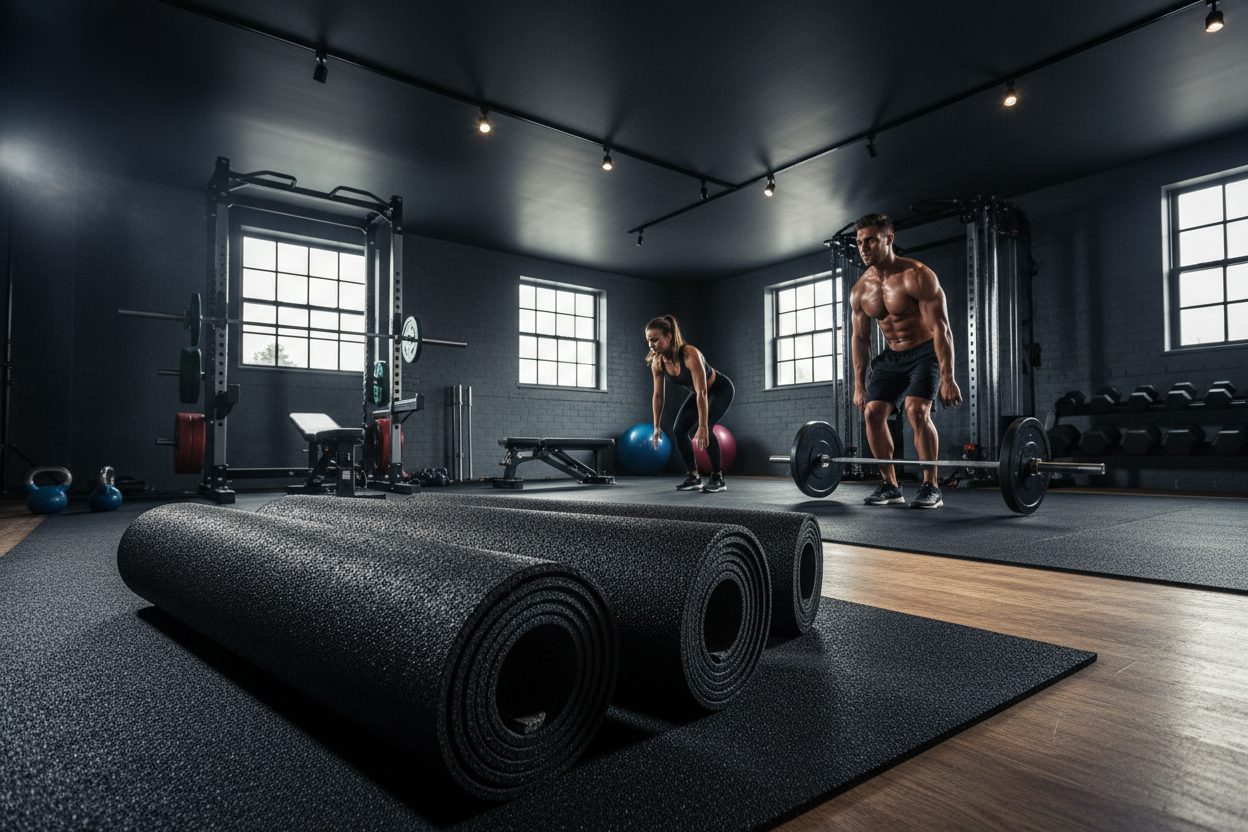
Rolling out rubber flooring rolls for home gym setups transforms a cold garage or basement into a legitimate training facility, but it requires some upfront planning.
Measuring Your Space
Most commercial rolls come in standard 4-foot widths. To calculate your needs, measure your room's length and width, and plan your seams to run parallel to your primary walking path. Always order an extra 10% to account for cutting mistakes and wall irregularities.
Securing the Floor
While commercial gyms glue their floors down, this is overkill for residential spaces. Using heavy-duty double-sided tape around the perimeter and along the seams keeps gym floor roll mats firmly in place without ruining your underlying concrete or hardwood if you ever decide to move.
From Our Gym: Honest Take
When we upgraded our primary testing garage, we laid down three 4x15-foot rolls of 3/8-inch rubber. The difference in acoustics was immediate—the echoing clank of deadlifts turned into a dull, manageable thud. The subtle surface texture provided excellent traction for heavy lunges, and our 300-pound power rack hasn't shifted a millimeter in six months.
However, I will be completely honest: moving these rolls solo is a nightmare. A 4x15 roll of 3/8-inch rubber weighs well over 100 pounds and is incredibly awkward to maneuver. You absolutely need two people to carry and position them. Additionally, even with premium rolls, there was a noticeable off-gassing smell for the first week. Keep your garage doors open and run a fan to speed up the process.
Frequently Asked Questions
Are rubber floor rolls better than interlocking tiles?
For dedicated gym spaces, yes. Rolls provide a seamless look, are less likely to separate under heavy lateral movements (like sled pushes), and offer superior water resistance since there are fewer seams for liquid to seep through.
Do I need to glue down gym flooring rolls?
No, full glue-down installation is rarely necessary for a home gym. The sheer weight of the rubber, combined with double-sided tape at the seams and edges, is more than enough to prevent shifting.
How do I cut rubber flooring rolls to fit my room?
All you need is a sharp utility knife, a straight edge (like a metal framing square), and patience. Place a scrap piece of wood underneath the cut line, score the rubber multiple times rather than trying to cut through it in one pass, and it will eventually snap clean.