Rubber Childrens Floor Mats: What to Know Before You Buy
Building a home gym is tough enough, but when that space doubles as a family basement or garage, safety becomes your top priority. You don't want your kids playing on cold concrete or taking a tumble near heavy iron. Investing in high-quality rubber childrens floor mats bridges the gap between a hardcore training zone and a safe family environment. This guide will help you choose the right flooring to protect both your equipment and your little ones.
Key Takeaways
- Rubber provides superior impact absorption compared to cheap foam puzzle pieces.
- Look for a minimum thickness of 3/8-inch to properly cushion falls and dropped toys.
- Vulcanized rubber is virtually odorless, making it ideal for enclosed basements.
- Properly zoning your gym with distinct kiddie mats keeps kids safely away from heavy lifting areas.
Why Ditch Foam for Real Rubber?
The Problem with Standard Play Mats
Most parents default to cheap EVA foam for a children's mat. While soft, foam tears easily under gym equipment and poses a choking hazard if kids bite off the interlocking edges. Upgrading to commercial-grade childrens rubber floor mats ensures the flooring survives both heavy kettlebell swings and aggressive toddler play.
Thickness and Density Matters
For a shared fitness and play area, density is your best friend. A 3/8-inch (8mm to 10mm) thick rubber mat provides enough shock absorption to protect your joints during a workout while offering a forgiving landing pad for kids. It will not compress permanently under the weight of a power rack.
Designing a Shared Gym and Play Space
Creating the Safe Zone
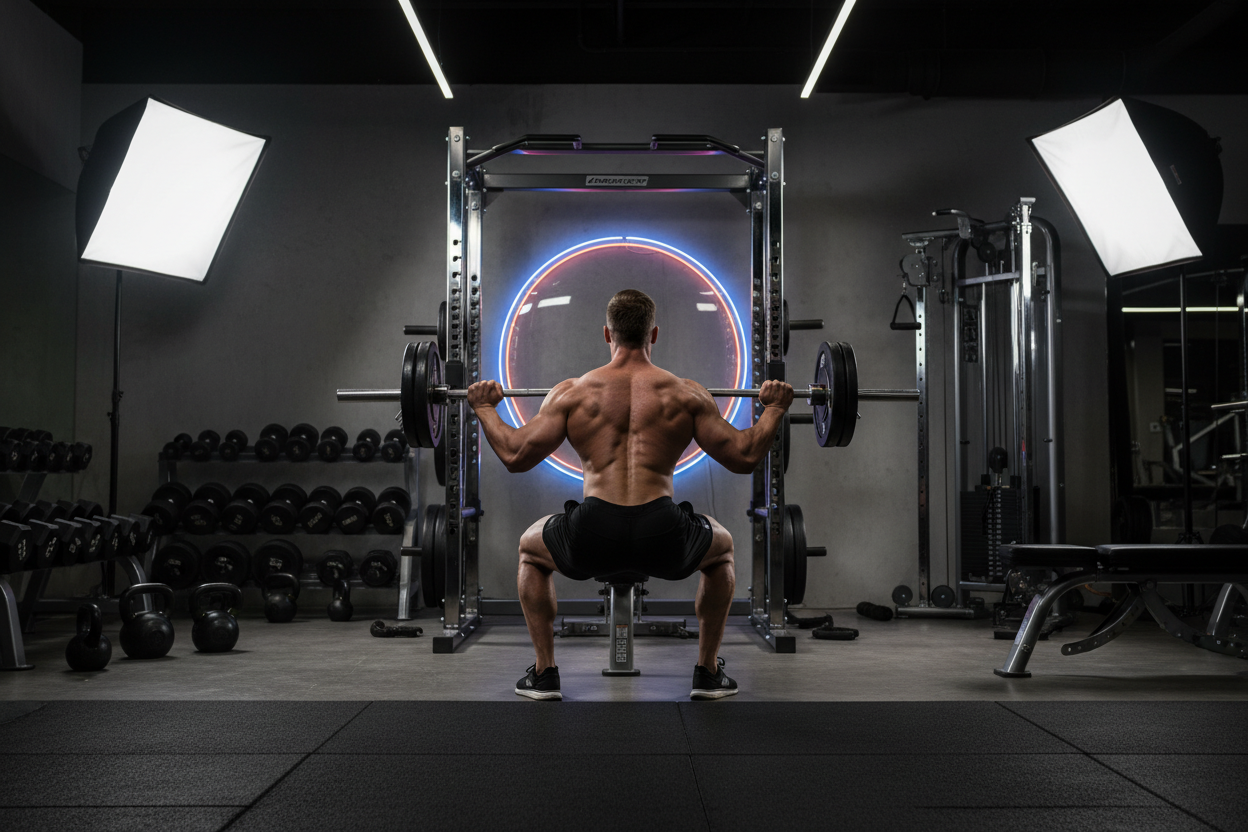
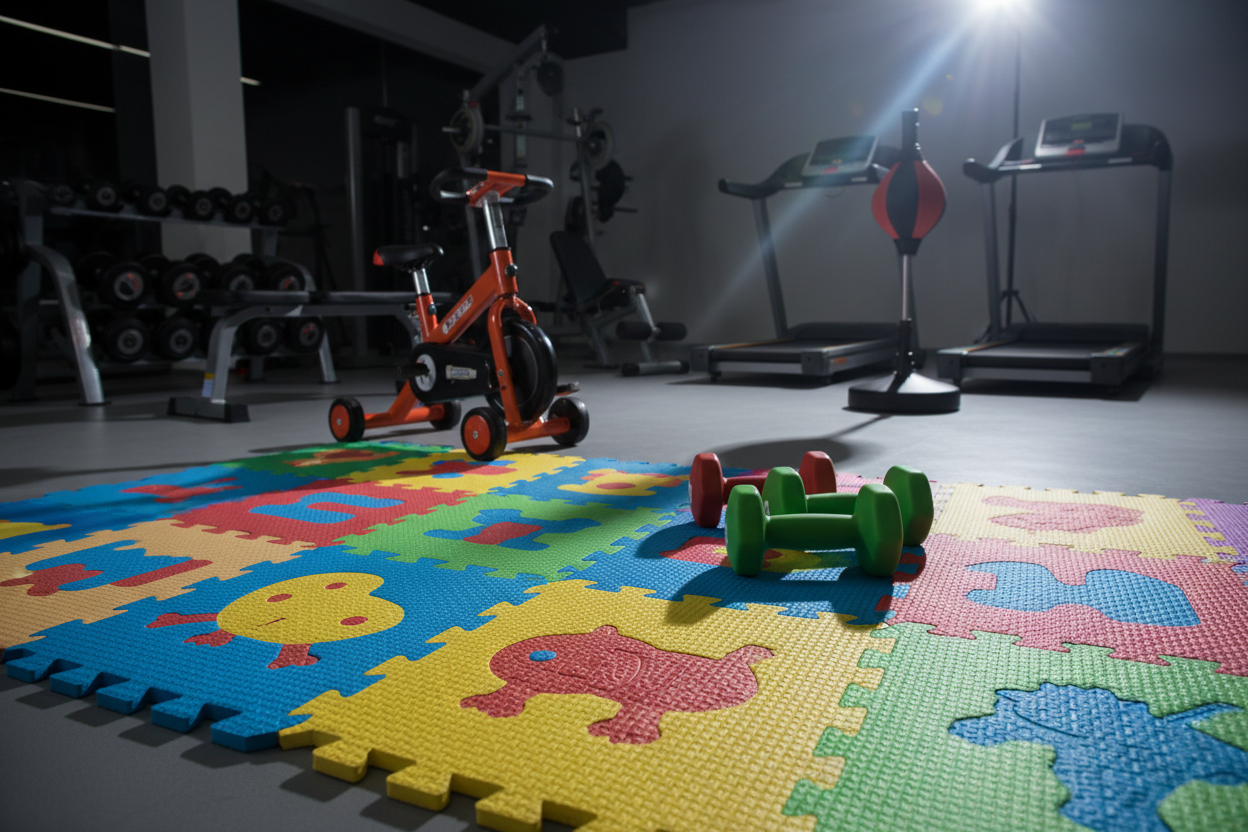
When laying out your basement or garage, visual boundaries are crucial. Using brightly colored kiddie mats in one corner and solid black stall mats in the lifting zone helps children understand exactly where they can safely play. This visual separation is a simple but effective safety measure.
Durability and Easy Maintenance
Unlike plush rugs or porous foam, rubber is incredibly easy to maintain. Whether you are wiping up spilled pre-workout or juice boxes, a simple mop with a neutral pH cleaner does the trick. High-quality children's floor mats resist moisture, meaning you won't have to worry about mold developing in damp basement environments or accidental liquid spills ruining the subfloor.
From Our Gym: Honest Take
When I first built my garage gym, my two-year-old constantly wanted to work out with me. I initially bought a cheap foam kiddie mat, but my bench press dug permanent divots into it within a week. I swapped them out for 3/8-inch flecked rubber mats. The grip is fantastic for my heavy barbell lunges, and it is soft enough that my kid can roll around with their toy dumbbells safely.
One caveat: fresh rubber does have a distinct smell. I had to leave the garage door open with a high-velocity fan running for about four days to let the mats fully off-gas before letting my toddler play on them. It is a minor inconvenience for years of durable, safe use.
Frequently Asked Questions
Are rubber floor mats safe for babies and toddlers?
Yes, provided you choose high-quality, non-toxic, and vulcanized rubber. These mats offer excellent slip resistance and impact protection, making them much safer than hard tile or concrete floors.
How do I clean a rubber kiddie mat?
Sweep away loose dirt, then mop with warm water and a few drops of mild dish soap. Avoid harsh chemicals like bleach, which can break down the rubber surface over time.
Can I put heavy gym equipment on children's floor mats?
Absolutely. Unlike EVA foam, high-density rubber will not permanently compress, warp, or tear under the weight of a squat rack, treadmill, or heavy dumbbells, making it perfect for multi-use rooms.