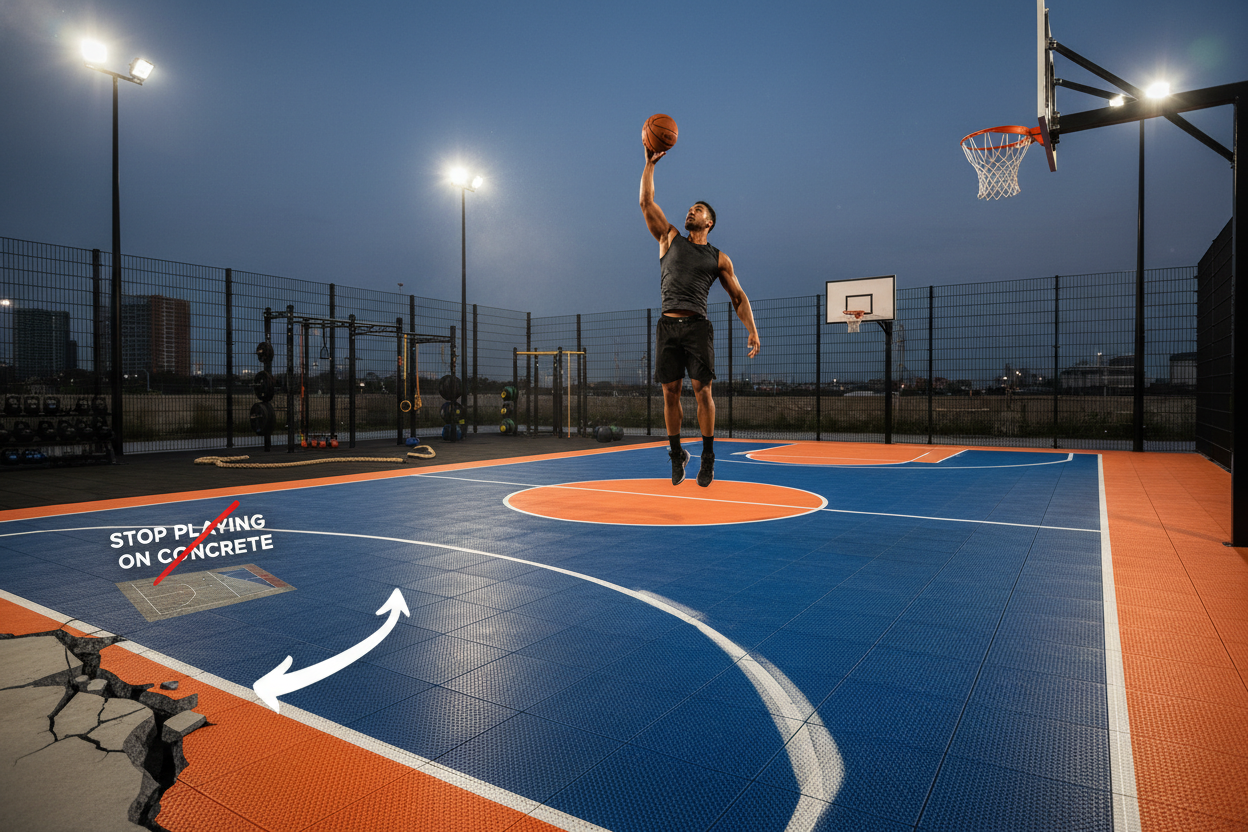
Rubber Basketball Court Guide: Stop Playing on Concrete
If you grew up shooting hoops in a North American driveway, you know the toll unforgiving concrete takes on your knees, shins, and lower back. As we get older—or as we look to build a safer practice space for our kids—upgrading that playing surface becomes a priority.
Investing in a rubber basketball court is one of the best ways to bring professional-grade shock absorption and grip right to your home. But with so many tile, mat, and poured options on the market, choosing the right foundation can be overwhelming. This guide will break down everything you need to know about materials, installation, and long-term durability so you can build the ultimate backyard arena.
Key Takeaways
- Shock Absorption: A rubber floor basketball court significantly reduces joint impact compared to asphalt or concrete, prolonging your playing years.
- Weather Resistance: Quality outdoor rubber flooring is UV-treated and designed to drain quickly after heavy rain or snowmelt.
- Installation Options: Choose between DIY-friendly interlocking modular tiles or heavy-duty rolled rubber mats based on your sub-base.
- Maintenance: Most rubber basketball floors require only occasional power washing and debris removal to maintain their grip.
Why Upgrade to a Rubber Court?
Joint Protection and Bounce
The primary reason athletes transition to a rubber floor basketball court is injury prevention. Concrete has zero give, sending shockwaves up your legs with every jump and hard cut. Specialized rubber flooring for basketball court applications provides lateral forgiveness and vertical shock absorption. This means longer practice sessions and less next-day soreness, all while maintaining a true, predictable ball bounce.
All-Weather Durability
North American weather is notoriously harsh. Fortunately, modern basketball court outdoor rubber materials are engineered to withstand freezing winters and blistering summers. Unlike painted asphalt that cracks and fades, a high-quality polymeric rubber basketball court expands and contracts with temperature changes without compromising structural integrity.
Choosing the Right Surface Material
Interlocking Tiles vs. Court Mats
When shopping for a home setup, you generally face two choices: modular tiles or a large basketball court mat. Interlocking suspended tiles are incredibly popular for outdoor setups because they allow water to drain underneath. On the other hand, a heavy-duty rubber mat basketball court offers a seamless feel that mimics indoor hardwood, though it requires a perfectly flat sub-base to prevent dead spots.
Indoor vs. Outdoor Specs
If you are converting a garage or basement, standard rubber basketball gym flooring provides excellent traction and noise reduction. However, if you are building outside, you must specifically look for outdoor rubber flooring for basketball court use. These outdoor-rated products feature UV stabilizers to prevent color fading and specialized textures that maintain grip even when slightly damp.
Planning Your Home Court Setup
Measuring Your Space
Before ordering your rubber court flooring, measure your exact playable area. A standard half-court requires about 30 by 50 feet, but many driveway setups work perfectly well with a 20 by 20-foot shooting pad. Always order 5% to 10% extra material to account for cutting and edge trimming.
Sub-Base Requirements
You cannot simply throw a rubber mat for basketball court use over grass or gravel. For the best performance, you need a solid, level sub-base—typically a concrete pad or highly compacted asphalt. Any dips or cracks in the sub-base will eventually mirror through the rubber basketball floor, affecting ball bounce and player safety.
From Our Gym: Honest Take
Last summer, we installed a 25x25 foot outdoor rubber flooring basketball court over an aging, cracked concrete pad behind our facility. The difference was night and day. The interlocking rubber tiles completely masked the minor imperfections of the old concrete, and the grip was phenomenal—even after a light drizzle, my sneakers held solid during aggressive lateral defensive drills.
However, I will be completely honest about one caveat: the acoustic profile. While the rubber court absorbs shock beautifully, hollow-backed modular tiles create a slightly different, more hollow sound when dribbling compared to solid concrete. It is not a dealbreaker by any means, but it is something to be aware of if you have very close neighbors. Overall, my knees have never been happier, and I would never go back to bare asphalt.
Frequently Asked Questions
Is a rubber basketball court worth the money?
Yes, especially if you play frequently. The joint protection and reduced wear-and-tear on your body make rubber basketball floors an excellent long-term investment for serious players and families alike.
Can I leave a basketball floor mat outside all year?
It depends on the specific product. A dedicated outdoor basketball floor mat made from vulcanized or UV-treated rubber can survive year-round exposure. Always check the manufacturer's weather rating before leaving it out in snow or extreme heat.
Does rubber flooring affect the bounce of the basketball?
High-quality rubber court surfaces are designed specifically to provide a 95% or higher ball rebound rate compared to concrete. As long as your sub-base is flat and hard, you will not experience dead spots.