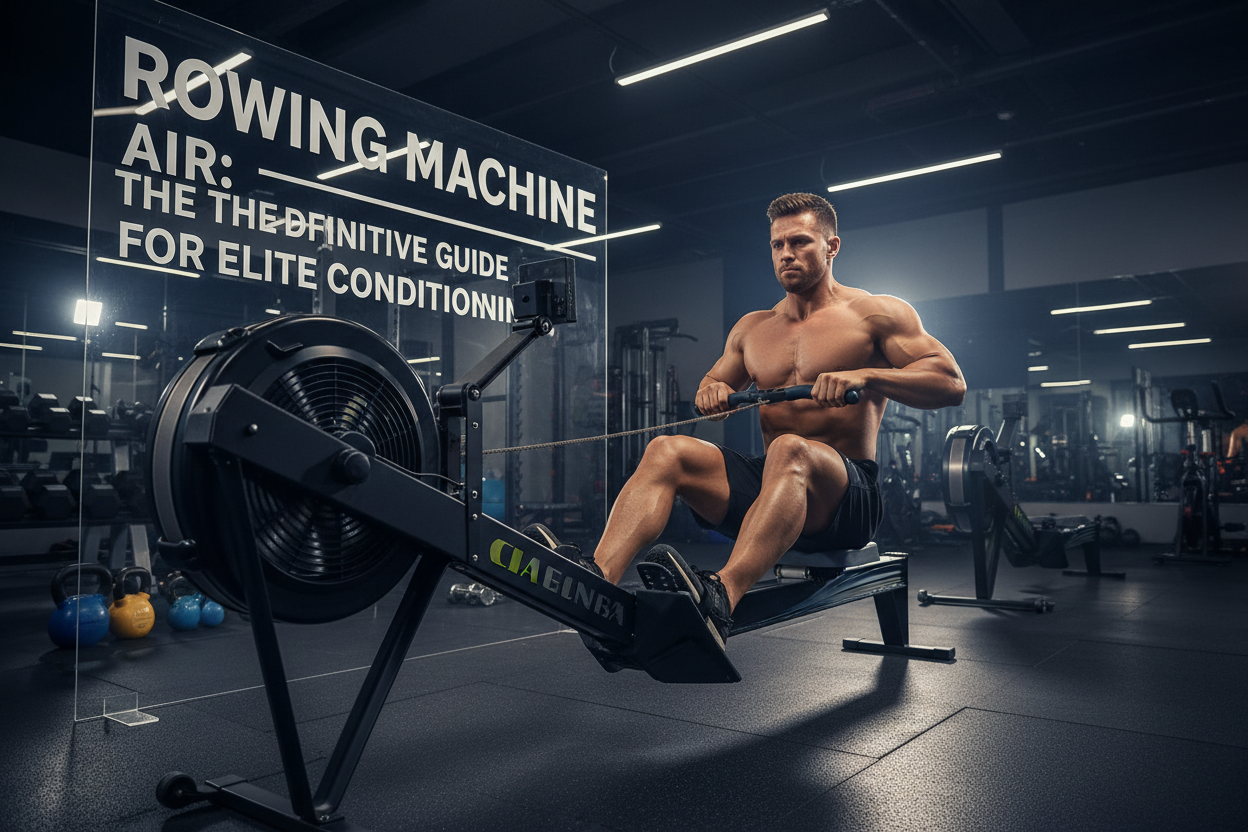
Rowing Machine Air: The Definitive Guide for Elite Conditioning
You have probably heard the distinctive whoosh sound the moment you walked into a CrossFit box or a serious commercial gym. That sound represents the gold standard of metabolic conditioning. While magnetic and water rowers have their place, the rowing machine air mechanism remains the top choice for athletes who demand honest, brutal feedback from their workouts.
Many beginners misunderstand this equipment. They confuse the damper setting with weight plates or worry about the noise levels without understanding the payoff. If you are looking to build an engine that doesn't quit, you need to understand the physics of air resistance.
Quick Summary: Key Takeaways
- Infinite Resistance: Unlike magnetic rowers, air resistance rowing machines provide resistance directly proportional to your effort. The harder you pull, the harder it gets.
- The Damper Myth: The lever on the side isn't a difficulty setting; it adjusts airflow (drag factor) to simulate a heavier or lighter boat.
- Feedback Loop: Air rowers offer the most accurate data consistency, which is why they are the standard for world records.
- Noise Factor: They are louder than magnetic options, producing a rhythmic wind noise that increases with intensity.
How Air Resistance Actually Works
To get the most out of your training, you have to respect the mechanics. An air resistance rower operates on a flywheel system. As you pull the handle, you spin a fan blade against the air. The physics here are simple but unforgiving: air resistance increases exponentially with speed.
If you double your speed, you don't just double the resistance; you quadruple it. This creates a self-regulating workout. You can technically row with 'light' resistance by moving slowly, or you can generate enough force to exhaust an Olympic sprinter in 40 seconds. The machine doesn't limit you; your lungs do.
Understanding Drag Factor vs. Damper Setting
This is where most home gym owners get it wrong. You will see the lever on the side numbered 1 through 10. Most novices crank it to 10, thinking they are getting a better workout. They aren't.
Setting the damper to 10 allows the maximum amount of air into the flywheel housing. This slows the wheel down faster between strokes. It feels like rowing a heavy, wooden rowboat. Setting it to 1 restricts air, making it feel like a sleek racing shell. For cardiovascular development, a setting between 3 and 5 is usually optimal because it allows for a higher stroke rate and better technique maintenance.
Air vs. Magnetic: The Honest Truth
When shopping for equipment, you will inevitably compare an air resistance rower against magnetic models. Here is the breakdown without the marketing fluff.
Magnetic rowers are silent. They use magnets to create drag on the flywheel. The resistance is constant, regardless of how hard you pull. If you set it to level 5, it stays at level 5 even if you explode through the drive.
Air rowers are dynamic. They mimic water. If you are doing interval training or trying to improve your 2k time, air is superior because it rewards explosive power. The downside? The noise. If you exercise in a small apartment at 5 AM next to a sleeping baby, an air rower might cause domestic issues. If you have a garage or a basement, the performance benefits outweigh the acoustics.
Common Technique Mistakes on Air Rowers
Because air machines respond instantly to force, they also highlight poor form instantly.
Shooting the Slide
This happens when your legs push back, but the handle stays still, and your back takes the load. On an air machine, you will feel a distinct lack of connection—a "slip" in the resistance. You need to engage the lats and core the moment you drive with your legs to catch the air immediately.
The Recovery Rush
The fan keeps spinning during your recovery (the slide back to the start). If you rush back too fast, you are wasting energy and messing up your rhythm. Let the fan spin. Use the recovery to breathe. A ratio of 1:2 (one second drive, two seconds recovery) is standard practice.
My Training Log: Real Talk
I want to share something the spec sheets won't tell you about living with an air rower. I've logged over two million meters on these machines, and there is a specific sensory experience you need to prepare for.
It's the "dry throat."
Because the flywheel blows air out, depending on the model's casing design, you often get a dry breeze hit you in the face or chest on every return stroke. In a cold garage gym during winter, this can actually be annoying. I learned the hard way that I needed to position the rower so the exhaust vent wasn't bouncing air off a nearby wall and right back into my face.
Also, the maintenance is real. I once noticed my split times getting worse despite my fitness improving. I thought I was overtraining. Turns out, I hadn't vacuumed the flywheel cage in six months. Dust builds up on the mesh, restricts airflow, and artificially lowers the drag factor. A quick vacuum and my "heavy" boat feel returned instantly. If you buy one, check that cage monthly.
Conclusion
Choosing a rowing machine air model is a commitment to performance over convenience. It won't be quiet, and it won't be easy. But it is the most honest piece of cardio equipment you can own. It gives you exactly what you put into it, nothing more and nothing less. If you are ready to build real work capacity, the air rower is your best tool.
Frequently Asked Questions
Are air rowing machines good for beginners?
Yes, actually. Because the resistance is created by the user's effort, a beginner can row gently and feel very little resistance. As your fitness improves, the machine scales with you automatically without needing upgrades.
How loud is an air resistance rower?
Expect a noise level similar to a loud box fan or a washing machine on the spin cycle. It is rhythmic and increases with intensity. You will likely need to turn the TV volume up significantly to hear it over a vigorous workout.
Can you lose belly fat with an air rower?
Rowing is a full-body movement that uses roughly 86% of your muscles. This high muscle engagement burns a significant amount of calories compared to stationary cycling. Combined with a caloric deficit, it is a highly effective tool for fat loss.