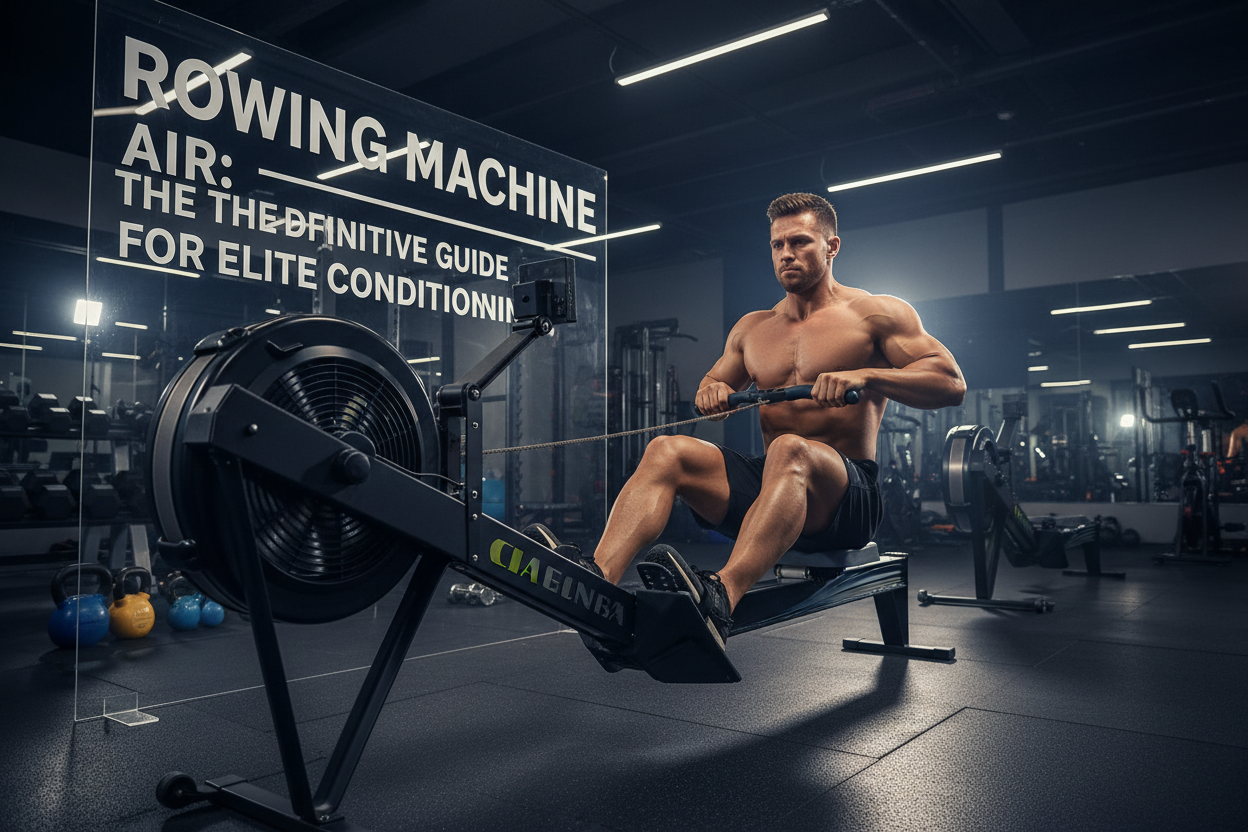
Is the Aerobic Rowing Machine the Best Cardio? The Honest Truth
You walk into the gym, bypass the rower, and head straight for the treadmill or elliptical. It’s a standard routine for millions, but it’s also a missed opportunity. While most people associate rowing with broad backs and muscular arms, the aerobic rowing machine is arguably the most efficient cardiovascular tool on the gym floor.
There is a misconception that rowing is purely a strength movement. While resistance is involved, the sustained rhythmic nature of the stroke makes it a powerhouse for heart health. If you are looking to build an engine without destroying your joints, you need to understand why the ergometer (rower) reigns supreme.
Key Takeaways: Is Rowing Good Cardio?
- Full-Body Engagement: Unlike cycling or running, a rowing machine engages approximately 86% of your body's muscle mass, requiring more oxygen and elevating your heart rate faster.
- True Low Impact: It provides a high-intensity aerobic rowing workout without the ground reaction force that damages knees and hips over time.
- Hybrid Training: Rowing sits in a unique "power-endurance" sweet spot, meaning you improve cardiovascular capacity and muscular endurance simultaneously.
- Versatility: It is effective for both steady-state (LISS) aerobic exercise and high-intensity anaerobic intervals.
Is Rowing Aerobic or Anaerobic?
This is one of the most common questions athletes ask: is rowing aerobic or anaerobic? The answer depends entirely on how you drive with your legs.
Rowing is unique because it is effort-based. If you row at a moderate pace (18–22 strokes per minute) for 20 minutes, you are firmly in the aerobic zone. You are utilizing oxygen to fuel the muscles, keeping your heart rate at 60–70% of its max. This is the "fat-burning" zone.
However, if you crank the intensity up for a 500-meter sprint, the rowing machine becomes an anaerobic beast. Your body switches fuel sources, lactic acid builds up, and you build explosive power. This versatility is why the rowing machine cardio potential is unmatched; it adapts to your specific training goal.
Why the Rower Beats the Treadmill
When asking is rowing the best cardio, we have to compare it to the gold standard: running. Running is excellent, but it is high-impact. Every step sends shockwaves through your ankles, knees, and hips.
The Low Impact Advantage
Because your feet are fixed and you are seated, rowing is a closed-chain kinetic exercise. You can push your heart rate to its absolute limit—sprinting pace—without your joints feeling the pounding. This makes the rower cardio machine ideal for runners recovering from injury or older athletes looking to preserve joint health.
The Caloric Burn
Is rowing good for cardio in terms of calorie burn? Absolutely. Because you are pushing with your legs and pulling with your arms simultaneously, the metabolic demand is massive. A vigorous rowing cardio workout can burn between 600 to 800 calories per hour, often outpacing a stationary bike or elliptical maintained at a similar perceived exertion.
Structuring Your Rowing Cardio Workout
Jumping on and flailing away at the handle won't get you results. You need a plan. Here are two ways to utilize rowing workouts for cardio.
1. The Steady State (LISS)
To build a massive aerobic base, aim for a long, steady session. Keep your stroke rate low (18–20 spm). Focus on power per stroke rather than speed. This teaches your body to utilize oxygen efficiently. Aim for 20 to 40 minutes of continuous movement.
2. The Aerobic Interval
If you are short on time, try this rowing machine aerobic workout:
- Warm up: 5 minutes light rowing.
- Work: 3 minutes at moderate intensity (can speak in short sentences).
- Rest: 1 minute of very light paddling.
- Repeat: 4 to 6 times.
My Training Log: Real Talk
Let’s step away from the science and talk about what actually happens when you commit to the rower. I remember my first attempt at a serious 10k session on a Concept2.
On paper, it’s just 40-ish minutes of work. But around the 6,000-meter mark, the reality of the machine set in. It wasn't just my lungs burning—it was the specific, gritty fatigue in my forearms. I wasn't wearing gloves (never wear gloves on a rower), and the sweat made the handle slick. I had to focus intensely on not death-gripping the bar, hooking it with just my fingers to save energy.
Then there’s the "numb bum." No one warns you about the seat. By minute 30, I was shifting my weight cheek-to-cheek just to keep circulation flowing. It’s a mental battle as much as a physical one. Unlike a treadmill where the belt forces you to keep moving, the rower stops the second you stop driving. That silence when the flywheel slows down is the loudest guilt trip in the gym.
Conclusion
So, is a rowing machine a good cardio workout? It is arguably the most complete option available. It demands more from your muscles than running and protects your joints better than plyometrics. Whether you are doing long, steady distances or short sprints, the aerobic rowing machine offers a ceiling for fitness that is as high as you are willing to work.
Frequently Asked Questions
Is rowing machine cardio or strength training?
It is primarily a cardiovascular activity, but it is unique because it requires significant muscular endurance. It falls under the category of "power endurance." You will build lean muscle tone, particularly in the legs, back, and core, but it will not build bulk like heavy weightlifting will.
Can I do a rowing cardio workout every day?
Yes, because it is low impact, you can row daily. However, because it engages the lower back, it is smart to alternate between hard intensity days and light recovery days to prevent lumbar fatigue. Listen to your body.
Is rowing good for belly fat loss?
Yes. Rowing burns a high number of calories due to full-body engagement. Combined with a calorie deficit, the high metabolic cost of a rowing workout makes it highly effective for fat loss.