Rep Fitness Flooring: Is It Actually Worth the Investment?
Building a home gym is an investment, and the last thing you want is a cracked garage foundation from a dropped barbell. Whether you are dealing with noisy deadlifts, a slippery concrete base, or just want a professional aesthetic, choosing the right foundation is critical. That is where rep fitness flooring comes into play.
In this guide, we will break down the specs, durability, and overall value of these mats to help you decide if this upgrade is the right fit for your training space.
Key Takeaways
- Premium gym flooring protects both your expensive equipment and your home's foundation from impact damage.
- A dedicated rep fitness mat offers superior surface traction and significantly less odor compared to agricultural alternatives.
- Thickness matters: 3/4-inch flooring is the gold standard for heavy free-weight zones and power rack setups.
- Proper space planning and precise cutting are essential for a seamless, wall-to-wall garage or basement installation.
Analyzing the Rep Fitness Gym Flooring Lineup
When outfitting a workout space, lifters generally choose between standalone heavy-duty pieces and interlocking systems. Understanding the difference is key to maximizing your budget and floor plan.
The Classic Rep Fitness Mat
For heavy lifting zones, the standard 4x6 foot, 3/4-inch thick rubber mat is the undisputed champion. These standalone rep fitness mats are incredibly dense and heavy, meaning they will not shift during dynamic movements like kettlebell swings or Olympic lifts. The thickness provides ample shock absorption, which is non-negotiable if you are dropping bumper plates on a regular basis.
Premium Mats vs. Rep Fitness Stall Mats
Many budget-conscious lifters compare premium gym flooring to agricultural horse stall mats. While tractor supply options are cheaper, they often come with a notoriously strong sulfur smell and uneven thicknesses. While some users refer to heavy-duty gym options as rep fitness stall mats due to their similar dimensions, the fitness-specific versions are manufactured with a smoother, non-porous top layer. This makes them significantly easier to sweep, mop, and maintain, without the overpowering rubber stench.
Space Planning and Installation
Before you order, you need a realistic assessment of your space. North American garage gyms and basement setups often have quirks like sloped floors, support pillars, or tight baseboards.
Sizing for Garage Gyms
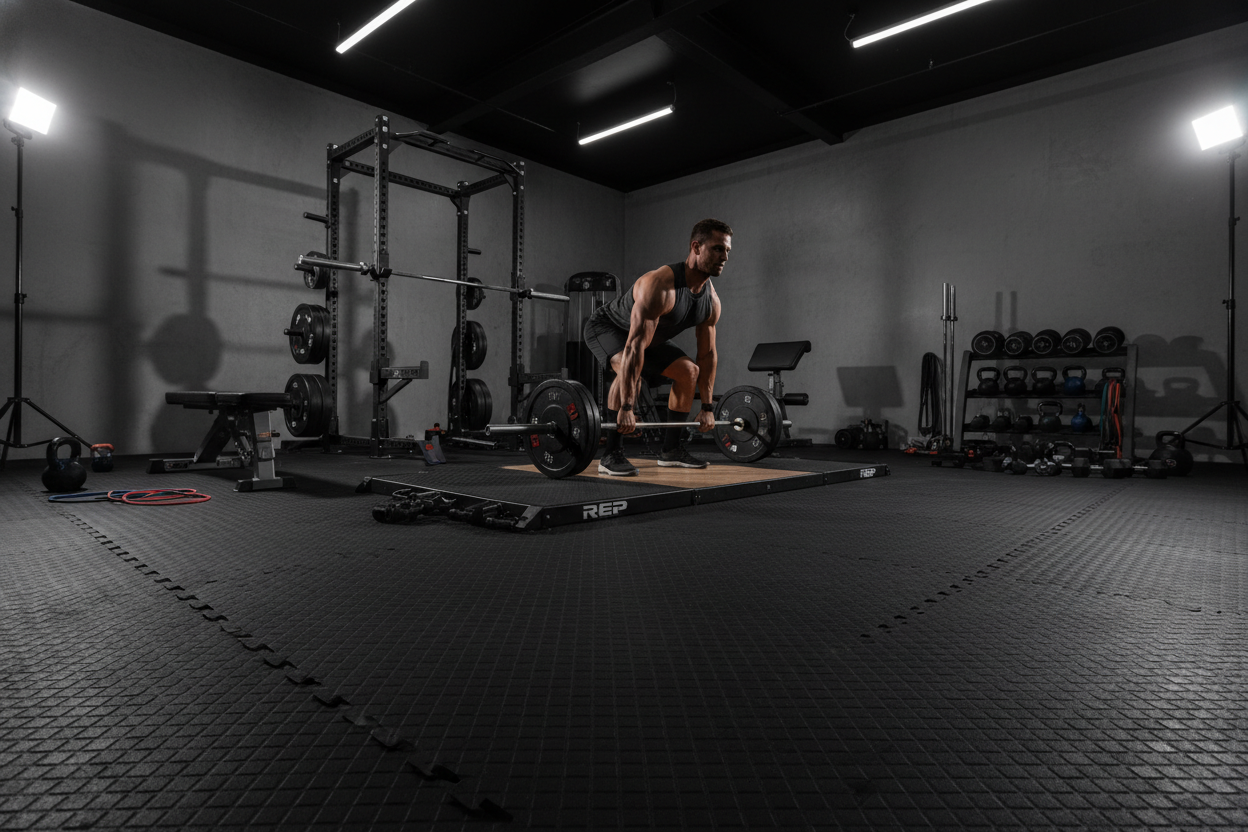
If you are building a platform or outfitting a lifting zone, standardizing your dimensions is crucial. Most commercial-grade power racks are around 47 inches wide. Placing two rep fitness floor mats side-by-side gives you an 8x6 foot area, which perfectly accommodates a rack, a bench, and provides enough clearance for barbell side-loading. If you plan to go wall-to-wall with your rep fitness gym flooring, factor in an extra 5-10% of material for cutting errors and edge fitting.
From Our Gym: Honest Take
We outfitted our 400-square-foot testing facility with a mix of interlocking tiles and standard heavy-duty mats over a year ago. The grip is exceptional; my feet felt completely planted during heavy squat walkouts, even in a humid, un-air-conditioned garage in the middle of July.
The density is spot on—firm enough for heavy lifting without squishy energy loss, but shock-absorbing enough to protect our urethane plates. However, I want to be completely transparent about the installation. Moving 100-pound mats is a two-person job. The only minor con we experienced was during the cutting process. You will absolutely need a heavy-duty utility knife with fresh blades, a T-square, and a lot of patience to get them perfectly flush around drywall corners.
Frequently Asked Questions
Do rep fitness mats smell bad?
Unlike cheap agricultural mats, high-quality gym flooring goes through a different manufacturing and vulcanization process. You might notice a faint rubber scent for the first few days, but it dissipates rapidly, especially if you leave your garage door open or run a fan.
How thick should my gym flooring be?
For general fitness, cardio, and machines, 3/8-inch to 1/2-inch is sufficient. However, if you are doing heavy barbell training, deadlifts, or Olympic weightlifting, you should exclusively look at 3/4-inch thick options to protect your concrete subfloor.
Can I put a power rack directly on a rep fitness mat?
Yes. The high-density rubber used in these mats is designed to withstand thousands of pounds of static weight. Your power rack will not compress the mat to the floor, and the rubber actually helps prevent the rack from sliding during heavy pull-ups or re-racking.