Reclaim Your Garage: Why Wall-Mounted Barbell Storage Changed My Workouts
Nothing kills the motivation to train quite like stepping into a chaotic home gym. You walk out to the garage ready to squat, but before you can even load a plate, you have to navigate a minefield of dumbbells, bands, and barbells rolling around on the floor. For years, I operated this way. I leaned my bars into the corner of the room, assuming that was good enough. It wasn't until I almost took out my car’s side mirror with a sliding deadlift bar that I realized I needed a serious storage solution. Floor space in a home gym is the most valuable currency you have, and leaving your most expensive equipment on the concrete is a recipe for disaster.
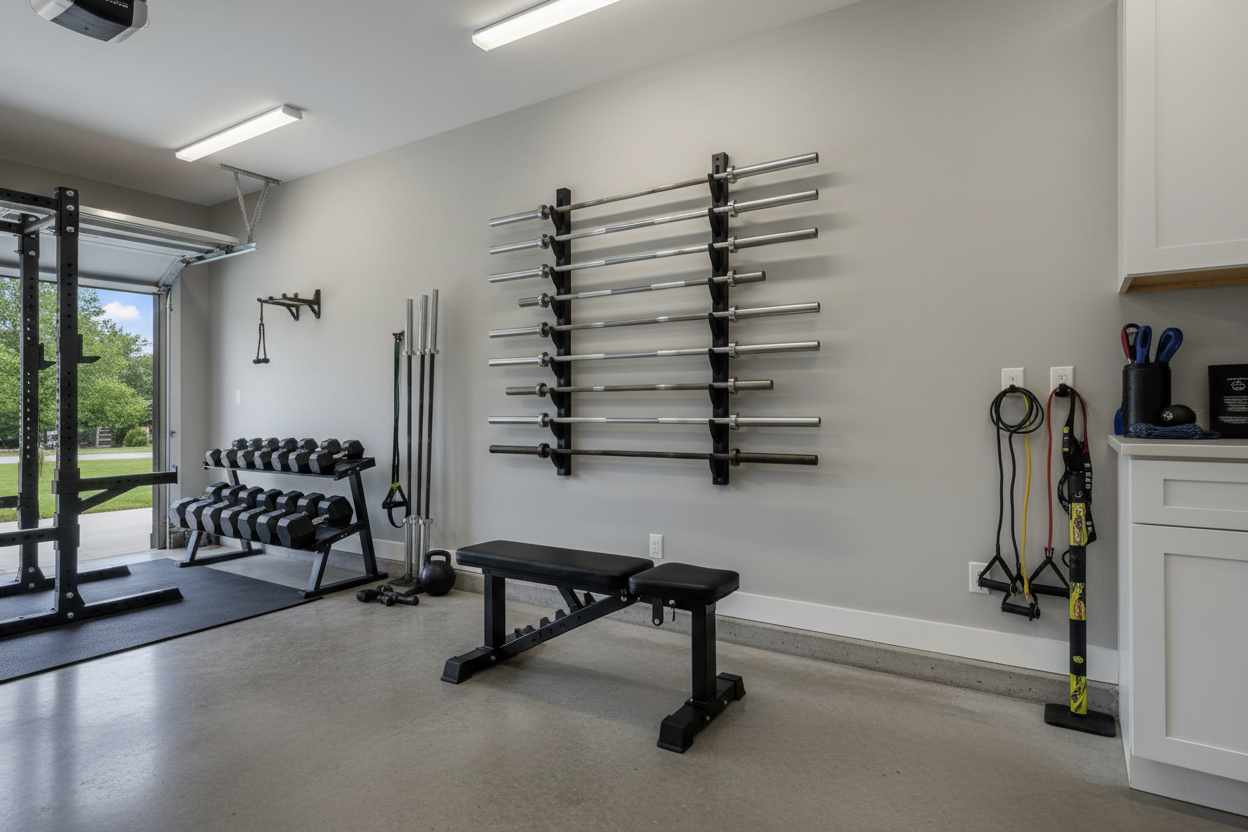
Getting your equipment off the ground is the single most effective change you can make to improve your training workflow. While vertical tubes are a common option, they often require a specific ceiling height and can be awkward to use if you aren't tall. This is where the horizontal approach shines. Specifically, using a barbell gun rack transforms a cluttered wall into a functional display case. It allows you to store multiple bars parallel to the floor, keeping them secure, organized, and out of the way until you need them.
Why Horizontal Storage Makes Sense
Most garage gyms are fighting a losing battle against square footage. You need room for the rack, the bench, and enough clearance to actually perform the movements. Floor stands are bulky and become tripping hazards. Wall-mounted options utilize dead space that serves no other purpose. The horizontal configuration mimics the racks found in old-school weight rooms, often referred to as "gun racks" because of their resemblance to weapon displays. This setup is particularly useful if you own multiple bars for different lifts—like a power bar for squats, an Olympic bar for clean and jerks, and perhaps a specialty bar or two.
I remember the weekend I finally installed my own rack. I had three bars at the time: a beater bar for rack pulls, a nice multi-purpose bar, and an EZ curl bar. They were constantly in the way. Once I bolted the brackets to the wall and racked them up, the entire energy of the room changed. It looked professional. More importantly, it protected the equipment. High-quality barbells rely on precise spinning mechanisms in the sleeves (bushings or bearings). Leaving them vertical in a corner allows dirt and chalk to settle down into the sleeve, eventually gumming up the spin. Horizontal storage keeps the sleeves neutral and the bar shaft straight.
Choosing the Right Rack for Your Space
Not all storage solutions are built the same. When looking for gun rack barbell storage, construction quality is non-negotiable. You are hanging heavy steel above the ground, often near where you or your family walk. Thin sheet metal brackets that flex under load are a safety risk. You want heavy-gauge steel brackets that can support significantly more weight than you currently own. Most standard racks hold either three or six bars. Even if you only own two bars right now, buying a six-bar rack is usually the smarter play. It gives you room to grow without drilling new holes later.
The Importance of Protective Liners
If you care about the longevity of your equipment, pay close attention to the contact points. Cheap racks are often just powder-coated metal. When you rack and unrack a barbell, that metal-on-metal contact will grind down the knurling on your bar. The knurling is the grip texture you paid good money for; flattening it out with a cheap storage rack defeats the purpose of buying a nice bar.
Look for racks that feature UHMW (Ultra-High Molecular Weight) plastic liners on the hooks. This dense plastic is durable enough to hold the weight but soft enough that it won't scratch the finish or dull the knurling of your barbell. If you already have a metal rack without liners, you can sometimes DIY a solution with adhesive felt or rubber strips, but factory-installed plastic is always superior for durability.
Installation: Do It Right the First Time
Installing these racks requires more than just eyeballing it. Since you are dealing with significant weight—potentially hundreds of pounds if you have a full collection—you must mount the brackets into wall studs. Drywall anchors will rip out immediately. Use a stud finder to locate the center of your studs. Most residential framing places studs 16 inches apart. A standard barbell gun rack usually consists of two separate brackets, allowing you to space them out to fit the shaft length of your bars.
Spacing is critical here. If you mount the brackets too far apart, the sleeves of the barbell will hit the brackets, and the bar won't fit. If you mount them too close together, the bar becomes unstable and tippy. For a standard 7-foot Olympic bar, you generally want the brackets spaced so they hold the shaft just inside the collars. Measure the distance between the collars on your shortest bar (usually the EZ curl bar or a women’s bar) and ensure your bracket spacing accommodates that, while still supporting your longer bars.
Use lag bolts, not standard screws. Predrill your pilot holes to prevent the wood studs from splitting. Once those lag bolts are driven in, that rack should feel like a part of the house structure. Give it a firm tug before trusting it with your expensive iron.
The Workflow Benefit
Beyond the safety and protection aspects, there is a psychological benefit to an organized gym. When you have to wrestle a bar out from a pile to start your workout, you are adding friction to your habit. You want the barrier to entry for exercise to be as low as possible. With gun rack barbell storage, you simply reach up, grab the bar you need, and place it in the squat rack. It creates a flow that makes the workout feel smoother and more efficient.
This setup also allows you to quickly swap bars mid-workout. If you are supersetting heavy bench press with barbell curls, you can grab the curl bar and rack the power bar in seconds without cluttering the floor. It turns a cramped garage into a versatile training facility.
Investing in proper storage is rarely the most exciting purchase compared to a new heavy dumbbell set or a cardio machine, but it is the one that yields the highest return on investment regarding space and equipment longevity. Get the bars off the floor, protect their mechanics, and give yourself the room to train properly.
Frequently Asked Questions
How high should I mount the rack on the wall?
Mount the rack at a height where the top bar is reachable without standing on a bench, and the bottom bar doesn't interfere with floor equipment. A good rule of thumb is to position the middle hooks at roughly chest height for easy loading and unloading.
Can I store specialty bars like a Safety Squat Bar on a gun rack?
It depends on the bar's geometry. Standard gun racks are designed for straight shafts. Specialty bars with cambered ends or handles (like a Safety Squat Bar or Trap Bar) often fit better on extended hooks or specific specialty bar hangers, as they may not sit flush or stable on a standard horizontal rack.
Do I really need a 6-bar rack if I only have one barbell?
While not strictly necessary, buying a larger rack is future-proofing. As you progress, you will likely add a specialty bar, a beater bar, or a curl bar to your collection. Having the empty slots ready prevents you from having to uninstall and reinstall a larger system later.