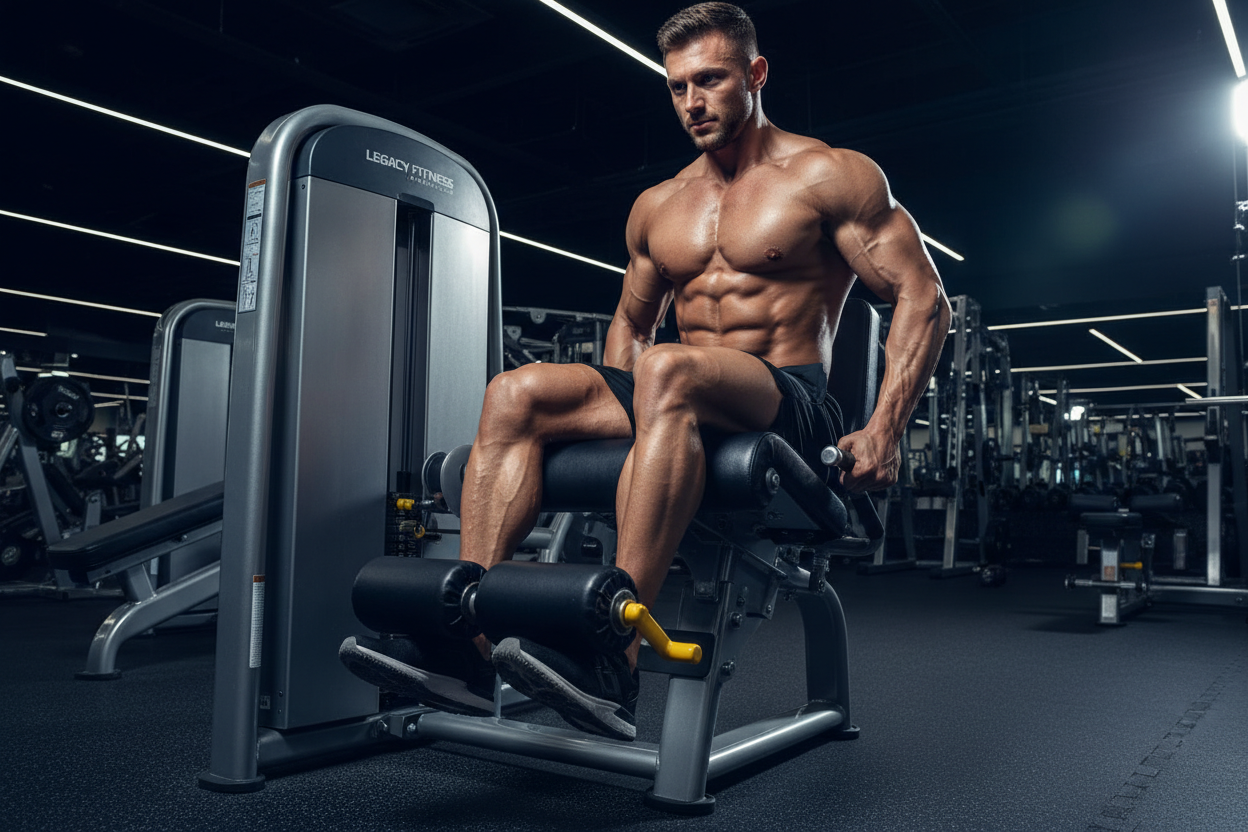
Quad Extension Machine: The Ultimate Guide to Isolated Leg Growth
If you walk into any commercial gym, you will likely see a line forming around one specific piece of equipment on leg day. The quad extension machine is often demonized by functional training purists but worshipped by bodybuilders. The truth lies somewhere in the middle.
This isn't just a machine for lazy lifters who don't want to squat. It is mechanically the only way to load the quadriceps in their fully shortened position while completely isolating the knee joint. If you want that deep separation in your legs, you cannot ignore this tool.
Key Takeaways
- Isolation is King: This is the only exercise that targets the rectus femoris (the middle quad muscle) effectively without hip engagement.
- Alignment Matters: Your knee joint must align perfectly with the machine's axis of rotation (the red dot or pivot point) to prevent shearing force.
- Control the Eccentric: Bouncing the weight out of the bottom position is the fastest way to tendonitis; control the descent.
- Foot Position: Keep toes pointed straight up (dorsiflexed) to maximize quad activation and minimize calf involvement.
Why the Quadricep Extension Machine is Non-Negotiable
Compound movements like squats and lunges are fantastic, but they have a limitation: the hips. When you squat, your hips extend while your knees extend. This actually takes some tension off the rectus femoris—the distinct muscle running down the middle of your thigh.
A seated quad machine fixes this. By locking your hips in a fixed position, you force the quads to do 100% of the work. This is crucial for hypertrophy. You aren't limited by your lower back strength or cardiovascular endurance; you are limited solely by the failure of the quadriceps.
Mastering the Setup: Don't Just Sit and Kick
Most injuries associated with the leg quad machine come from user error, not the machine itself. The setup dictates the safety of the movement.
The Pivot Point Rule
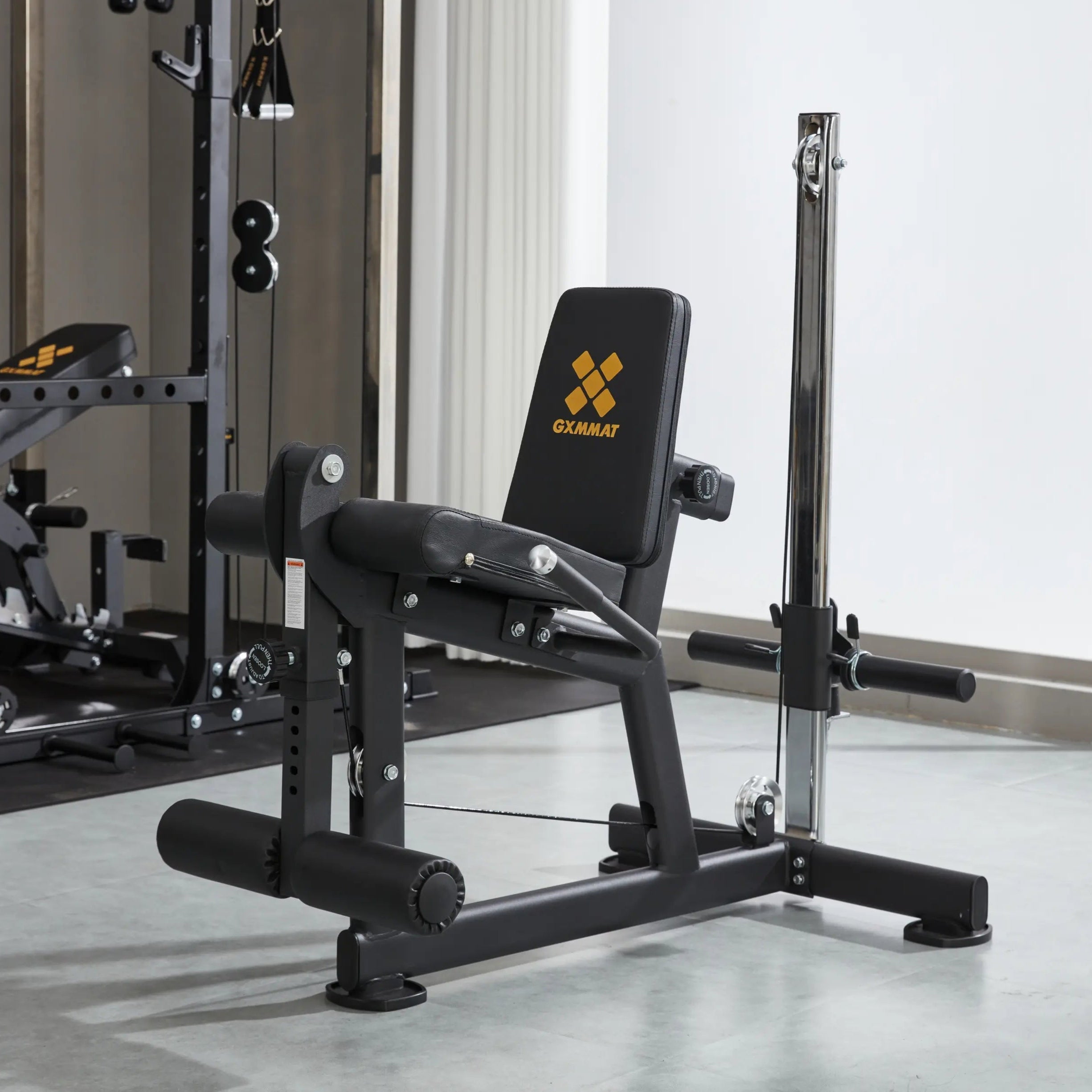
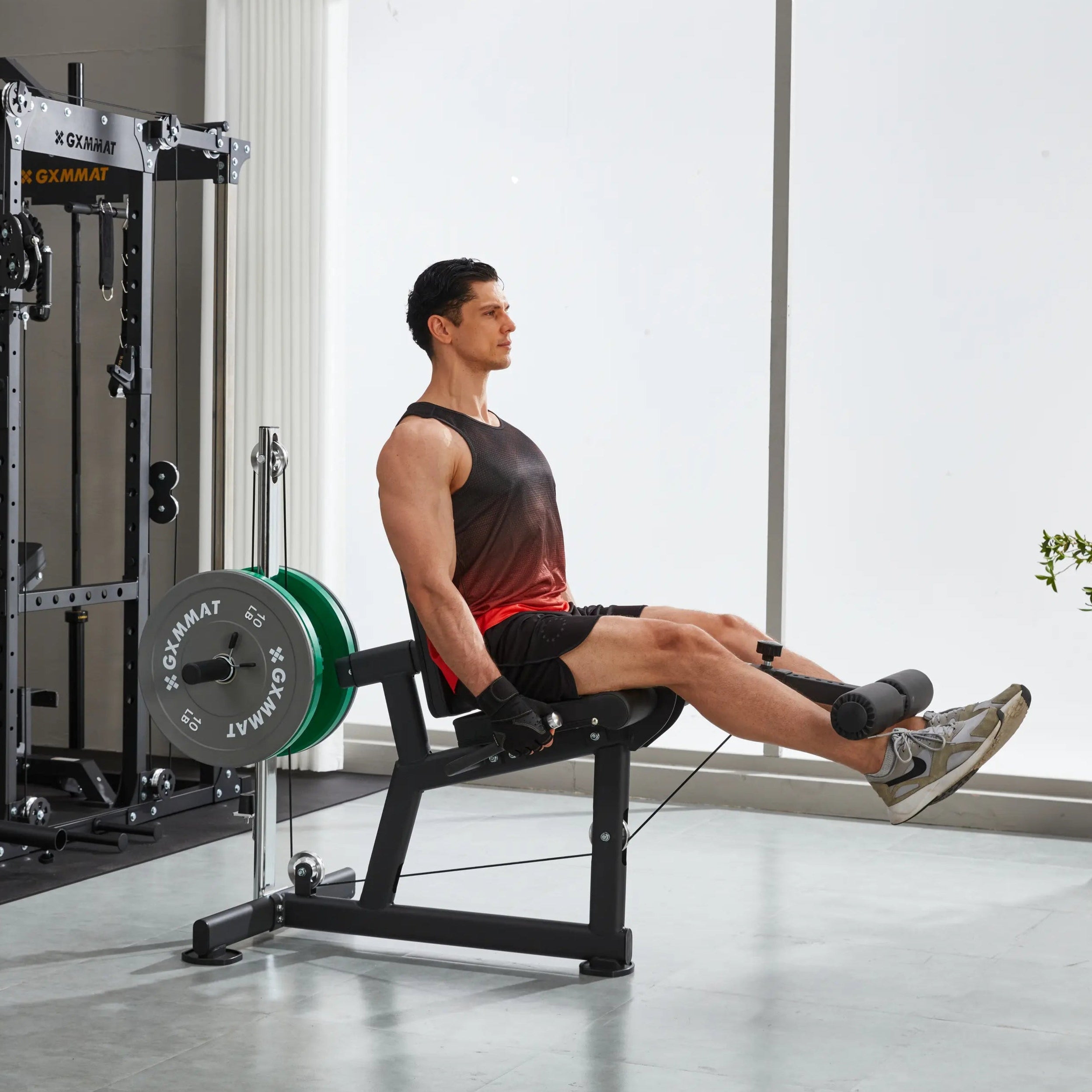
Look at the side of the machine. There is usually a cam or a bolt that the arm swings from. Your knee needs to be directly in line with this pivot point. If your knees are too far back or forward, you introduce unnatural shearing forces that grind the patella against the femur. Adjust the back pad until this alignment is perfect.
The Shin Pad Placement
The roller pad should rest comfortably on your lower shin, just above the ankle. If it's too high (mid-shin), you lose leverage and range of motion. If it's on your foot, you risk ankle strain. This turns the movement into a true quad raise machine rather than an ankle lift.
Common Mistakes That Kill Gains
We see it all the time: lifting too heavy and using momentum. If you have to throw your upper body backward to get the weight up, drop the pin. You are engaging your lower back to move weight that your quads can't handle.
Another issue is stopping short. The magic happens at the very top of the rep—the lockout. You need to fully extend the leg and squeeze for a hard one-second count. If you can't hold it there, the weight is too heavy.
My Training Log: Real Talk
I’ve spent years grinding away on various iterations of this machine, from old-school plate-loaded levers to modern selectorized stacks. Let's be honest about the experience.
There is a specific, nasty burn you get on a quad extension machine that you just don't get from squats. It’s that deep, acidic burning sensation right above the knee cap that feels like the skin is going to tear. But the thing nobody mentions is the shin pad. If you are sweating—and if it's leg day, you should be—that vinyl pad gets slippery. I've had sets ruined not because my legs failed, but because my ankles kept sliding up and down the roller, forcing me to stop and wipe it down with a towel.
Also, the handles on the side of the seat aren't just for decoration. I've found that if I don't white-knuckle those handles and pull my butt down into the seat, my hips lift off the pad as I struggle through the last few reps. Once the hips lift, the isolation is gone. The trick is pulling yourself down while pushing the weight up.
Conclusion
The quad extension isn't a replacement for squats, but it is the ultimate accessory for finishing off the legs. It allows you to safely take the muscle to absolute failure without worrying about a barbell crushing you. Focus on the setup, control the tempo, and embrace the burn.
Frequently Asked Questions
Is the quad extension machine bad for your knees?
Not inherently. It becomes dangerous when the user aligns the pivot point incorrectly or uses excessive weight with explosive momentum. Controlled reps with proper alignment are generally safe for healthy knees.
Can I build big legs with just the leg quad machine?
You can achieve significant definition and some size, but for maximum mass, you generally need compound movements like squats or leg presses to stimulate the entire lower body musculature and hormonal response.
How is this different from a leg curl machine?
They are opposites. The quad extension targets the front of the thigh (quadriceps) by extending the knee. A leg curl targets the back of the thigh (hamstrings) by flexing the knee.