Build Elite Vertical Power With Specialized Basketball Leg Exercises
You can have the best handle in the league, but if your first step is slow or your vertical is lacking, your ceiling is capped. The problem isn't usually a lack of effort; it's a lack of specificity. Too many athletes train like bodybuilders, focusing on size rather than function. To dominate on the court, you need specific basketball leg exercises designed to convert raw strength into explosive power.
This guide moves beyond generic advice. We are looking at the biomechanics of the sport—jumping, landing, cutting, and defensive sliding—to build a lower body that is bulletproof and bouncy.
Key Takeaways: The Basketball Leg Blueprint
- Focus on Unilateral Strength: Basketball is played on one leg at a time. Your training must reflect that through split squats and lunges.
- Prioritize the Posterior Chain: The glutes and hamstrings are the engines of your vertical jump, not just the quads.
- Integrate Plyometrics Correctly: explosive movements should be paired with strength work, not just done randomly.
- Mobility is Durability: Deep ranges of motion prevent non-contact injuries like ACL tears.
Why Traditional Leg Days Fail Hoop Heads
Walk into a commercial gym, and you see people doing leg curls and heavy leg presses. While these create muscle tension, they don't necessarily translate to basketball legs.
A basketball leg workout needs to focus on the "Triple Extension"—the simultaneous extension of the ankle, knee, and hip. This is the exact movement pattern used when you jump for a rebound or explode for a dunk. If your leg training for basketball isolates muscles rather than integrating movement patterns, you are building "show muscles," not "go muscles."
The Core Pillars of a Lower Body Basketball Workout
To build the best leg workout for basketball players, you need to categorize your movements into three buckets: Force Production (Strength), Force Absorption (Landing/Eccentric), and Rate of Force Development (Power).
1. The King of Stability: Unilateral Training
Think about a layup. Think about a defensive slide. You are rarely planting two feet perfectly symmetrical on the ground. This is why single-leg movements are the best leg exercises for basketball players.
Exercises like the Bulgarian Split Squat or the Single-Leg Romanian Deadlift expose imbalances. If your right leg is 10% stronger than your left, you will favor it, leading to inefficient movement and potential injury. Correcting this asymmetry is vital for basketball players legs.
2. Developing the Posterior Chain
Many players are "quad-dominant," meaning they rely too heavily on their thighs to jump. This leads to patellar tendonitis (Jumper's Knee). A proper leg workout for basketball shifts the load to the hips and hamstrings.
Trap Bar Deadlifts and Kettlebell Swings are non-negotiable here. They teach you to hinge at the hips, loading the glutes to protect the knees while generating massive force.
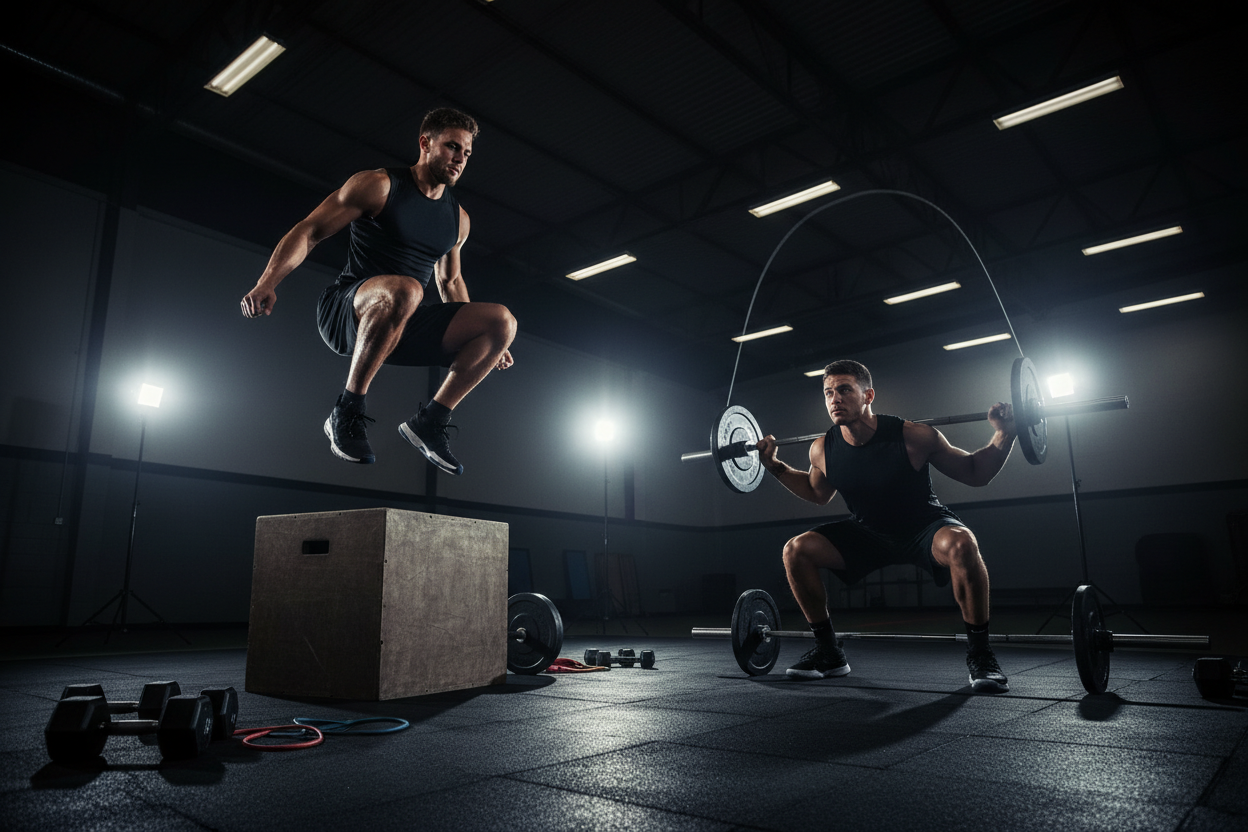
3. Explosive Leg Workout for Basketball (Plyometrics)
Strength is the gas tank; plyometrics is the engine. Once you have a base of strength, you must teach the nervous system to fire quickly. This is where depth jumps and box jumps come in.
However, the focus shouldn't just be on how high you jump, but how quietly you land. Force absorption is the secret to longevity. If you sound like a bag of bricks hitting the floor, your joints are taking a beating.
Sample Routines: Gym vs. Home
You don't always need a squat rack to get better. Here is how to structure your leg day for basketball players regardless of equipment.
The Gym Routine (Strength Focus)
This lower body workout for basketball players focuses on heavy loads and low reps to build maximum force.
- Trap Bar Deadlift: 4 sets of 5 reps (Focus: Raw Strength)
- Bulgarian Split Squats: 3 sets of 8 reps per leg (Focus: Stability)
- Box Jumps: 5 sets of 3 reps (Focus: Explosiveness)
- Calf Raises: 3 sets of 15 reps (Focus: Ankle Stiffness)
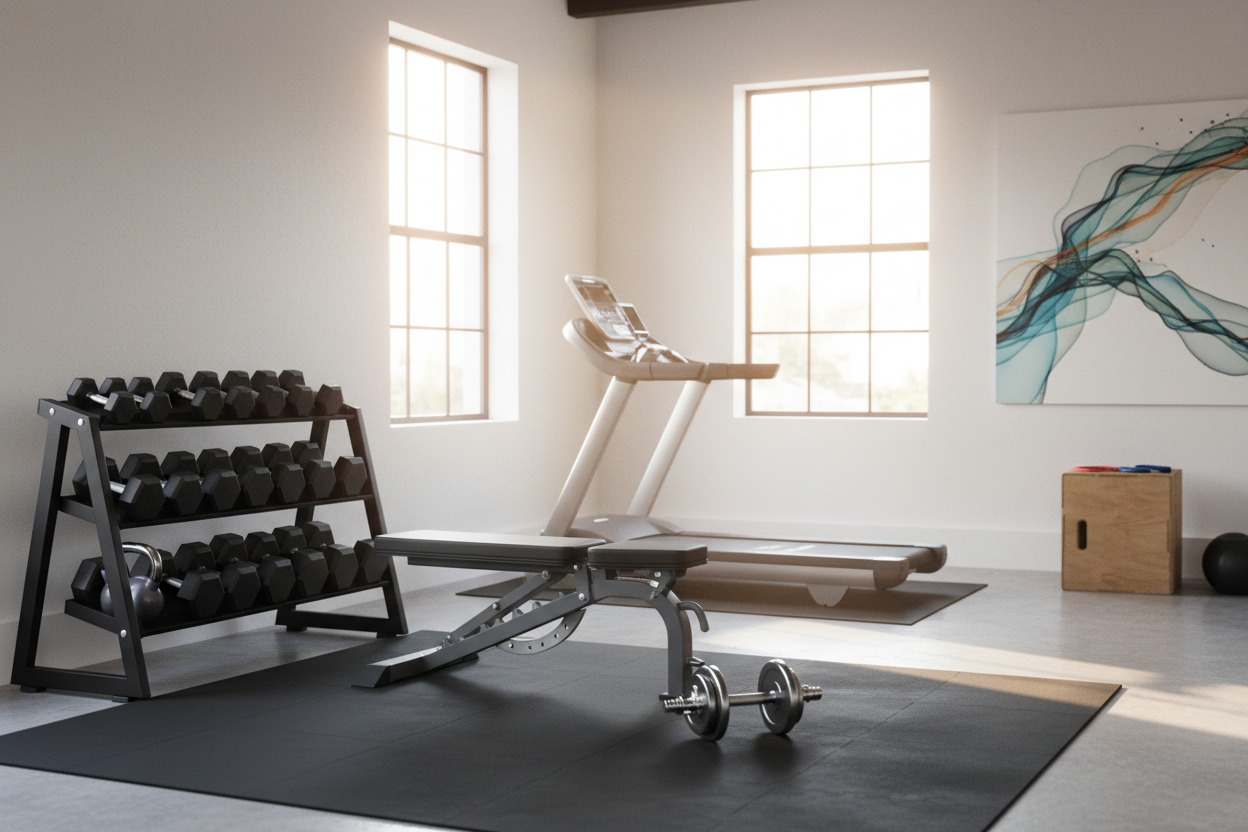
Leg Workouts for Basketball at Home
If you have no weights, you increase the intensity by manipulating tempo and gravity. This lower body workout for basketball is surprisingly difficult.
- Pistol Squats (to a chair if needed): 3 sets of 5 reps per leg.
- Nordic Hamstring Curls (hook feet under couch): 3 sets of 5 reps (Control the descent).
- Jump Lunges: 3 sets of 20 seconds (Max effort).
- Single-Leg Glute Bridges: 3 sets of 12 reps.
My Training Log: Real Talk
I want to be transparent about the reality of these workouts. I remember specifically when I started prioritizing leg workouts for basketball players over standard bodybuilding routines. I incorporated heavy Bulgarian Split Squats twice a week.
The first month was humbling. It wasn't just the soreness; it was the balance. I remember holding 40lb dumbbells, sweat dripping into my eyes, and feeling my arch cramp up as my ankle wobbled violently trying to stabilize on that single leg. It felt like I was surfing, not lifting.
But the real "aha" moment came about six weeks later during a pickup game. I went for a chase-down block—a movement that usually felt heavy for me. I planted that same "wobbly" leg, and the floor felt solid. I didn't just jump; I felt a pop off the hardwood that I hadn't felt in years. The wobble in the gym had turned into stiffness on the court. That specific feeling of stability in the ankle during a max-effort plant is something you can't fake, and it's worth every second of the struggle in the rack.
Conclusion
Building good leg workouts for basketball players isn't about chasing a pump. It is about constructing a body that can handle the violent torque of the game. Whether you are doing lower body workouts for basketball in a high-end facility or doing basketball leg workouts in your driveway, consistency and intent are what matter. Start prioritizing single-leg strength and posterior chain power today, and your vertical will thank you.
Frequently Asked Questions
How often should basketball players train legs?
Generally, 2 times per week is the sweet spot for a basketball player leg workout. This allows for one heavy strength day and one dynamic/explosive day, leaving enough recovery time so your legs aren't dead for practice or games.
Will heavy leg lifting ruin my shooting mechanics?
No, provided you don't lift immediately before a game. In fact, best basketball leg workouts increase your range. A stronger lower body allows you to shoot from deep with less effort from your arms, actually improving your mechanics in the fourth quarter when fatigue sets in.
Can I increase my vertical with just bodyweight exercises?
Yes, especially if you are a beginner or younger athlete. Leg workouts for basketball at home using plyometrics (jump lunges, depth jumps) and high-tension movements (Nordic curls) can significantly improve your vertical leap without external weights.