Creating Your Perfect Home Gym: A Practical Guide
Walking into a crowded gym after a long day at work used to drain what little energy I had left. Between waiting for equipment and the commute time, my fitness routine felt more like a chore than a benefit. That's when I decided to transform my spare room into a personal workout space, and it completely changed my relationship with exercise.
Start With Your Space and Goals
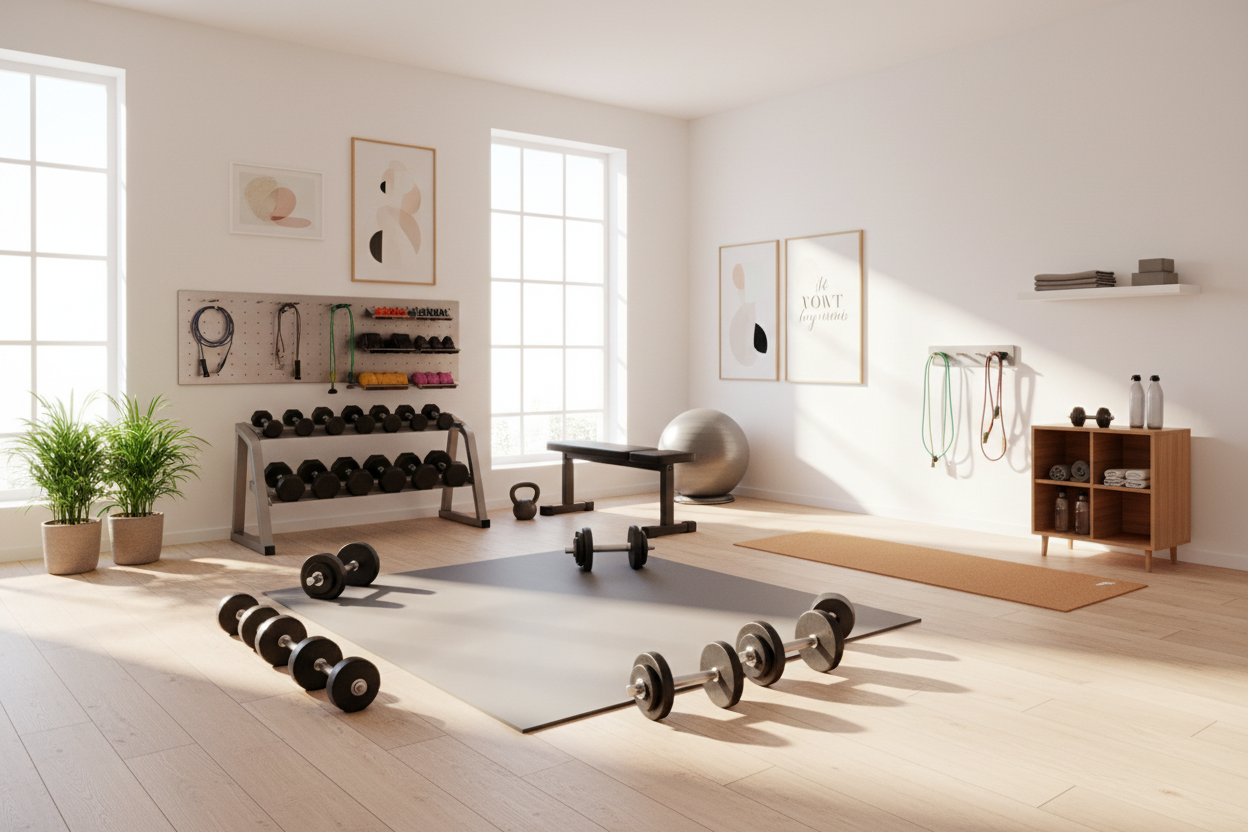
The beauty of a home gym is that it doesn't require a massive basement or garage. I've seen impressive setups in apartment corners and small bedrooms. The key is matching your equipment to both your available space and fitness objectives. Are you focusing on strength training, cardio, yoga, or a combination? Your answer will determine everything from floor protection to equipment selection.
For strength training, measure your ceiling height carefully—especially if you're tall or planning overhead movements. Cardio equipment often requires more square footage, while yoga and bodyweight exercises can thrive in surprisingly compact areas. Remember to consider ventilation, lighting, and how the space makes you feel. You're more likely to use a gym that feels inviting.
The Essential Equipment Checklist
You don't need to replicate a commercial gym to get an effective workout. When I built my first home gym, I made the mistake of buying cheap equipment that didn't suit my actual needs. Through trial and error, I discovered that quality matters more than quantity.
For most people, these categories cover the fundamentals:
Flooring First
Don't skip this step—it protects both your equipment and your floors. Interlocking rubber tiles provide excellent protection for dropped weights and reduce noise transmission. For yoga or bodyweight exercises, a high-quality mat might suffice. If you're working in a space with delicate flooring underneath, consider a layer of plywood beneath rubber tiles for added protection.
Strength Training Essentials
Adjustable dumbbells revolutionized my home workouts. Instead of needing an entire rack of weights, I have one set that replaces fifteen pairs. A foldable weight bench adds tremendous versatility without consuming permanent space. Resistance bands are another space-smart addition that provide surprising workout variety.
For those with more space and budget, a power rack or squat stand with a pull-up bar becomes the centerpiece of a serious strength training area. Pair it with an Olympic barbell and weight plates, and you have virtually unlimited strength potential.
Cardio Solutions
Cardio equipment tends to be the bulkiest part of any home gym setup. Before purchasing a treadmill or elliptical, consider how you'll use it. Foldable options exist for smaller spaces, and many modern models feature vertical storage capabilities. For maximum space efficiency, a jump rope and commitment to outdoor running might suffice. I eventually settled on a folding bike that tucks behind my door because it's what I actually use consistently.
Smart Layout Strategies
How you arrange your equipment significantly impacts your workout experience. Place your most frequently used items in the most accessible positions. Create clear pathways between stations—you shouldn't need to navigate an obstacle course between exercises.
Think about your workout flow: many people prefer placing cardio equipment near entertainment sources (like televisions or tablets) and strength equipment in areas with mirror visibility for form checking. Storage solutions like wall-mounted racks for weights and resistance bands keep your space organized and safe.
For multi-purpose rooms (like garages that still need to park cars), consider equipment on wheels or that folds against the wall. The ability to quickly reconfigure your space makes dual-use areas more practical.
Budget-Friendly Approaches
Building a home gym doesn't require maxing out your credit card. I built my initial setup gradually, prioritizing pieces based on what would give me the most workout variety for the investment. The secondhand market is filled with barely-used equipment—check local marketplaces for deals on quality items.
Bodyweight exercises require minimal equipment while delivering impressive results. A simple setup with resistance bands, a mat, and a stability ball can provide hundreds of exercise variations. As your budget allows, you can add more specialized equipment or try at-home workout programs.
Creating an Inspiring Atmosphere
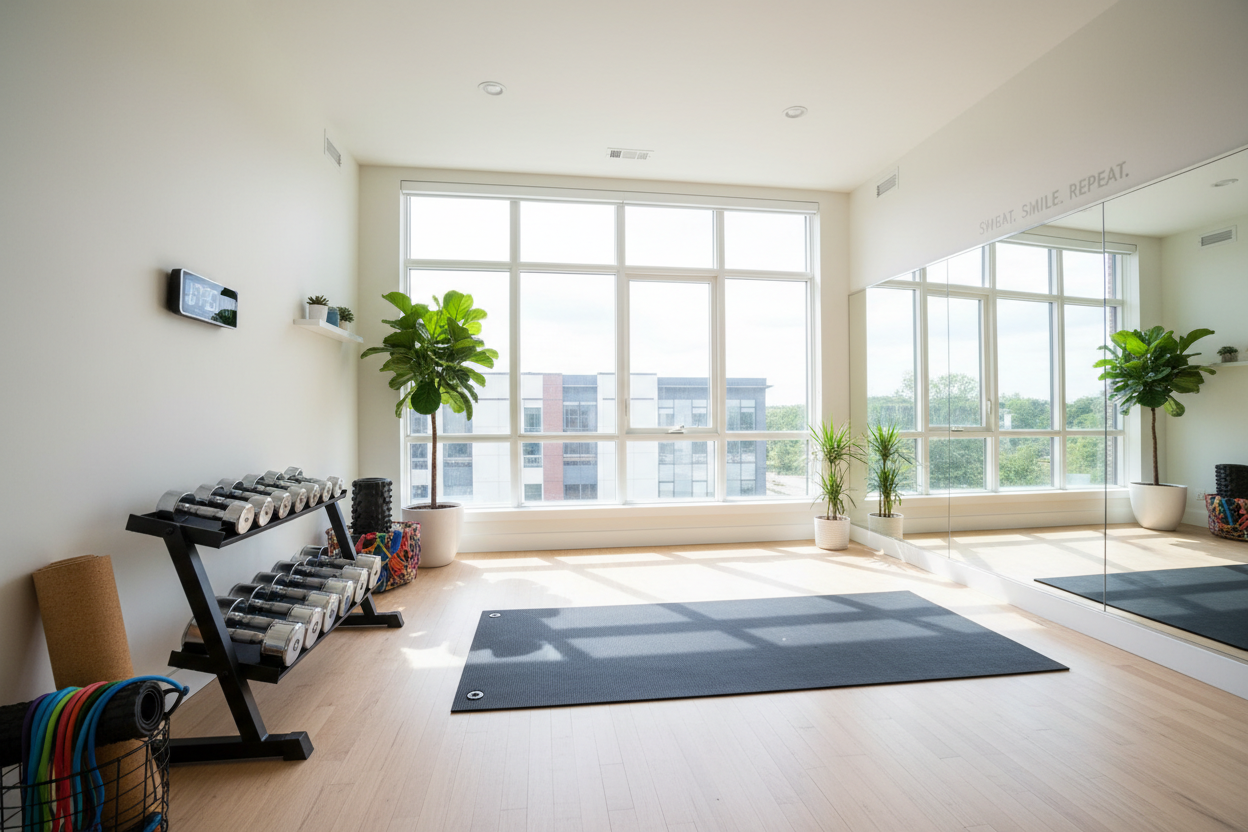
The environment you create significantly impacts your motivation. Good lighting—preferably natural—makes any space more inviting. A quality Bluetooth speaker or headphones can help you get in the zone without disturbing household members or neighbors.
Mirrors serve dual purposes: they allow you to check your form during exercises and make the space feel larger. Proper ventilation becomes increasingly important as you intensify your workouts—a simple fan can make a hot room tolerable.
Personal touches matter too. Whether it's motivational posters, your favorite color scheme, or simply keeping the space clean and organized, create an environment that makes you want to return.
Maintaining Your Home Gym
Regular maintenance extends the life of your equipment and ensures safety. Wipe down surfaces after each use to prevent sweat damage. Check cables and moving parts periodically for wear. Keep your space organized—a cluttered gym is both frustrating and hazardous.
Dedicate five minutes after each session to quick cleanup. This simple habit maintains the inviting nature of your space and makes your next workout more appealing.
Building my home gym transformed my fitness consistency. The convenience of having everything I need just steps away eliminated my excuses. Whether you're working with a corner of your living room or dedicating an entire basement, the investment returns itself through improved health and saved time. Start with what you need most, build gradually, and create a space that inspires you to show up consistently.