Plate Stripping vs. Angle Shifts for exercises to get lean and toned
You are twelve reps into a heavy set of overhead presses. Your shoulders are screaming, your form is starting to break, and you know you have more in the tank—if only the weight were ten pounds lighter. In a commercial gym, you might have a buddy to strip the plates. In your garage? You have to rack the bar, fumble with those annoying spring collars, slide the plates off, and try to get back under it before your heart rate settles. By then, the intensity is gone. You are basically starting a new set, not extending the old one.
Quick Takeaways
- Mechanical drop sets allow for zero-rest transitions, keeping muscle tension higher than traditional plate stripping.
- Changing your body angle allows you to move from a weak leverage position to a strong one to keep the set alive.
- These techniques are safer for solo lifters who do not have a spotter to help with mid-set weight changes.
- Focus on high-rep finishers to maximize the metabolic stress required for a lean physique.
Why Traditional Drop Sets Are Terrible for Home Gyms
Traditional drop sets are a logistical nightmare when you are training alone. I have spent years testing different exercises to get lean and toned, and nothing kills a workout faster than equipment friction. When you are chasing a pump or trying to create enough metabolic stress to actually see a change in the mirror, every second counts. If it takes you twenty seconds to strip weight off a barbell, you have transitioned from a high-intensity drop set into a rest-pause set. The stimulus is completely different.
I have seen guys try to make it work by leaving the collars off, which is a recipe for a trip to the ER when a plate slides off and the bar flips. Or they buy expensive magnetic collars that still require you to stop moving. I Tried 4 Workout Programs to Get Lean (And Picked the Most Boring) and the one thing they all got wrong was assuming the lifter had a pit crew. In a real garage gym environment, the best workouts to get lean and toned are the ones that require the least amount of gear-fiddling mid-set. You want to spend your energy moving the iron, not rearranging it.
Enter the Mechanical Drop Set (And Why It Works Better)
A mechanical drop set is the thinking man’s way to suffer. Instead of changing the weight on the bar, you change how your body interacts with the weight. You start the exercise in your most disadvantaged position—the hardest version of the move. When you hit technical failure, you immediately shift your body angle or grip to a stronger position. This gives you a mechanical advantage, allowing you to squeeze out another 5 to 10 reps with the exact same weight.
This is superior for home gym owners because there is zero downtime. You do not even have to let go of the dumbbells. The best exercises to get lean and toned Are Done Standing Up because standing allows for these subtle shifts in leverage that you just cannot get when you are locked into a machine. When you shift from a strict movement to one that allows for a bit of 'body English' or a better leverage point, you are forcing the muscle fibers to keep firing while they are already exhausted. That is where the magic happens.
4 Angle-Shifting Exercises to Get Lean and Toned
Here are four ways I use mechanical advantage to blow past plateaus without ever touching a collar. First, the Incline-to-Flat Dumbbell Press. You will need a reliable Weight Set And Bench for this. Start with your bench at a 45-degree incline. Press until you hit failure. Immediately drop the bench to the flat position and keep going. You are significantly stronger on a flat bench than an incline, so you can keep the set alive for another 6-8 reps. It is brutal on the chest and shoulders.
Second, the Strict Press to Push Press. This is my go-to for shoulder day. Use a barbell with decent knurling—something like a 28.5mm multi-purpose bar. Perform strict overhead presses until you cannot move the bar past your forehead. Instead of racking it, start using your legs to 'pop' the weight up. You are using a lower body drive to assist the fatigued shoulders. Third, try the Incline Dumbbell Curl to Standing Hammer Curl. Start seated on an incline bench to fully stretch the biceps. Once you fail, stand up and switch to a neutral hammer grip. You have gone from an isolated, weak position to a powerful, multi-muscle position.
Finally, the Pull-up to Chin-up to Inverted Row. Start with a wide, overhand grip on your rack's pull-up bar. When you can't get your chin over the bar, switch to a close, underhand grip (the chin-up). Your biceps will take over for your tired lats. When that fails, drop down to a barbell set in the rack at waist height and finish with inverted rows. This is one of the most effective workouts to get lean and toned because it targets the entire posterior chain in one continuous blast.
Programming These Workouts to Get Lean and Toned Without Burning Out
Do not go out and do this for every exercise in your routine. Mechanical drop sets are high-intensity tools, not a foundation. If you try to do this on every set, your Central Nervous System will be fried before you finish your second exercise. I recommend picking one 'finisher' per muscle group. If it is chest day, do your heavy work first, then end your session with one or two 'all-out' mechanical drop sets.
Focus on the mind-muscle connection. Because you aren't dropping the weight, the load stays heavy. This means your form needs to be locked in. If you are doing the strict-to-push press transition, make sure you aren't arching your lower back just to get the weight up. The goal is to get lean and toned, not to earn a trip to the chiropractor. Track your total reps across the entire 'drop' and try to beat that number by one or two every week.
Setting Up Your Space for Seamless Transitions
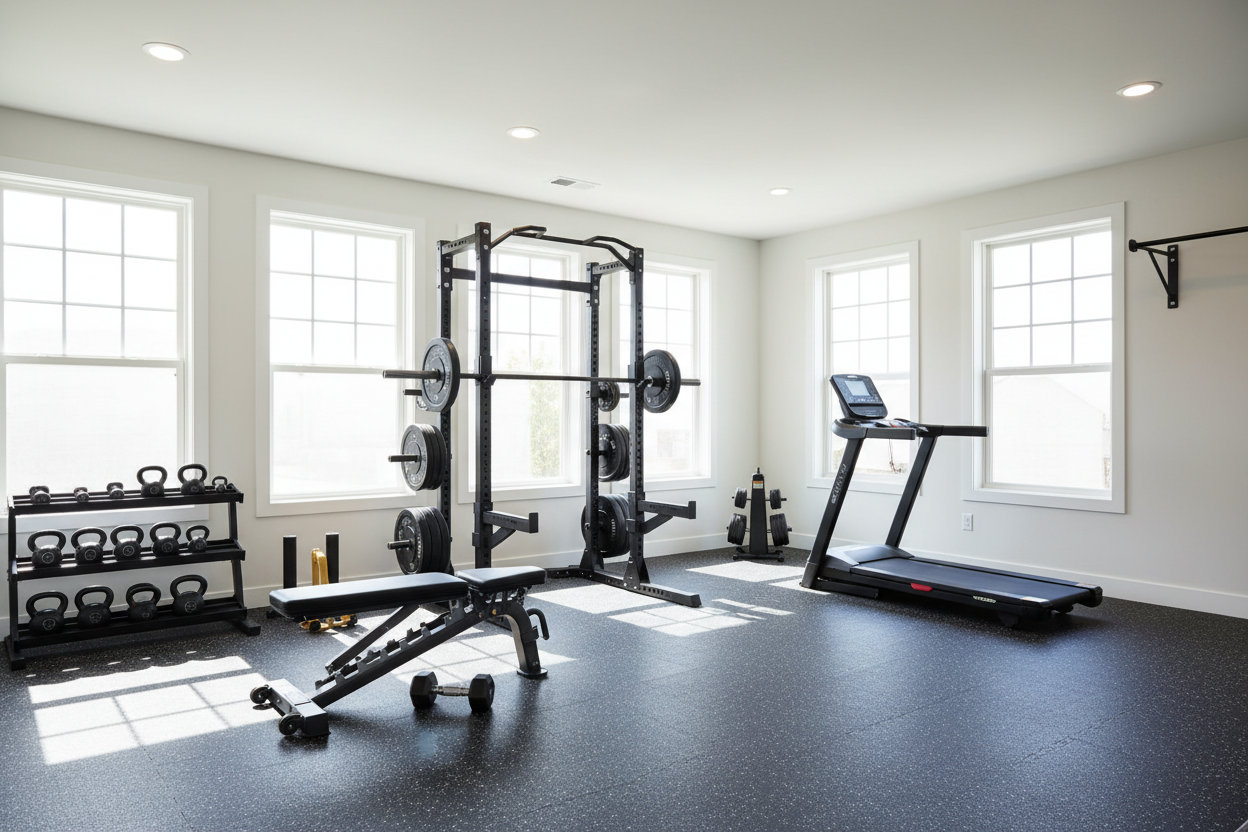
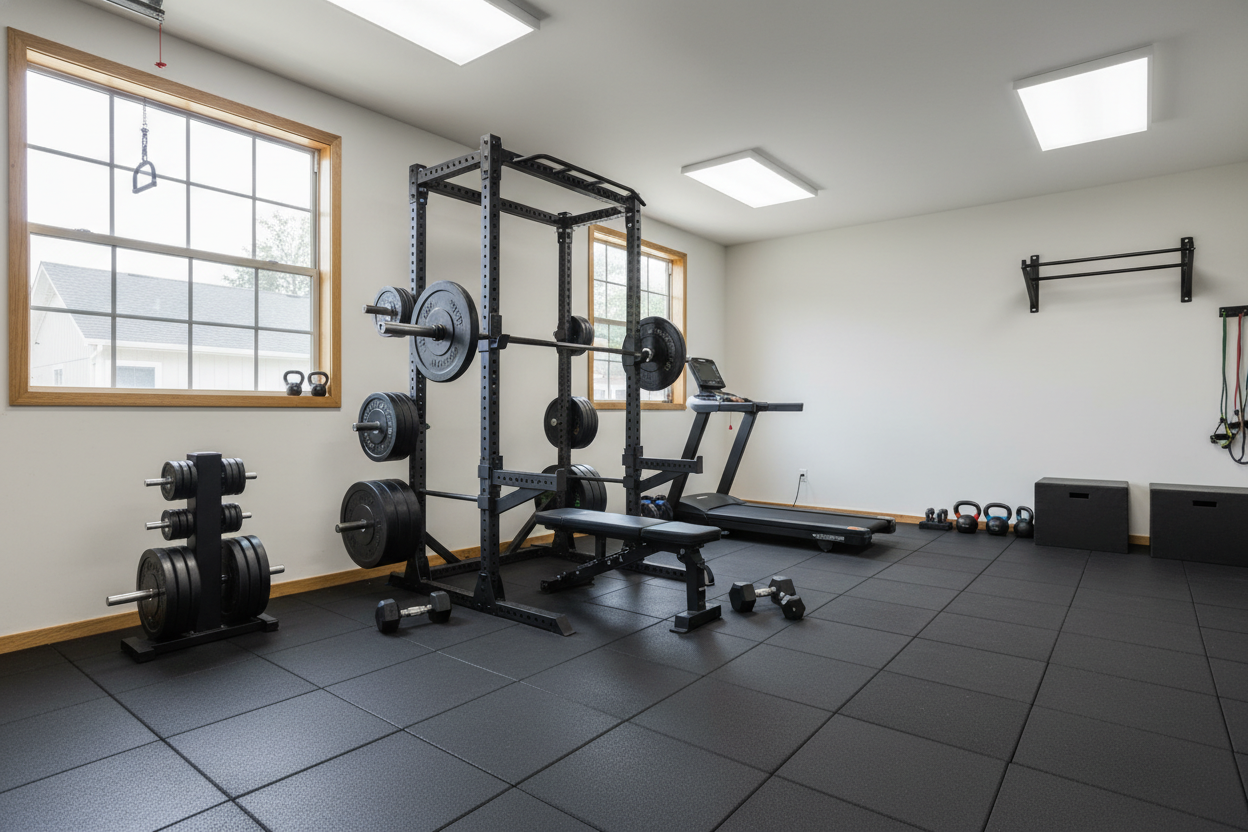
The biggest hurdle to these transitions is a cluttered floor. If you are moving from a seated incline curl to a standing hammer curl, the last thing you want is to trip over a stray 45-pound plate. I have found that having a dedicated, wide-open area is non-negotiable. I use Gxmmat New Upgraded Exercise Mats Extra Wide 7 Feet 3 Popular Size 7X8 7X10 7X12 To Fit Your Space Requirements to cover a large portion of my garage. It gives me a 7x10 foot area where I know the grip is consistent and I won't slide when I transition from a seated to a standing position.
Keep your bench clear of the power rack if you are doing dumbbell work. You need enough 'swing' room to move your arms without hitting the uprights. If you are using an adjustable bench, make sure the ladder or pin mechanism is easy to operate with sweaty hands. Some of those cheap Amazon benches have pins that stick, which ruins the 'no rest' aspect of the mechanical drop set. Buy once, cry once—get a bench that adjusts in seconds.
Personal Experience: The Day I Almost Flipped My Rack
I learned the hard way that plate stripping is for the birds. I was trying to do a 'strip set' on squats, alone in my garage. I had 315 on the bar. I hit failure, racked it, and rushed to take a 45 off the left side. As soon as the plate cleared the sleeve, the bar started to tilt because the other side was still loaded. I had to catch the bar with one hand while holding a 45-pound plate in the other. It was a stupid, dangerous mistake born of trying to move too fast. That was the day I switched entirely to mechanical drop sets for my solo high-intensity work. It is safer, faster, and frankly, more effective.
FAQ
Do I need an adjustable bench for these exercises?
It helps significantly. Many of the best mechanical drop sets, like the incline-to-flat press, rely on changing the bench angle. If you only have a flat bench, you can still do transitions like strict press to push press or various grip changes on the pull-up bar.
Are mechanical drop sets better for fat loss?
They are excellent for increasing the 'metabolic cost' of a workout. By extending the set without rest, you keep your heart rate elevated and increase the demand on your cardiovascular system, which helps when you are looking for exercises to get lean and toned.
How often should I use this technique?
Keep it to 2-3 times per week, specifically on your last set of a given muscle group. It is an intensity finisher, not a replacement for your heavy, foundational lifting.