Outdoor Rubber Mats Explained: What to Know Before You Buy
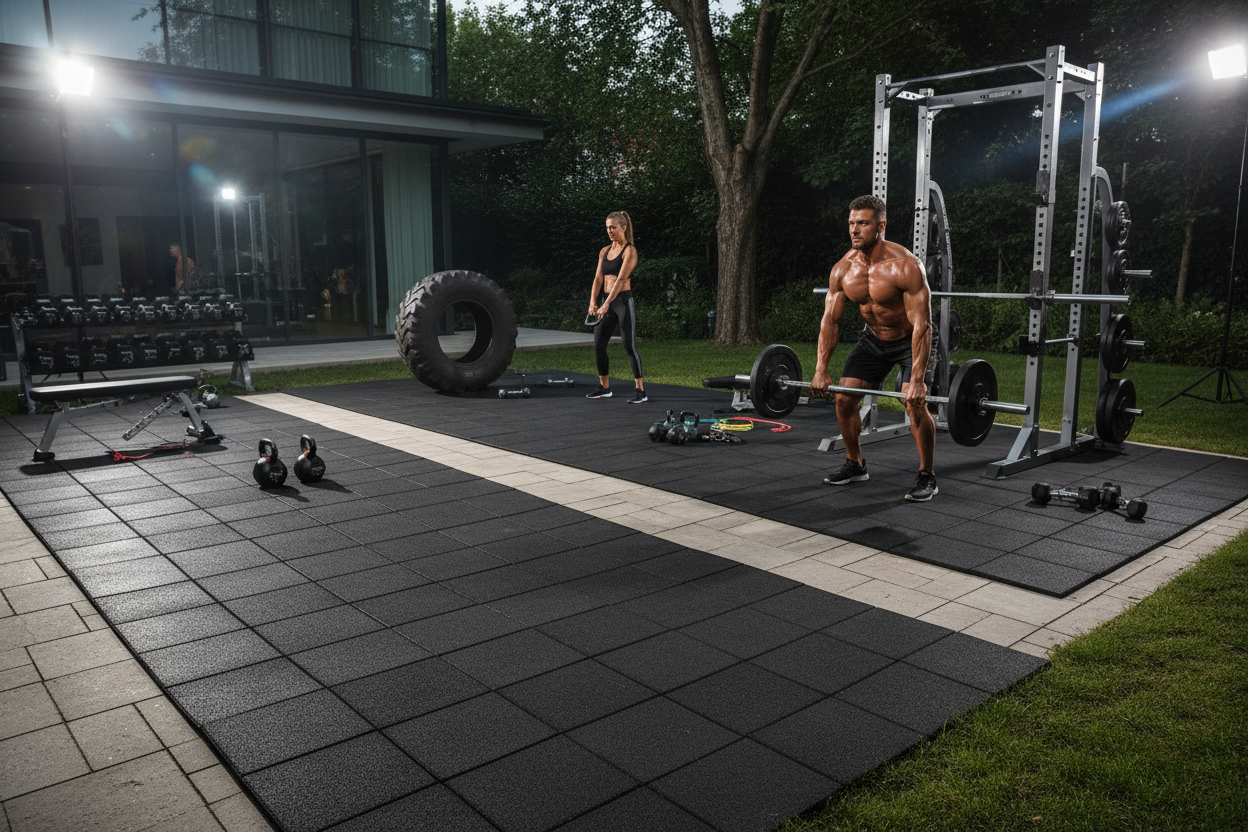
Building a backyard gym is a dream for many fitness enthusiasts, but dropping heavy kettlebells on bare concrete or uneven grass is a recipe for disaster. Whether you are dealing with limited indoor space, enjoying the summer sun, or trying to protect your property, investing in high-quality outdoor rubber mats is a non-negotiable first step. Unfortunately, not all flooring is built to survive UV rays, heavy rain, and 400-pound deadlifts.
This guide breaks down exactly what you need to know about outdoor floor matting. We will help you navigate the specs, avoid common installation mistakes, and choose the right foundation so you can train safely without destroying your joints or your patio.
Key Takeaways
- Thickness matters: For heavy weightlifting, aim for at least 3/4-inch thick rubber mats for outside to protect both your equipment and the sub-floor.
- Drainage is critical: A true rubber outdoor mat waterproof setup requires channeled backing or porous material to prevent standing water and mold.
- UV resistance prevents crumbling: Standard indoor mats will degrade in the sun; you need vulcanized rubber exterior mats designed for UV exposure.
- Surface dictates the mat: Installing a rubber mat for outdoor patio use requires different prep than laying heavy duty rubber garden mats over dirt or grass.
Choosing the Right Rubber Exterior Mats
Thickness and Impact Absorption
When you take your workouts outside, the density of your flooring becomes your primary defense against property damage. If you are doing yoga or bodyweight exercises, a 3/8-inch outdoor rubber rug or rubber backed outdoor mat might suffice. However, if you are dropping barbells, you need heavy duty outdoor rubber mats. We recommend a minimum of 3/4-inch thickness for strength training. These thick outdoor rubber mat options absorb the shock of dropped weights, preventing micro-fractures in concrete patios and keeping your bumper plates from warping.
Weatherproofing and Drainage
The biggest difference between indoor and outdoor flooring is moisture management. If you use standard indoor outdoor rubber mats outside, water can pool underneath, leading to foul odors and degradation. Look for a rubber floor mat outdoor specific design that features a waffle or pedestal backing. This allows rainwater to flow underneath the rubber carpet outdoor, keeping the top surface dry and providing essential outdoor rubber padding that won't rot.
Space Planning for Your Backyard Setup
Hardscapes vs. Soft Ground Installations
Where you place your gym dictates the type of outdoor floor rubber mats you should buy. If you are setting up on concrete or wood, patio rubber mats with interlocking edges work perfectly. However, if you are building a functional fitness space on the lawn, you need heavy rubber mats for outside that won't sink into the mud. For grass installations, a rubber yard mat or specific rubber garden mats should be laid over a compacted gravel sub-base to ensure the heavy duty rubber garden mats remain level under heavy loads.
Sizing and Coverage
Don't underestimate the footprint of your outdoor workouts. A single large outdoor rubber mat might work for kettlebell swings, but a squat stand and barbell setup requires at least an 8x8 foot area. Using rubber square mats outdoor (typically 2x2 or 4x4 tiles) allows you to customize the footprint of your backyard rubber mats and easily replace a single tile if it gets damaged, rather than replacing an entire outdoor rubber carpet.
Durability and Long-Term Wear
The elements are brutal on fitness equipment. A standard black rubber outdoor mat absorbs heat, which can cause cheap recycled rubber to expand, curl at the edges, and emit a strong tire odor. To ensure your rubber rugs for outside last through multiple seasons, look for vulcanized rubber. The vulcanization process binds the rubber molecules together under extreme heat, creating rubber mats for backyard use that resist temperature fluctuations, UV fading, and the abrasive friction of outdoor workouts.
From Our Gym: Honest Take
When we built our testing facility's outdoor rig last spring, we made a rookie mistake. We initially laid down standard 1/2-inch stall mats directly over a concrete slab. After two weeks of spring rain, the lack of drainage channels left us with a slick, smelly mess, and a 45-pound bumper plate drop actually chipped the concrete underneath. We upgraded to 3/4-inch thick rubber mats for outside with a channeled underside. The difference was night and day. Even after an intense Canadian winter, there was zero edge curling, and the aggressive texture provided incredible grip during sweaty summer lunges. The caveat? High-quality outdoor rubber mats for patio use are heavy—moving 100-pound tiles into place is a workout in itself, so recruit a friend for installation.
Frequently Asked Questions
Can you leave a rubber floor mat outdoor year-round?
Yes, provided it is specifically manufactured for outdoor use. True outdoor floor mats rubber are vulcanized and UV-treated to withstand freezing temperatures and intense heat without cracking or crumbling.
Are outdoor floor rubber mats slippery when wet?
They can be if you buy the wrong texture. Look for a rubber mat for outdoor use that features a diamond-plate or wire-mesh surface texture. This provides traction even when the rubber mats for outside are damp from morning dew or light rain.
How thick should a rubber mat for outdoor patio use be?
For general fitness, HIIT, and dumbbells up to 50 lbs, a 1/2-inch rubber mat for outdoor patio use is sufficient. If you are doing Olympic weightlifting or powerlifting, upgrade to 3/4-inch or 1-inch heavy duty rubber mat outdoor tiles to protect the concrete or pavers below.