Master the Adjustable Leg Curl/Extension Machine for Home Gains
Let’s be honest: training legs effectively in a garage gym is a logistical nightmare. You have a rack for squats and deadlifts, but true isolation work usually requires bulky commercial equipment. If you rely solely on compounds, your quad sweep and hamstring peak often lag behind. This is where the adjustable leg curl/extension machine becomes the MVP of your setup.
It solves the biggest problem home gym owners face: how to isolate the anterior and posterior chain without buying two massive units. Whether you are looking for the best home leg curl machine or a compact combo unit, understanding the mechanics of these devices is crucial for hypertrophy.
Key Takeaways
- Space Efficiency: A leg extension/curl combo machine combines two primary isolation movements into one footprint, saving roughly 15-20 square feet of floor space.
- Muscle Isolation: Unlike squats, this machine allows for seated hamstring extension and quad isolation, targeting the rectus femoris and bicep femoris without spinal loading.
- Cost-Effectiveness: A free weight leg extension machine (plate-loaded) is significantly cheaper than selectorized weight stack models while providing the same stimulus.
- Adjustability is King: Look for a rotary leg extension and curl machine with multiple pop-pin adjustments to align the machine's pivot point with your knee joint.
Why the Combo Machine is Essential for Hypertrophy
Many lifters assume squats and lunges are enough. While they are foundational, they don't fully shorten the hamstrings or fully isolate the quads in the lengthened position. To build a complete physique, you need a dedicated leg extension device.
The Mechanics of Isolation
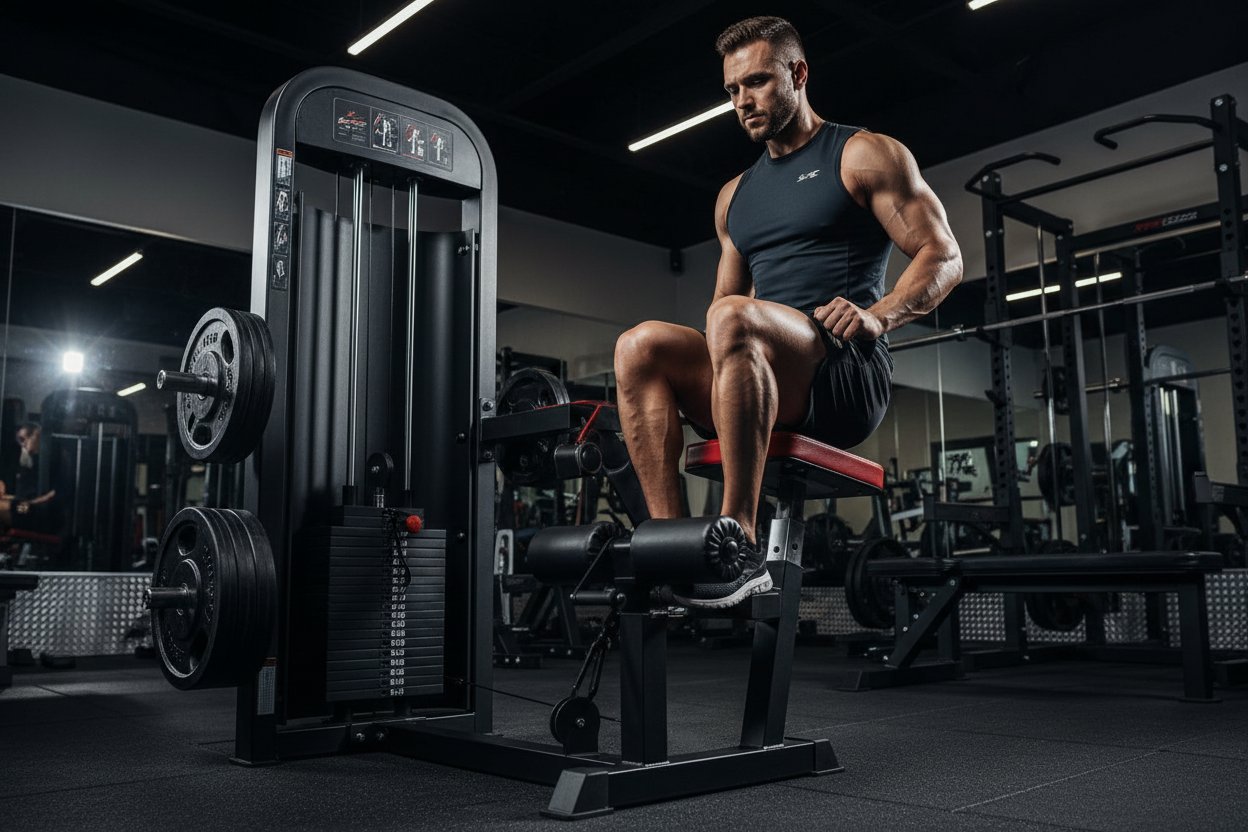
A high-quality hamstring curl quad extension machine operates on a fixed axis. This stability removes the need for balance, allowing you to drive 100% of your neural output into the target muscle. When performing a seated leg extension curl machine movement, you can focus entirely on the contraction (flexion) and the stretch (extension).
This is particularly vital for the hamstrings. During squats, the hamstrings act primarily as stabilizers. To actually grow them, you need knee flexion against resistance, which is exactly what the curls and extension exercise provides.
Choosing the Right Equipment: Plate Loaded vs. Selectorized
When searching for the best leg extension machine for home, you will encounter two main types. Your choice depends on budget and floor space.
Free Weight (Plate Loaded)
The free weight leg extension machine is the most common home gym option. You load standard Olympic plates onto a peg.
Pros: Drastically lower leg curl leg extension machine price; easier to maintain.
Cons: The resistance curve drops off at the top of the movement due to gravity; changing weights takes longer.
Selectorized (Weight Stack)
This mimics the commercial gym feel.
Pros: Constant tension throughout the rep; rapid drop-sets.
Cons: Heavy, expensive, and difficult to move.
Common Mistakes When Buying
Don't just search for a "leg extension machine cheap" and buy the first result. Cheap models often lack stability. If the leg extension and hamstring curl bench wobbles under load, you risk injury.
You need a leg extension flexion machine that allows you to adjust the back pad and the shin roller. If the machine's pivot point doesn't align perfectly with your knee joint, you will place shearing force on the knee ligaments rather than tension on the quads.
My Training Log: Real Talk
I want to share my personal experience with adjustable leg curl/extension machine setups because the spec sheets never tell you the annoying parts. I currently run a plate-loaded combo unit in my garage.
The biggest reality check? The "transition tax." Switching from leg extensions to hamstring curls isn't instantaneous. I have to unweight the machine, pull the heavy pop-pin to swing the cam arm all the way around, adjust the backrest forward, and then reload the plates.
There is also a very specific 'sweet spot' with the shin pad. On my unit, if I don't wear high socks, the vinyl rolls against my shin hairs during heavy eccentrics—it’s a distinct, sharp pinch that breaks my focus. Also, with plate-loaded versions, the strength curve is brutal. The bottom of the curl feels easy, but the top contraction is almost impossible to hold because that’s where the leverage is heaviest. I’ve learned to use a resistance band hooked to the frame to smooth out that curve. It’s not perfect, but it beats driving to a commercial gym just for two exercises.
Conclusion
Investing in a leg curl and hamstring machine is the turning point for home leg development. It bridges the gap between "working out" and actual bodybuilding. Whether you opt for a premium rotary leg extension and curl machine or a budget-friendly plate-loaded version, the ability to isolate your legs will pay dividends in size and strength.
Frequently Asked Questions
Is a leg extension/curl combo machine bad for your knees?
Generally, no. Knee issues usually arise from improper alignment. Ensure the machine's pivot point is directly in line with your knee joint. If you have pre-existing conditions, consult a physio, but controlled isolation is often used for rehab.
What is a good price for a home leg extension machine?
A basic plate-loaded leg extension and hamstring curl bench can range from $200 to $500. High-end selectorized units with weight stacks typically start at $1,500 and go up from there.
Can I just use a leg press leg extension machine instead?
A leg press is a compound movement (pushing), while a leg extension is an isolation movement (levering). They work different mechanisms. The leg press builds mass, but the extension details the muscle. You ideally need both, or a squat rack and an extension machine.