
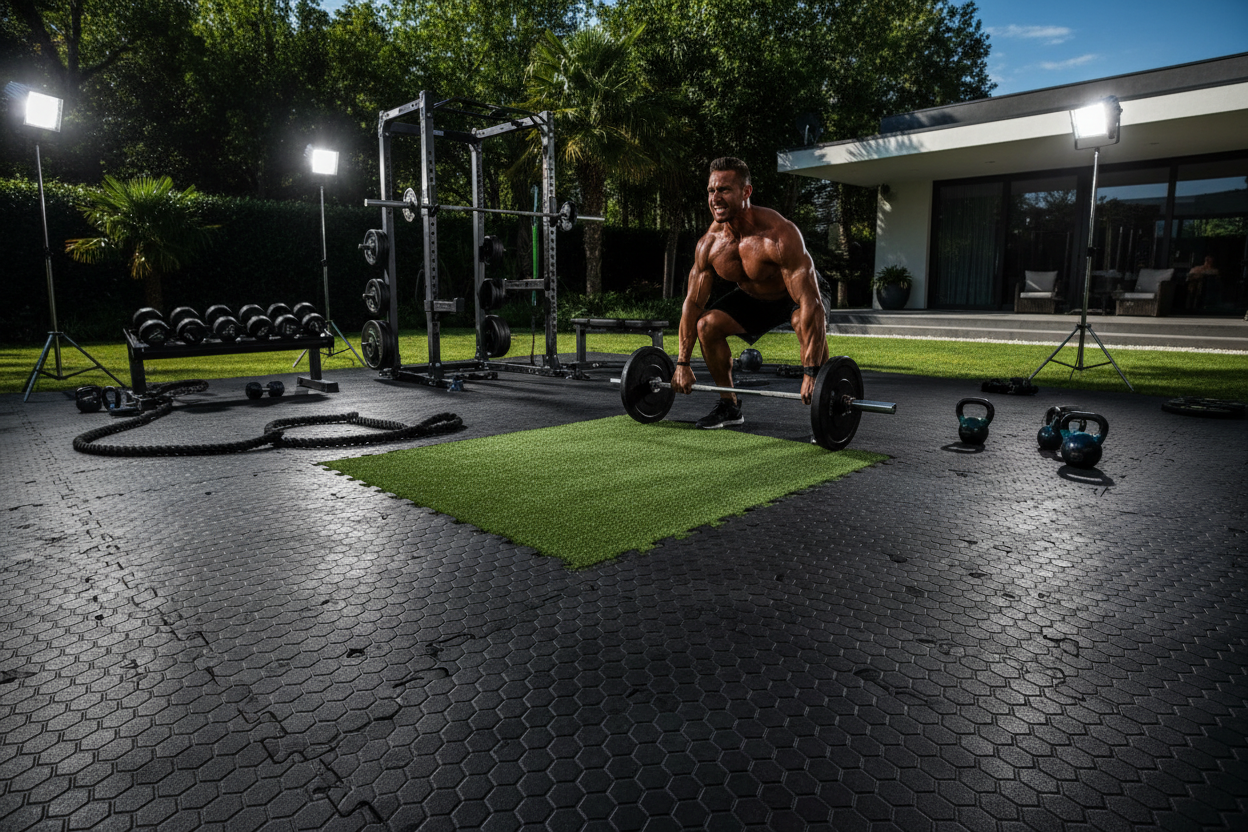
Outdoor Flooring Mat: The Ultimate Backyard Gym Guide
Moving your workouts to the driveway or patio sounds idyllic until you drop a 50-pound dumbbell on bare concrete or tear up your knees doing burpees on the grass. Creating a functional, safe exterior training space requires more than just dragging your indoor gear outside. You need a dedicated outdoor flooring mat designed to withstand the elements while protecting both your joints and your property.
Whether you are building a permanent backyard lifting platform or just need a temporary rollout space for kettlebell sessions, choosing the right foundation is the most critical decision you will make. Let's break down exactly what separates a patio-destroying mistake from a gym-quality outdoor setup.
Key Takeaways
- UV Resistance is mandatory: Standard indoor foam will crumble and fade under direct sunlight within a single season.
- Prioritize drainage: Look for mats with channeled undersides to prevent water pooling, mildew, and structural degradation.
- Vulcanized rubber wins: This material offers the best balance of weatherproofing, durability, and heavy-impact absorption.
- Subfloor protection: Proper outdoor floor padding should be at least 3/4-inch thick if you plan on dropping heavy weights.
Why Standard Gym Mats Fail Outside
It is tempting to buy cheap horse stall mats or EVA foam puzzle pieces for your patio, but the outdoors is an entirely different beast. Indoor mats are simply not engineered for thermal expansion, direct UV rays, or standing water.
The UV and Moisture Factor
When exposed to the sun, non-treated rubber and foam will undergo photodegradation. They become brittle, start to chalk (leaving black residue on your hands and clothes), and eventually crack. Furthermore, if your mat lacks a textured or channeled underside, rainwater gets trapped between the mat and your concrete, leading to foul odors and slippery, unsafe lifting conditions.
Thickness and Density
If you are doing yoga or bodyweight exercises, a 1/2-inch mat might suffice. However, if you are dropping barbells or kettlebells, you need high-density outdoor floor padding that is at least 3/4-inch thick to absorb the shock before it cracks your patio pavers or driveway concrete.
Planning Your Backyard Gym Space
Space planning outdoors requires accounting for nature. You aren't just measuring square footage; you are measuring the slope of your yard and the trajectory of the sun.
Drainage Clearance and Slopes
Most patios and driveways have a slight grade (usually 1% to 2%) to direct water away from the house. When laying down your mats, ensure the drainage channels underneath run parallel to the slope. If you install them perpendicular to the grade, you are essentially building a dam that will trap water under your lifting area.
From Our Gym: Honest Take
Last summer, I set up a heavy bag and squat stand on an 8x10 foot section of vulcanized rubber mats in my driveway. The grip held up beautifully during sweaty August kettlebell swings, and the outdoor floor padding protected my joints during high-impact plyometrics. However, I learned a hard lesson about thermal expansion. Without leaving a half-inch expansion gap near the brick retaining wall, the mats buckled slightly in 95-degree heat. Once I trimmed the edges to give them room to breathe, they laid perfectly flat. The durability is unmatched, but you must respect the heat.
Frequently Asked Questions
Can I leave my outdoor flooring mat in the rain?
Yes, provided it is made of vulcanized or non-porous rubber and features drainage channels on the bottom. You should still periodically lift the edges to sweep out debris that might block water flow.
How thick should outdoor floor padding be?
For bodyweight exercises and light dumbbells, 3/8-inch to 1/2-inch is adequate. For heavy lifting, Olympic weightlifting, or protecting delicate patio pavers, upgrade to 3/4-inch or 1-inch thick high-density rubber.
Do I need to glue down outdoor gym mats?
Generally, no. Heavy rubber mats (which can weigh 40-100 lbs each) will stay in place under their own weight. Gluing them outdoors is actually discouraged, as it prevents natural thermal expansion and makes it impossible to clean underneath them after heavy storms.


