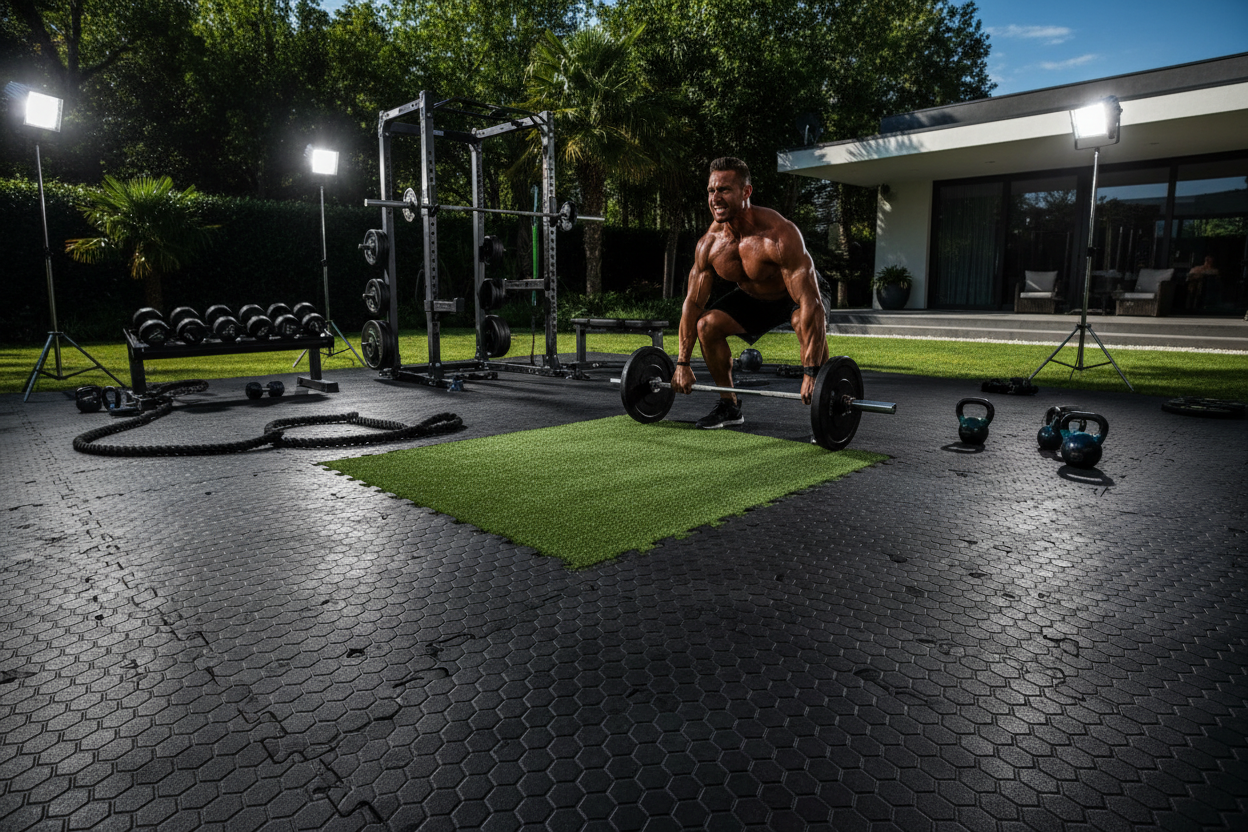
How to Force Growth With a High-Frequency Leg Mass Program
You have been squatting. You have been pressing. Yet, looking in the mirror, the lower half of your physique refuses to match the effort you are putting in. It is the most frustrating plateau in bodybuilding. Most lifters blame their genetics, but usually, the culprit is a flawed leg mass program that focuses on pain rather than progression.
Building substantial legs isn't just about surviving a brutal workout once a week. It requires a strategic approach to volume, frequency, and mechanical tension. If you are tired of "chicken legs" jokes and want quads that actually fill out your jeans, you need to stop training for soreness and start training for stimulus.
Key Takeaways
- Frequency Trumps Intensity: Hitting legs twice a week with moderate volume often yields better hypertrophy than one "annihilation" session.
- Mechanical Tension is King: Controlled eccentrics (lowering phase) trigger more growth than bouncing heavy weights.
- Compound First, Isolate Second: Prioritize squats and hinge movements before moving to machines.
- Caloric Surplus Required: You cannot build significant leg mass in a caloric deficit.
The Science of Hypertrophy: Why Your Current Split is Failing
Many lifters stick to the traditional "Bro Split," dedicating one single day to obliterating their legs. While this feels productive because you can't walk the next day, it is often suboptimal for natural lifters.
Muscle protein synthesis—the biological process of building muscle—typically returns to baseline within 24 to 48 hours after a workout. If you train legs on Monday and wait until next Monday to hit them again, you are leaving five days of potential growth on the table.
The Frequency Factor
A superior leg building program splits the volume. Instead of doing 20 sets of quads on Monday, try doing 10 sets on Monday and 10 sets on Thursday. You are performing the same total work, but you are spiking growth signals twice as often. This allows for higher quality reps because you aren't fatigued by the end of the session.
Structuring the Routine: The "Big Movers"
You don't need to confuse your muscles. You need to overload them. Your program should center around movements that allow for heavy loading and progressive overload over time.
The Squat Pattern
Whether it is a high-bar back squat, a front squat, or a hack squat, you need deep knee flexion. The goal here is to lengthen the quadriceps under load. Do not cut depth to add weight. Half-reps result in half-growth.
The Hinge Pattern
For hamstrings and glutes, the Romanian Deadlift (RDL) is non-negotiable. Unlike leg curls, the RDL trains the hamstrings in their lengthened position, which is superior for hypertrophy. Keep your spine neutral and push your hips back until you feel a deep stretch.
Accessory Work: Filling in the Gaps
Once the heavy lifting is done, move to isolation exercises to accumulate metabolic stress without taxing your central nervous system.
Leg extensions constitute a vital part of any leg mass program because they are one of the few exercises that challenge the rectus femoris (the middle quad muscle) effectively. Squats don't hit this muscle hard enough. Perform these with a pause at the top and a slow descent.
My Training Log: Real Talk
I want to be honest about what a successful hypertrophy block actually feels like. It isn't the "glamorous" Instagram highlight reel. I remember specifically during my last high-frequency block, the hardest part wasn't the heavy sets—it was the logistical annoyance of everyday life.
There is a specific, gritty sensation when you put on dress pants after a month of high-volume squats. I recall standing in my bedroom trying to button a pair of chinos that fit my waist perfectly, but the fabric was pulled so tight across my quad sweep that I couldn't lift my leg to tie my shoes. I had to sit on the edge of the bed, winded, with that dull, deep ache in my vastus medialis that feels like a toothache in your leg. That specific discomfort—where the fabric restricts you before your flexibility does—is the only metric that really tells me the program is working.
Conclusion
Building massive legs is a marathon, not a sprint. It requires managing fatigue, eating enough food to support new tissue, and adhering to a program that prioritizes frequency over one-off intensity. Stop skipping sessions, focus on the eccentric portion of your lifts, and trust the process.
Frequently Asked Questions
How often should I train legs for mass?
For most intermediate lifters, training legs twice a week (e.g., in an Upper/Lower split or Push/Pull/Legs rotation) offers the best balance between recovery and growth stimulus.
Can I build leg mass without squats?
Yes. While squats are excellent, they are not mandatory. You can build significant mass using Hack Squats, Leg Presses, and Bulgarian Split Squats, provided you apply progressive overload and achieve a full range of motion.
How many reps should I do for hypertrophy?
Legs generally respond well to a mix of rep ranges. Use 6–10 reps for heavy compounds like squats and deadlifts, and 10–20 reps for isolation movements like leg extensions and curls to maximize metabolic stress.