No Garage Needed: At Home Workout Plans for Beginners
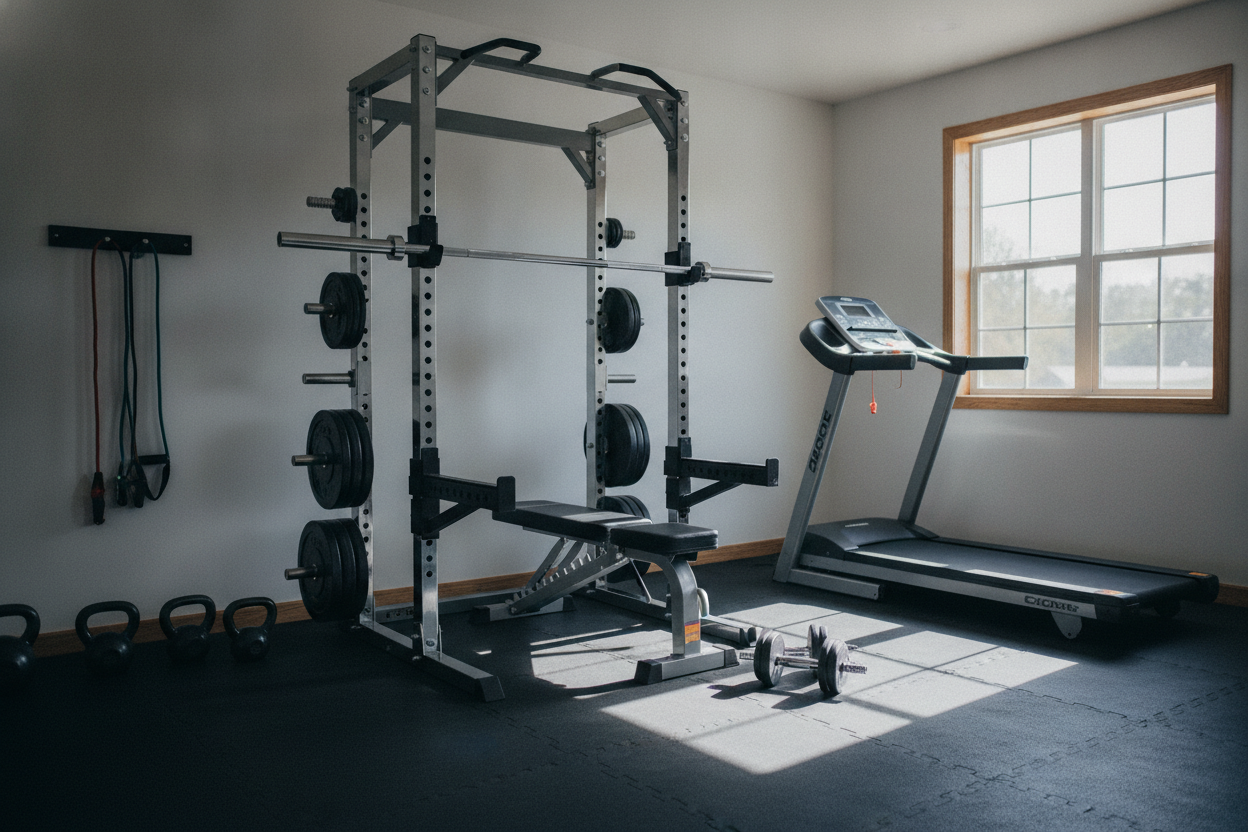
I have spent the last decade surrounded by thousands of pounds of cast iron and heavy-duty steel racks. My garage looks like a commercial gym, but here is the truth: I did not start there, and you definitely do not need to. Most at home workout plans for beginners fail because they overcomplicate the gear before the habit is even built.
You do not need a three-car garage or a $3,000 power rack to get strong. You need about 48 square feet of floor space and a plan that does not involve scrolling through Instagram for 'fitspo' while your coffee gets cold. Let's talk about how to actually build a beginner fitness plan at home without turning your house into a warehouse.
Quick Takeaways
- Your floor is your most important piece of equipment—protect it and your joints.
- Consistency is built through physical boundaries, not expensive memberships.
- A 3-day full-body split is the sweet spot for sustainable progress.
- Analog tracking (paper and pen) beats fitness apps for focus.
The Garage Gym Myth (And Why Your Living Room Is Fine)
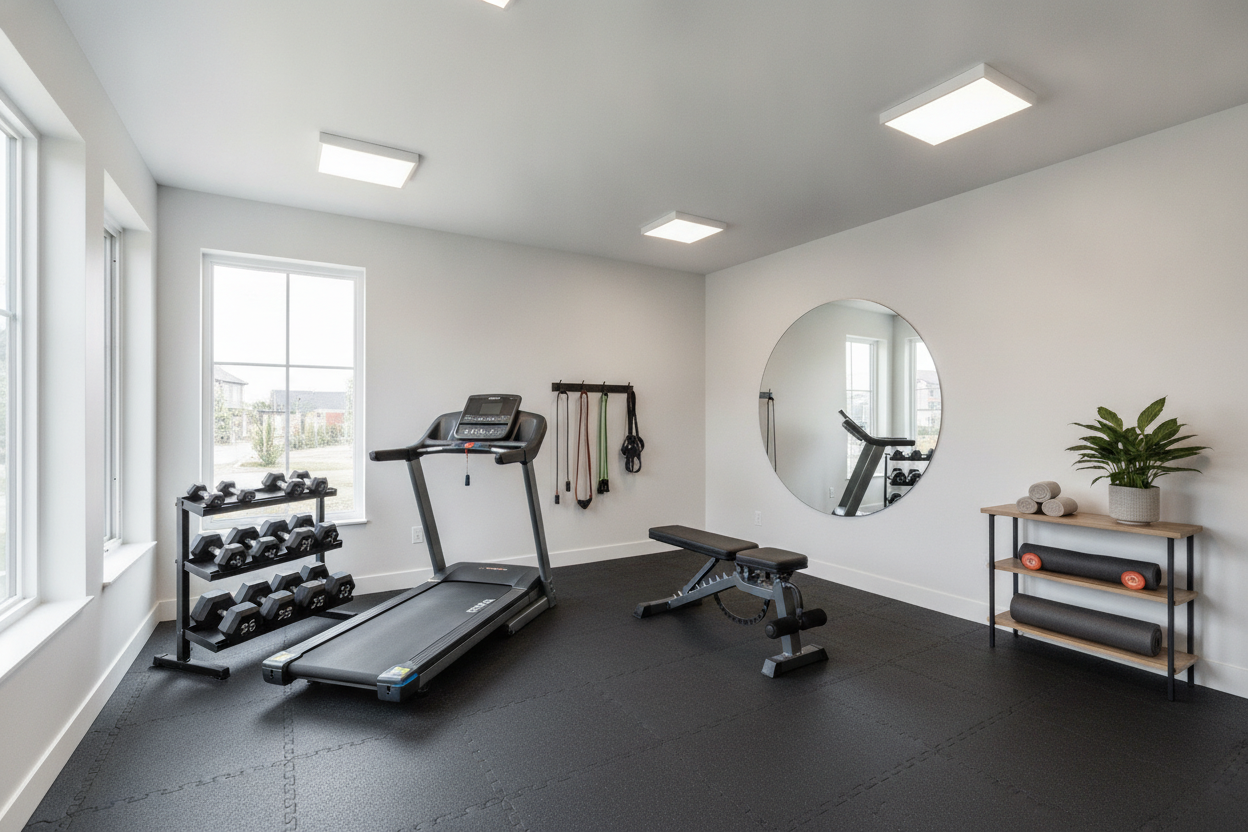
The internet loves showing off 'dream gyms' with neon lights and calibrated plates. It is easy to feel like you are failing before you start because you do not have a dedicated outbuilding. But for a novice, heavy iron is often a distraction. Your body does not know if you are in a $50,000 home gym or next to your sofa; it only knows tension and recovery.
The biggest hurdle for a beginners exercise plan at home is the lack of physical separation. In a commercial gym, the door is the trigger. At home, you have to create that trigger. Use your living room, but treat it with the same respect you would a professional facility. Clear the clutter, move the coffee table, and claim your space.
Mapping Out Your Space (The 'Mat-Only' Rule)
Hardwood floors are slippery. Carpets are unstable and trap sweat like a sponge. If you want a fitness program for beginners at home to actually stick, you need a dedicated boundary. I tell everyone starting out to invest in a large exercise mat for home gym use. This is not just about floor protection; it is about psychology.
When you step onto that mat, you are 'at the gym.' It provides the grip you need for mountain climbers and the cushioning your knees need for lunges. I have seen too many people quit because they were tired of their feet sliding out during planks. Eliminate the friction, literally and figuratively, by defining your workout zone.
The 3-Day Beginner Fitness Plan at Home
Stop trying to train six days a week. You will burn out by Tuesday. A 3-day 'Full Body' or 'Push/Pull/Legs' approach is the gold standard for a beginner fitness plan at home. It allows for maximum recovery while hitting every major muscle group.
I recommend a 6x8ft exercise mat as your base of operations. This footprint is large enough for lateral lunges and sprawling out for core work without your hands ending up on the dusty floorboards. For more details on maximizing small spaces, read our fixed footprint training guide.
- Monday (Legs/Core): Air squats, alternating lunges, and planks. Focus on keeping your chest up and your weight in your heels.
- Wednesday (Push/Pull): Pushups (on knees if needed) and 'Superman' holds or towel rows to engage the back.
- Friday (Full Body Burn): Burpees, glute bridges, and bird-dogs.
Ditching the Apps: Why Your Beginners Exercise Plan at Home Needs Paper
I am a tech guy, but I hate phones in the gym. Every notification is a potential distraction that turns a 30-minute workout into an hour of mindless scrolling. When you are following a beginners exercise plan at home, your momentum is fragile. Do not let a work email kill it.
Buy a cheap notebook. Write down your exercises, sets, and reps before you start. There is a visceral satisfaction in physically crossing off a set that a screen cannot replicate. It also makes it incredibly easy to see your progress over time. If you did 10 pushups last week and 11 this week, you are winning. That is progressive overload in its purest form.
When to Upgrade Your Fitness Program for Beginners at Home
Eventually, bodyweight alone will not be enough to drive significant strength gains. But do not rush out and buy a full set of dumbbells on day one. You should only upgrade your fitness program for beginners at home once you can move through full ranges of motion with perfect control. If your form is sloppy, adding weight just breaks things faster.
If you find that standard movements are too difficult or you are feeling 'stuck,' I suggest looking into a static start beginner program. Focusing on isometric holds—holding the bottom of a squat or the top of a pushup—builds the connective tissue strength you need before you start swinging heavy weights around your living room.
My Personal Take: The 'Cheap Bench' Lesson
Years ago, I tried to save money by buying a $60 folding bench from a big-box store. The first time I tried to step up onto it, the leg buckled. I ended up with a bruised shin and a bruised ego. It taught me that the foundation matters more than the accessories. If your floor is solid and your mat is high-quality, you can do 90% of what you need to do safely. Do not skimp on the stuff that sits between you and the ground.
FAQ
How much space do I really need?
If you can lie down and spread your arms without hitting a wall, you have enough space. A 6x8 foot area is the 'goldilocks' zone for most home routines.
Is working out on carpet okay?
It is doable, but not ideal. Carpet shifts under tension, which can lead to ankle rolls during lateral movements. A dense rubber or foam mat over the carpet is a much safer bet.
What if I cannot do a single pushup?
Start with your hands on a kitchen counter or the back of a sturdy sofa. Gradually move to lower surfaces (like a coffee table) as you get stronger until you reach the floor.