Fell Off the Wagon? Why You Need a 4-Week Workout Plan Reset
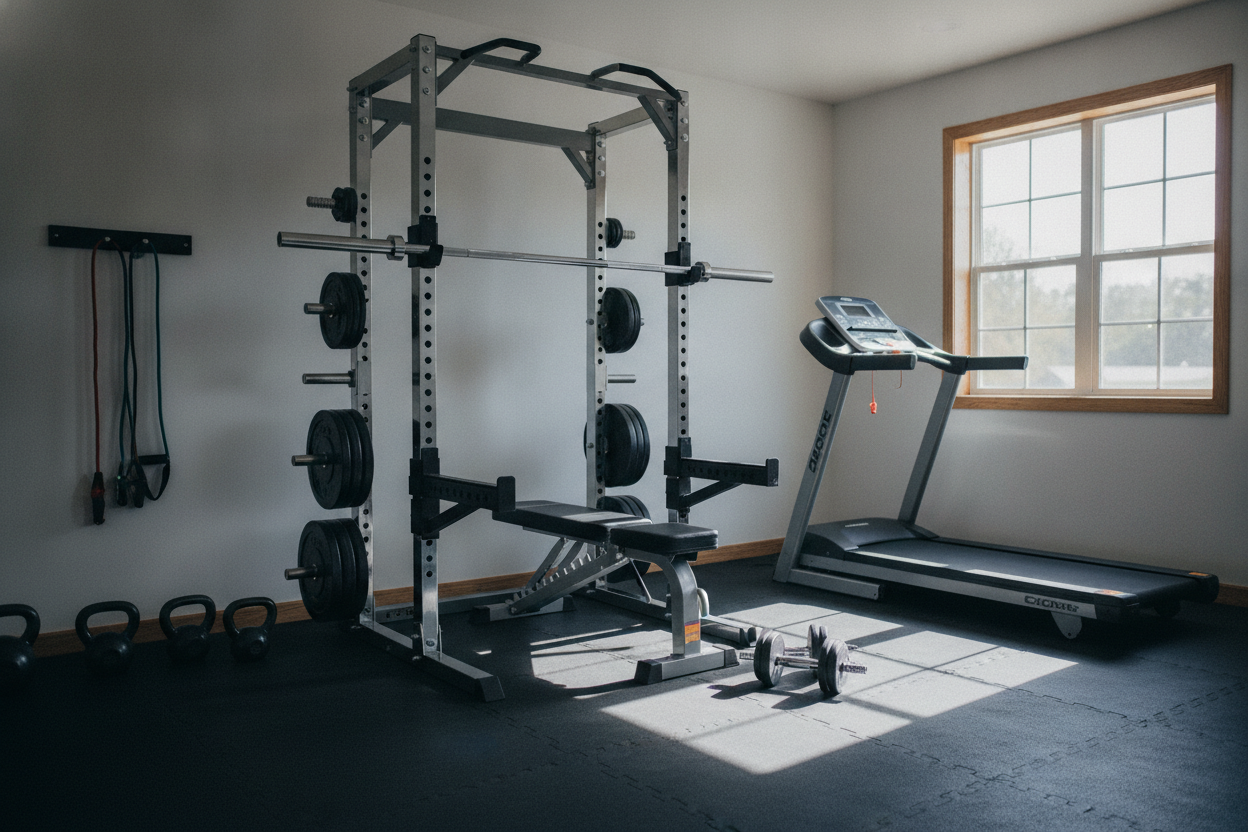
We have all been there. You stare at your power rack, and instead of seeing a tool for progress, you see a very expensive coat hanger covered in a fine layer of drywall dust. Maybe you got sick, maybe work went sideways, or maybe you just got lazy. Whatever the reason, the gap between your last session and today feels like a canyon. Jumping back in feels daunting because you feel like you have to make up for lost time immediately.
The biggest mistake I see garage gym owners make is trying to pick up exactly where they left off. You cannot expect to hit a PR when your body has spent the last month fueled by takeout and couch time. That is where a 4-week workout plan becomes your best friend. It is not about setting world records; it is about reminding your nervous system that you still lift heavy things and making the gym a habit again.
Quick Takeaways
- Short 28-day blocks prevent the 'week three burnout' common in longer programs.
- Focus on movement quality and consistency rather than total tonnage.
- Environment matters—a clean, dedicated space reduces the friction of starting.
- Leave 2-3 reps in the tank for the first fortnight to manage soreness.
The Re-Entry Trap: Why 12-Week Programs Fail After a Break
When you are feeling guilty about missing time, the instinct is to download the most grueling, high-volume 12-week program you can find. You think that suffering is the price of admission for your comeback. It is a trap. Your work capacity has dropped, and your connective tissues are not primed for high-intensity loads right now. If you try to run a professional-level strength block on day one, you will be so sore by Wednesday that you will quit by Friday.
Psychologically, a 12-week commitment feels like a mountain. When you are already struggling with motivation, looking at a calendar that ends three months from now is exhausting. You need a win, and you need it fast. A massive program is a marathon; a reset is a sprint to get your feet back under you.
The Power of the Short-Term Finish Line
Four weeks is the sweet spot. It is long enough to see the scale move or the muscle bellies fill back out, but short enough that the end is always in sight. You can do anything for 28 days. This timeframe allows you to rebuild your baseline strength without the mental fatigue of a long-term grind. If you want a structured, pre-written blueprint to follow, you can use our comprehensive monthly home workout plan to take the guesswork out of your programming.
By the time those four weeks are up, the 'newness' of the gym has worn off and the habit has taken over. You stop asking 'should I work out today?' and just go do it because it is part of your schedule again. That momentum is more valuable than any individual set of squats you perform during the month.
How to Build Your Comeback Routine
Your goal for this reset is simple: don't get hurt and don't miss a session. I recommend a full-body or upper/lower split three to four times a week. Stay away from one-rep maxes. Your ego will tell you to see if you still 'have it,' but all you will likely find is a strained lower back. Focus on moderate volume—sets of 8 to 12 reps—leaving at least two reps in the tank every single set.
Keep the sessions punchy. Long, two-hour marathons are the enemy of consistency when you are restarting. You might consider integrating a shorter session like a 45-minute chest workout plan to keep your daily time commitments manageable. The goal is to leave the gym feeling better than when you walked in, not like you were hit by a freight train.
Setting Up Your Space for Zero Excuses
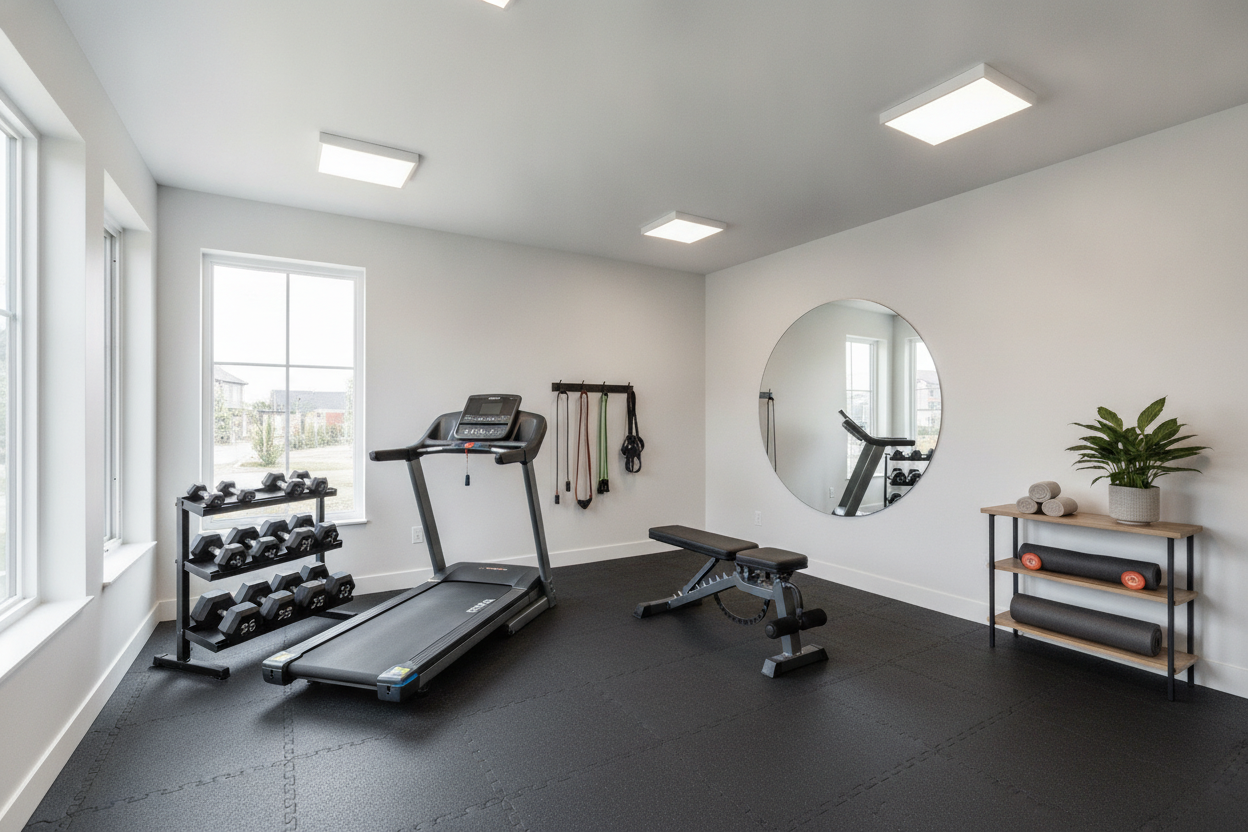
If your gym is a disaster zone, you are going to find every reason to stay in the house. I have spent more time cleaning my garage than lifting in it some weeks, and I can tell you that environment dictates success. If you have to move a lawnmower and three boxes of holiday decorations just to reach your barbell, you have already lost the battle.
Define your space. Even if you are working in a cramped corner, make it look like a gym. Throwing down a heavy-duty 6x8ft exercise mat permanently defines your workout zone and protects your floors from dropped dumbbells. When you step onto that mat, the 'home' part of the house disappears and the 'gym' part takes over. It is a mental trigger that says it is time to work.
What Happens on Day 29?
By the end of the four weeks, the 're-entry protocol' is over. You have survived the DOMS, your joints feel lubricated, and you have likely regained most of the strength you thought you lost. Now you have earned the right to go heavy again. You can transition into a more demanding training block with a much lower risk of burning out or snapping something.
Once the habit is rebuilt, you can explore our complete workout hub to find your next long-term program. Whether you want to focus on powerlifting, hypertrophy, or general conditioning, you will be doing it from a position of strength rather than a place of guilt.
My Experience: The 'Too Much Too Soon' Lesson
A few years back, I took a month off after a shoulder tweak. When I felt 100%, I went straight back to my old 5x5 routine at my previous weights. I felt great for two days. On day three, my central nervous system absolutely fried. I was irritable, I could not sleep, and I ended up taking another two weeks off just to recover from the 'recovery.' I learned the hard way that your brain remembers the weights, but your body needs a re-introduction. Now, I always use a 4-week ramp-up. It feels 'too easy' for the first week, and that is exactly the point.
FAQ
Do I need a lot of equipment for a reset?
Not at all. You can do a reset with a single pair of dumbbells or a kettlebell. The focus is on the 28-day habit, not the complexity of the movements.
Should I do cardio during these 4 weeks?
Keep it light. A 20-minute walk on off days is great for recovery. Don't start a marathon training plan at the same time you are trying to get back into lifting.
What if I miss a day during the 4-week plan?
Don't double up the next day. Just pick up where you left off. The goal is to finish the 28 days of work, even if it takes you 32 days to get them all in.