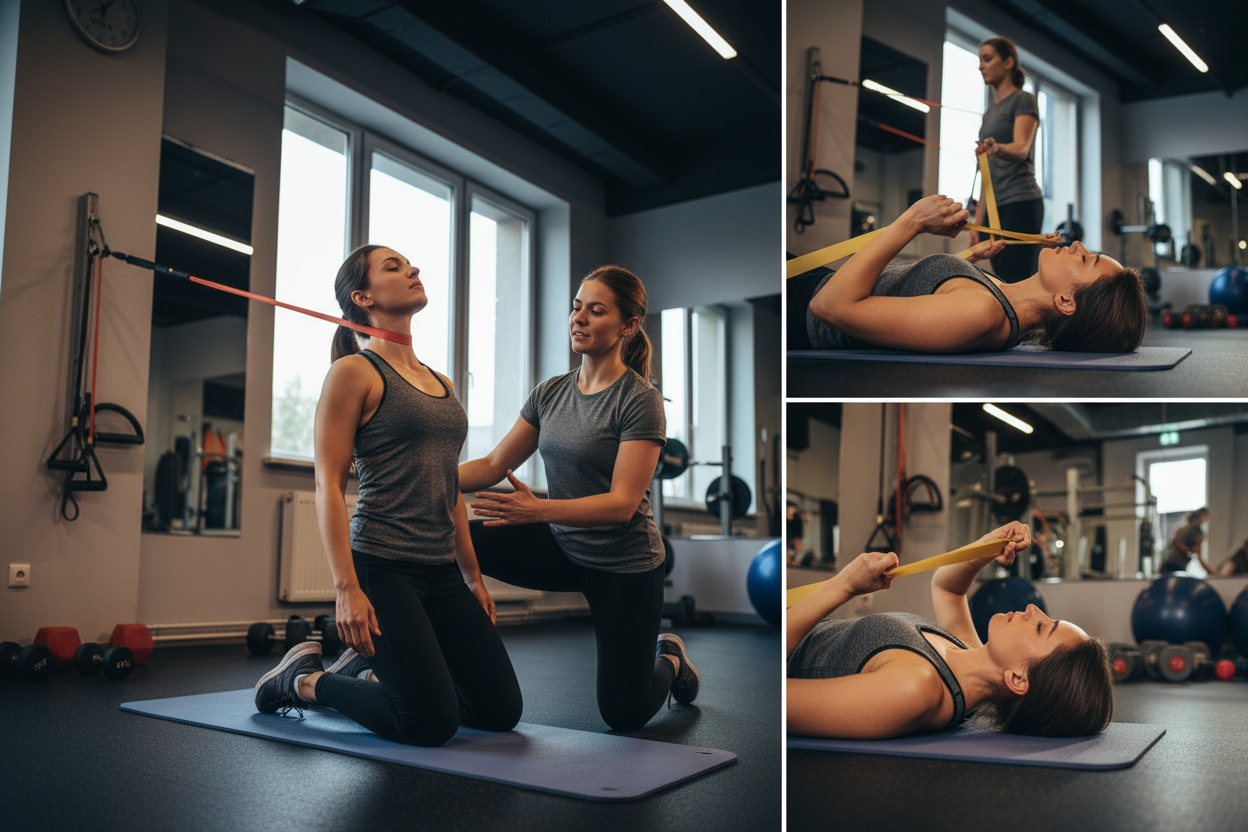
Neck Pain Physical Therapy Exercises: The Ultimate Recovery Guide
You wake up, turn your head, and there it is—that sharp, catching sensation that ruins your morning. Or maybe it’s the dull, burning ache that sets in after three hours at your desk. If you are reading this, you are likely tired of temporary fixes like heat packs or painkillers. You are looking for a structural solution. That solution lies in structured, clinically proven neck pain physical therapy exercises.
The neck, or cervical spine, is an engineering marvel, balancing a 10-pound head on a narrow column of vertebrae. When that balance is thrown off by injury, "tech neck," or weakness, the resulting cervicalgia (neck pain) can be debilitating. This guide isn't just about stretching; it is about retraining the complex muscular system that supports your head to provide lasting relief.
Key Takeaways: Quick Summary
- Mobility before stability: Always restore range of motion with cervical stretches physical therapy before adding load.
- Deep Neck Flexors are key: Most neck pain stems from weak deep stabilizers, not just tight outer muscles.
- Shoulder connection: You cannot fix the neck without addressing the shoulders; neck and shoulder physical therapy go hand-in-hand.
- Consistency beats intensity: Doing therapeutic neck exercises gently every day is superior to one intense session a week.
- Nerve health matters: Neck glide exercises can help alleviate radiating pain often mistaken for muscle tightness.
The Mechanics: Why Your Neck Actually Hurts
Before jumping into physio exercises for neck pain, you need to understand the "why." In many cases of chronic pain, the large prime movers (like the upper trapezius) become overactive and tight because the deep stabilizing muscles have fallen asleep. This is common in office workers and drivers.
When you perform physical therapy exercises for neck and back pain, the goal is often to "turn off" the overactive muscles by strengthening the underactive ones. This rebalancing act reduces the shear forces on your cervical vertebrae.
Phase 1: Restoring Mobility (The "Unlock" Phase)
If your neck feels locked, strengthening it immediately can cause spasms. We start with passive and active range of motion. These are foundational pt exercises for neck pain designed to lubricate the joints.
The Cervical Retraction (Chin Tuck)
This is the gold standard in cervical physical therapy exercises. It reverses the "forward head posture" that puts up to 60 pounds of pressure on your spine.
Sit upright. Pull your chin straight back as if you are making a "double chin." Do not look down; keep your eyes on the horizon. You should feel a gentle pull at the base of your skull. Hold for 3 seconds. Repeat 10 times.
Upper Trapezius Release
Tight traps are the enemy of a pain-free neck. For this physiotherapy neck exercise, sit on one hand to anchor your shoulder down. Gently tilt your ear toward the opposite shoulder. Do not force it. You want a mild stretch, not pain. This is crucial for cervicalgia exercises routines.
Phase 2: Stabilization (The "Build" Phase)
Once you have some movement, we need to lock it in. Physical therapy exercises for neck and shoulder pain often focus on the scapula (shoulder blade) because your neck muscles attach there. If your shoulders are unstable, your neck takes the hit.
Deep Neck Flexor Holds
Lie on your back. Perform the chin tuck mentioned above. Now, lift your head just one inch off the floor (or pillow). Hold this position. If your superficial neck muscles (the big cords in the front) pop out or shake violently, your deep flexors are weak. This is one of the most effective pt neck exercises for long-term stability.
Scapular Retraction
Since neck and shoulder pain exercises physical therapy are interconnected, this move is non-negotiable. Squeeze your shoulder blades together and down, as if trying to put them in your back pockets. This relieves tension on the upper neck muscles.
Phase 3: Advanced Gliding (The "Nerve" Phase)
Sometimes, the pain isn't muscular—it's neural. If you feel shooting pain or tingling, you might need neck glide exercises (neural flossing). These help the nerves slide freely through the tissues.
Note: If you have a suspected neck injury, consult a professional before attempting these.
Extend your arm out to the side with your palm up. Tilt your head away from the arm while flexing your hand down. Then tilt your head toward the arm while flexing the hand up. This "flossing" motion is a staple in rehab for cervical pain physical therapy exercises.
My Personal Experience with neck pain physical therapy exercises
I want to be real with you for a second. I spent years ignoring my own advice, hunching over laptops until I developed a nagging ache at the C5-C6 level. I thought I could just "stretch it out" with aggressive rolling. I was wrong.
I remember the first time I properly committed to the Deep Neck Flexor Hold. I lay on the floor of my living room, confident I could hold my head up for a minute. Within 10 seconds, my neck started vibrating. Not a little shake—a violent, uncontrollable tremor deep in my throat. It was humbling. It felt like my head weighed 50 pounds.
That specific, shaky weakness was the smoking gun. It wasn't that my neck was "tight"; it was that my stabilizers were atrophied. The grit required to do those boring, invisible exercises every single morning was harder than hitting a heavy deadlift. But after three weeks of dealing with that tremor, the morning stiffness vanished. If you feel that shake, embrace it. That's weakness leaving the body.
Conclusion
Healing the cervical spine is a marathon, not a sprint. Whether you call them physio neck exercises, cervical therapy exercises, or just rehab, the principle remains the same: Restore motion, build stability, and fix your posture.
Start with the gentle stretches. Respect your pain threshold. If a movement causes sharp pain (not just stretching discomfort), stop immediately. Your neck is resilient, but it requires patience.
Frequently Asked Questions
How often should I do physical therapy neck stretches?
For mobility and stretching, consistency is paramount. You can perform gentle neck stretches physical therapy daily, or even twice a day. However, for strengthening exercises like isometric holds, you might aim for 3-4 times a week to allow for muscle recovery.
Can I do these exercises if I have a pinched nerve?
You must be careful. While neck glide exercises are designed for nerve issues, aggressive stretching can aggravate a pinched nerve. If you have radiating pain (numbness in arms/fingers), seek professional physical therapy for neck and shoulder pain exercises tailored to your specific injury.
What is the difference between physiotherapy exercises and chiropractic care?
Chiropractic care often focuses on manual adjustments and alignment (like addressing neck subluxation). Physiotherapy exercises neck pain focus on strengthening the muscles to hold that alignment. Ideally, a combination of manual therapy and active neck pain rehab exercises yields the best results.