Names of Workout Equipment Decoded: A Complete Gym Guide
Walking into a commercial facility or browsing a fitness catalog can feel like learning a new language. If you are trying to piece together a garage gym but keep getting lost in the jargon, you aren't alone. Knowing the exact names of workout equipment is the crucial first step to buying the right gear, planning your floor space, and avoiding expensive mistakes.
Whether you are working with a tight basement corner or a sprawling two-car garage, understanding what each piece of machinery is actually called will help you compare specs, buy compatible attachments, and confidently design your ideal training space.
Key Takeaways
- Free weights (barbells, dumbbells) offer the highest versatility-to-space ratio for home gyms.
- Power racks (or cages) are the foundational safety centerpiece of any serious strength setup.
- Cardio machines are often categorized as 'ergs' (ergometers) in functional fitness spaces.
- Knowing the correct terminology ensures you buy compatible attachments, like matching 3x3 inch rack accessories.
Decoding the Iron: Free Weights and Resistance
When you look at the various equipment names in gym environments, free weights are usually the starting point. They require minimal maintenance and provide the most bang for your buck.
Barbells and Bumper Plates
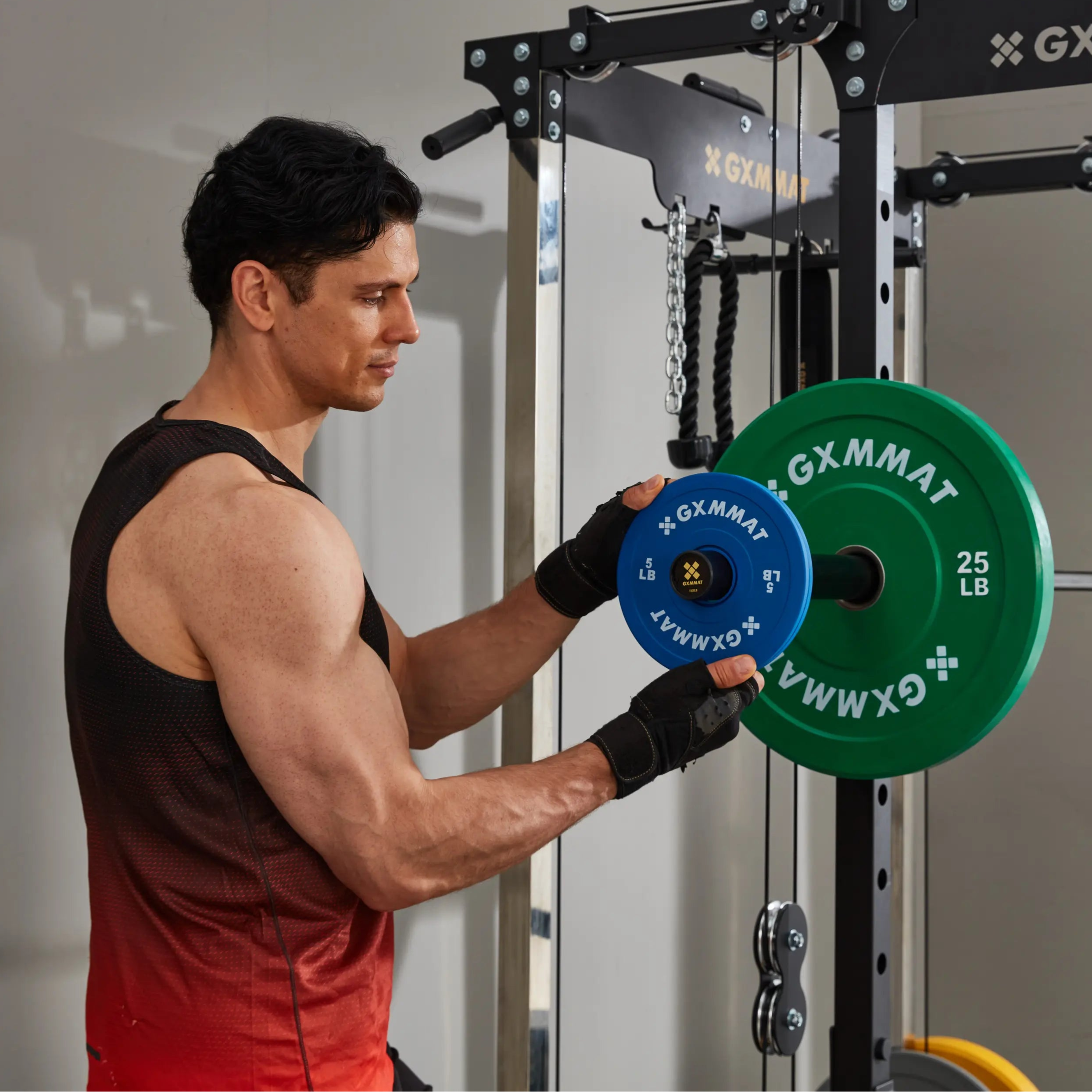
The Olympic barbell (typically 7 feet long and 45 pounds) is the gold standard for heavy lifting. It pairs with bumper plates—rubber-coated weight plates designed to be safely dropped on platforms without shattering. Standard plates, by contrast, are usually iron and strictly meant for controlled lifting.
Dumbbells and Kettlebells
Dumbbells are essential for unilateral (single-arm) training. For home gyms, adjustable dumbbells are a massive space-saver, replacing an entire wall of fixed weights. Kettlebells, characterized by their cast-iron bell shape and top handle, are unparalleled for dynamic, ballistic movements like swings and snatches.
The Centerpiece: Racks and Benches
Your heavy lifting zone revolves around your rack and bench. Mixing up these terms can lead to buying gear that doesn't fit your ceiling height or training style.
Power Racks vs. Squat Stands
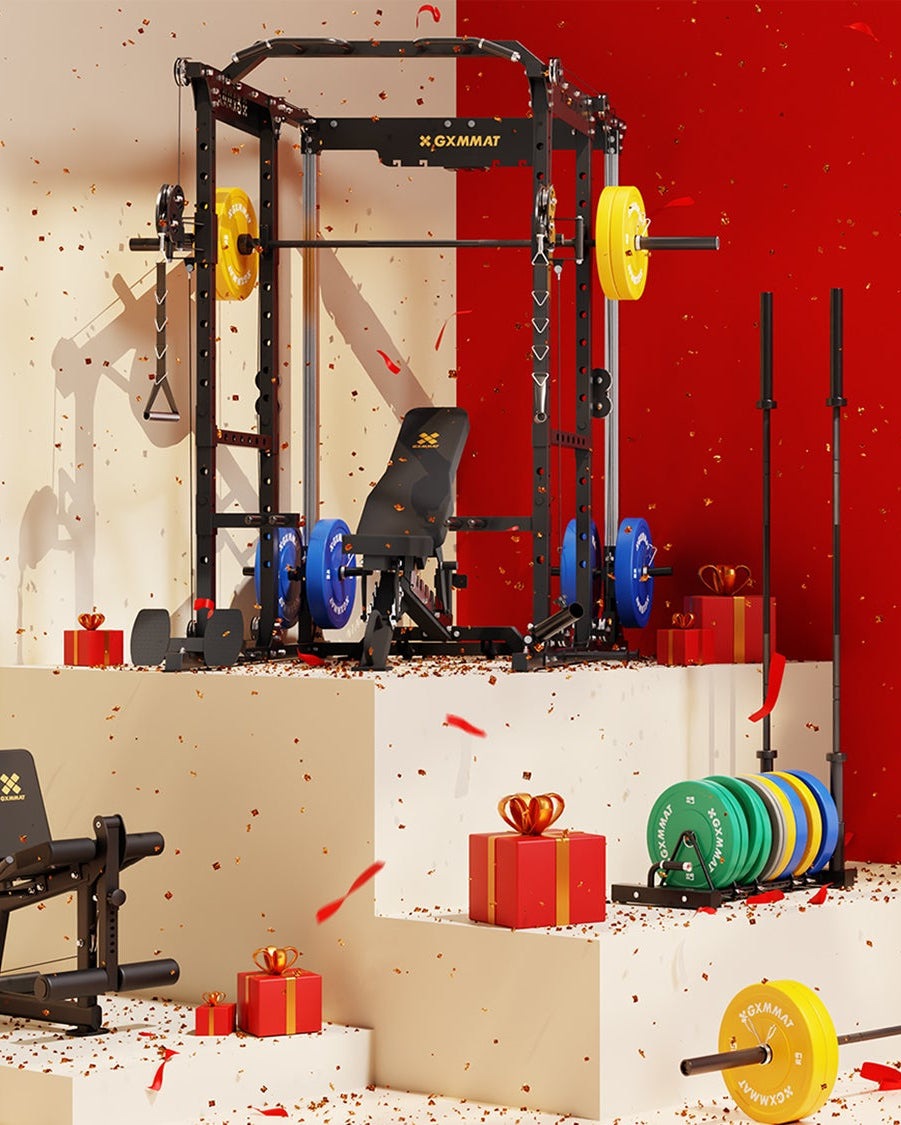
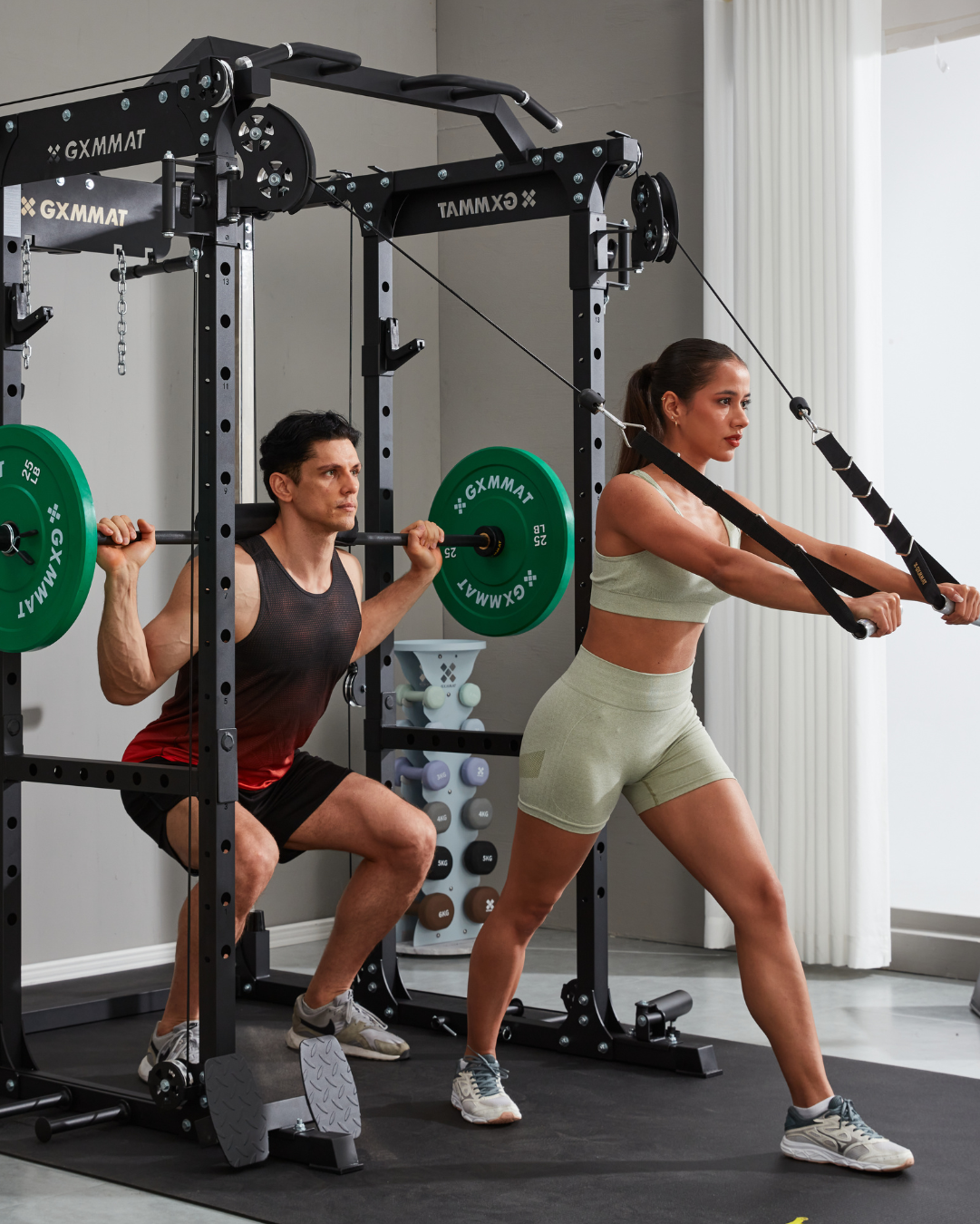
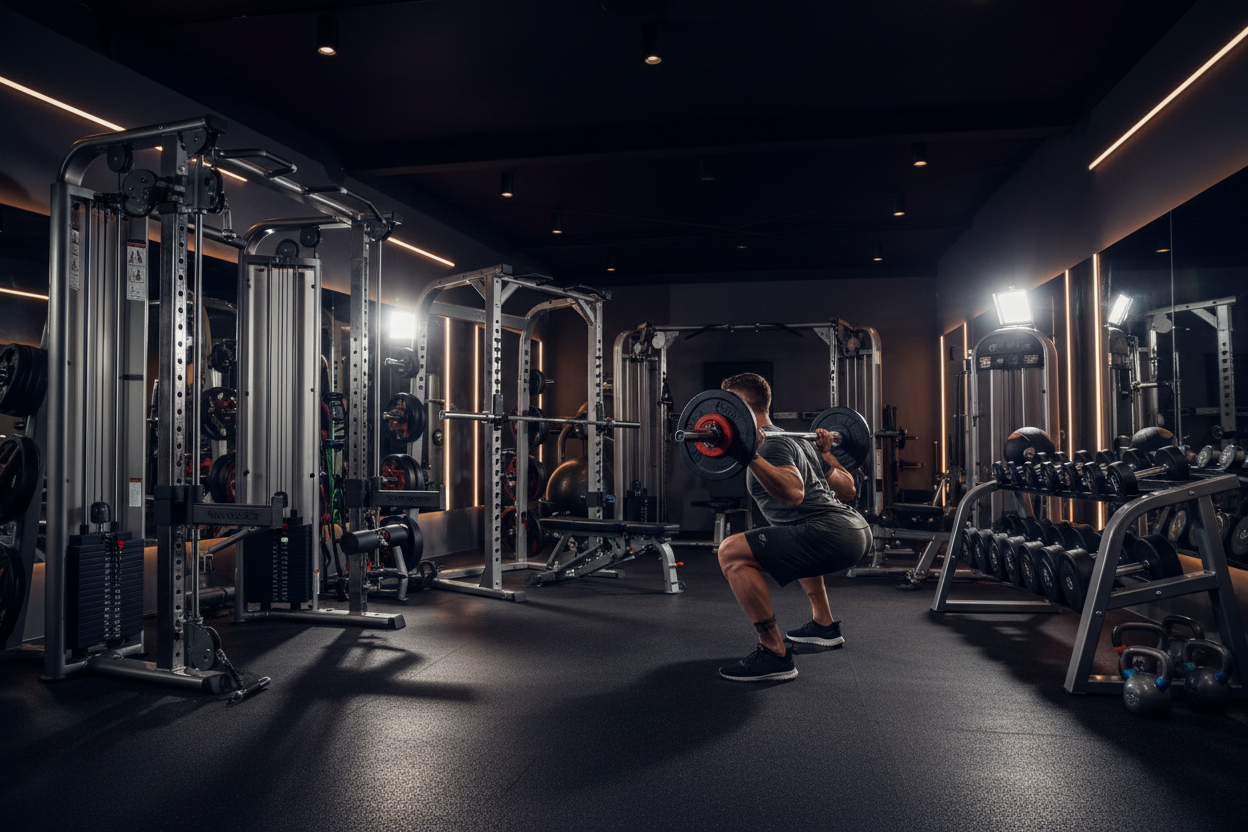
A power rack (or power cage) features four or six upright posts and includes safety pins that run horizontally to catch a dropped barbell. It is incredibly safe for solo lifters. A squat stand typically only has two uprights. If you have a standard North American garage with 9-foot ceilings, an 84-inch power rack is the ultimate investment.
FID Benches
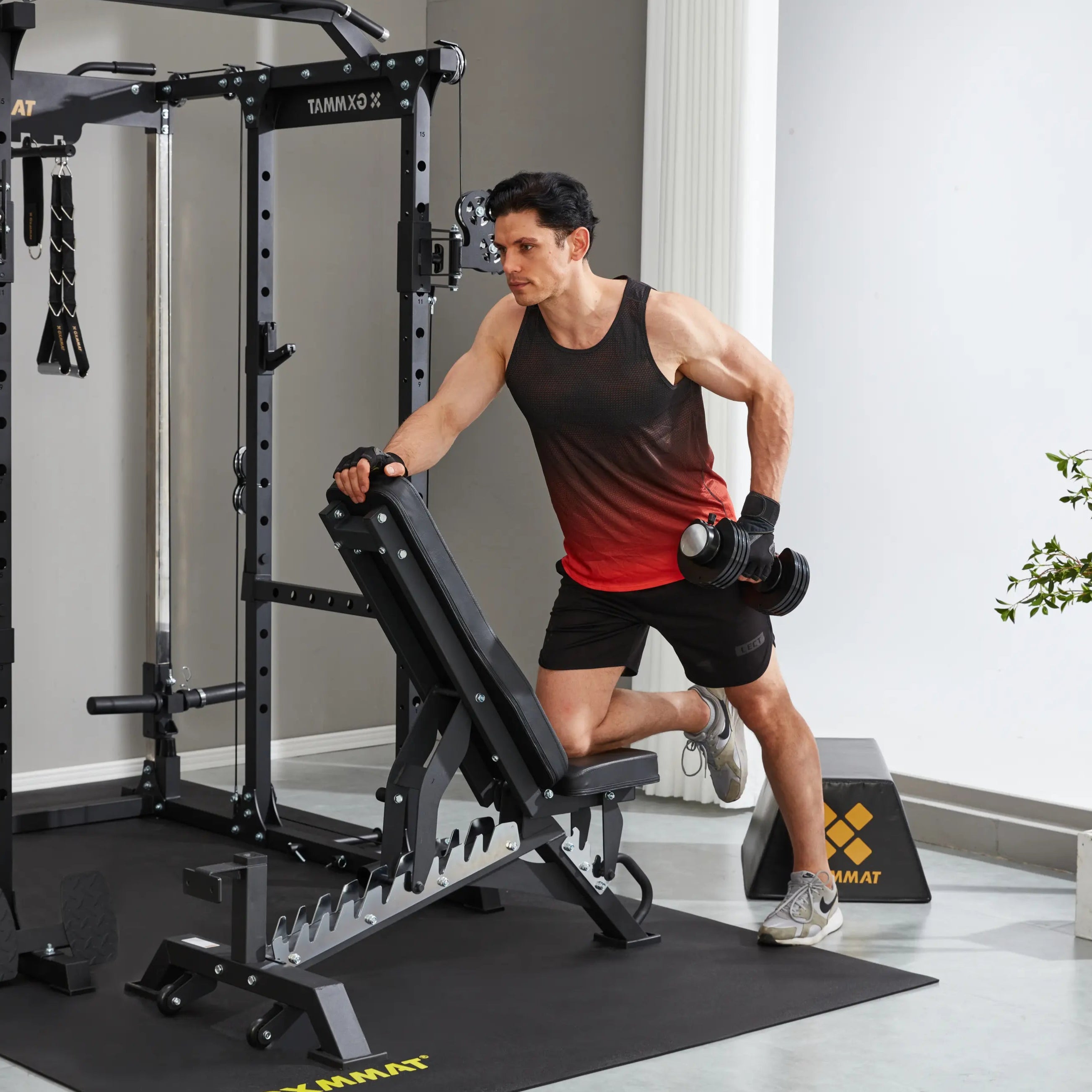
FID stands for Flat, Incline, Decline. While a standard flat bench is great for basic bench presses, an adjustable FID bench allows you to target different muscle angles, making it a highly versatile addition to any home setup.
Specialized Strength: Cable and Leverage Gear
Once the basics are covered, many lifters look to add machines that provide constant tension throughout the range of motion.
Functional Trainers
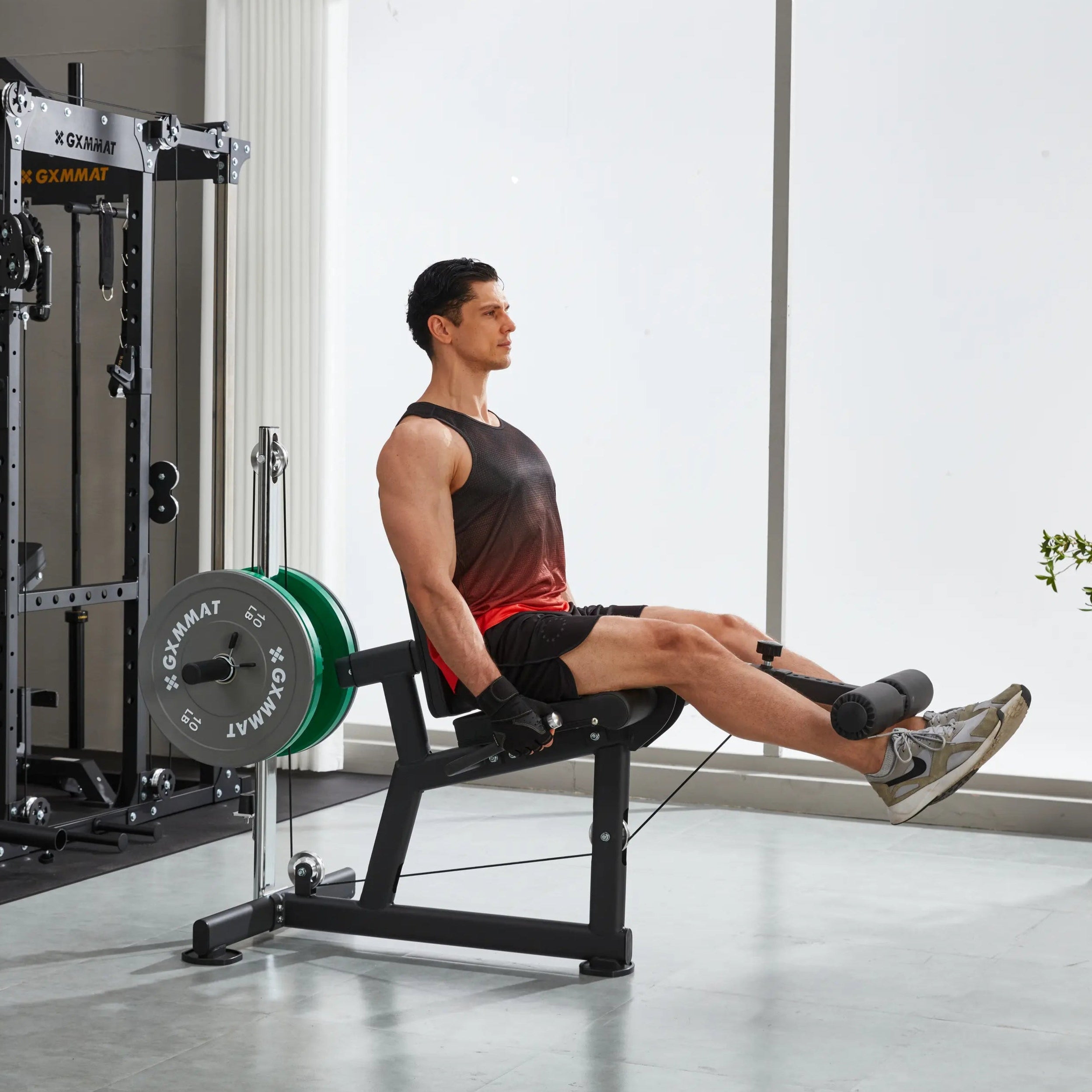
A functional trainer consists of dual cable columns with adjustable height pulleys. They are incredibly versatile but demand a significant footprint, often requiring at least 6 feet of wall width.
Smith Machines
Often confused with power racks, a Smith machine features a barbell fixed within steel rails. This restricts the bar to a strictly vertical (or slightly angled) path, which is excellent for isolation and rehabilitation, though it lacks the core stabilization required by free weights.
From Our Gym: Honest Take
When I first started building out my basement gym, I didn't fully grasp the specific fitness equipment names. I ordered a 'squat rack' thinking it was a full 'power rack.' It arrived as an independent two-piece stand. While it saved floor space, it completely lacked the safety spotter arms I desperately needed for heavy, solo bench pressing.
I also learned the hard way that a standard 2x2 inch rack requires entirely different attachments than a 3x3 inch rig. Knowing the precise terminology—down to the steel gauge and upright dimensions—saves you from the headache of return shipping 150 pounds of steel. Always double-check the exact nomenclature before hitting checkout.
Frequently Asked Questions
What are the most basic equipment names in gym beginner programs?
Most beginner programs focus on the fundamentals: dumbbells, Olympic barbells, flat benches, and a sturdy power rack. Resistance bands are also frequently used for mobility and assisted pull-ups.
Why is it important to know specific fitness equipment names?
Knowing the exact names ensures compatibility and safety. For example, knowing the difference between 'Olympic' (2-inch sleeve) and 'Standard' (1-inch sleeve) barbells prevents you from buying weight plates that won't fit your bar.
What is the most versatile piece of home gym equipment?
A power rack paired with an adjustable bench and a barbell is widely considered the most versatile setup. It allows you to safely perform all the major compound lifts: squats, bench presses, deadlifts, and overhead presses.