My 4-Week Experiment to Become Stronger Without Weights
I have spent the last decade convinced that if I was not clanking 45-pound plates, I was basically just doing cardio. Then a month-long renovation turned my garage gym into a construction zone, and I was forced to figure out how to become stronger without weights or lose my mind. I expected to come back to the rack feeling weak and soft, but the reality was the exact opposite.
We have been conditioned to think that strength is a byproduct of gravity and iron. It is not. Strength is a skill developed by your nervous system. By the end of my four-week experiment, I was hitting movements I used to think were reserved for gymnasts, and my central nervous system felt more 'wired' than it ever did during a standard bodybuilding split.
Quick Takeaways
- Leverage is your 'weight'—changing your body angle increases the load on your muscles.
- Neurological efficiency is the secret to raw power without a barbell.
- Explosive plyometrics train your body to recruit motor units faster.
- Recovery and low-rep focus are just as vital here as they are in powerlifting.
Why Your Central Nervous System Doesn't Care About Iron
Your brain is remarkably simple when it comes to force production. It does not know if you are holding a Rogue barbell or if you are suspended in a grueling planche progression. It only knows tension and the recruitment of motor units. When you learn how to get stronger without weights, you are essentially training your brain to fire more muscle fibers simultaneously.
Most people fail to build real power because they treat bodyweight work like high-rep endurance training. If you are doing 50 air squats, you are training for a marathon, not for strength. To build power, you need to create massive tension. Unlike standard weight lifting machines that guide you through a fixed, stable path, bodyweight strength requires every stabilizer in your body to fire at once. That instability is exactly what forces your nervous system to level up.
How to Get Stronger Without Equipment Using Leverage
The secret to how to get stronger without equipment is physics, specifically mechanical disadvantage. If a standard push-up is too easy, you do not just do more reps. You move your center of mass. By shifting your weight forward or elevating your feet, you force a higher percentage of your body weight onto your upper body.
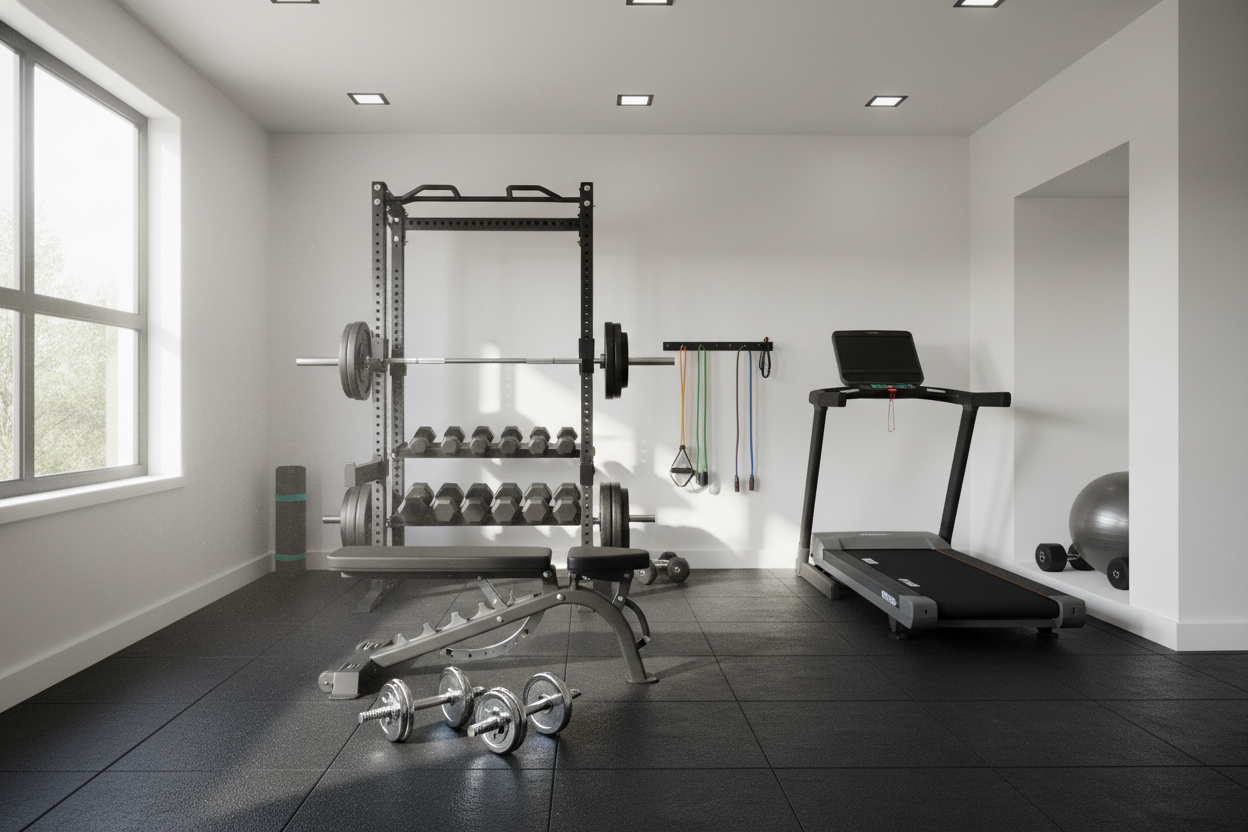
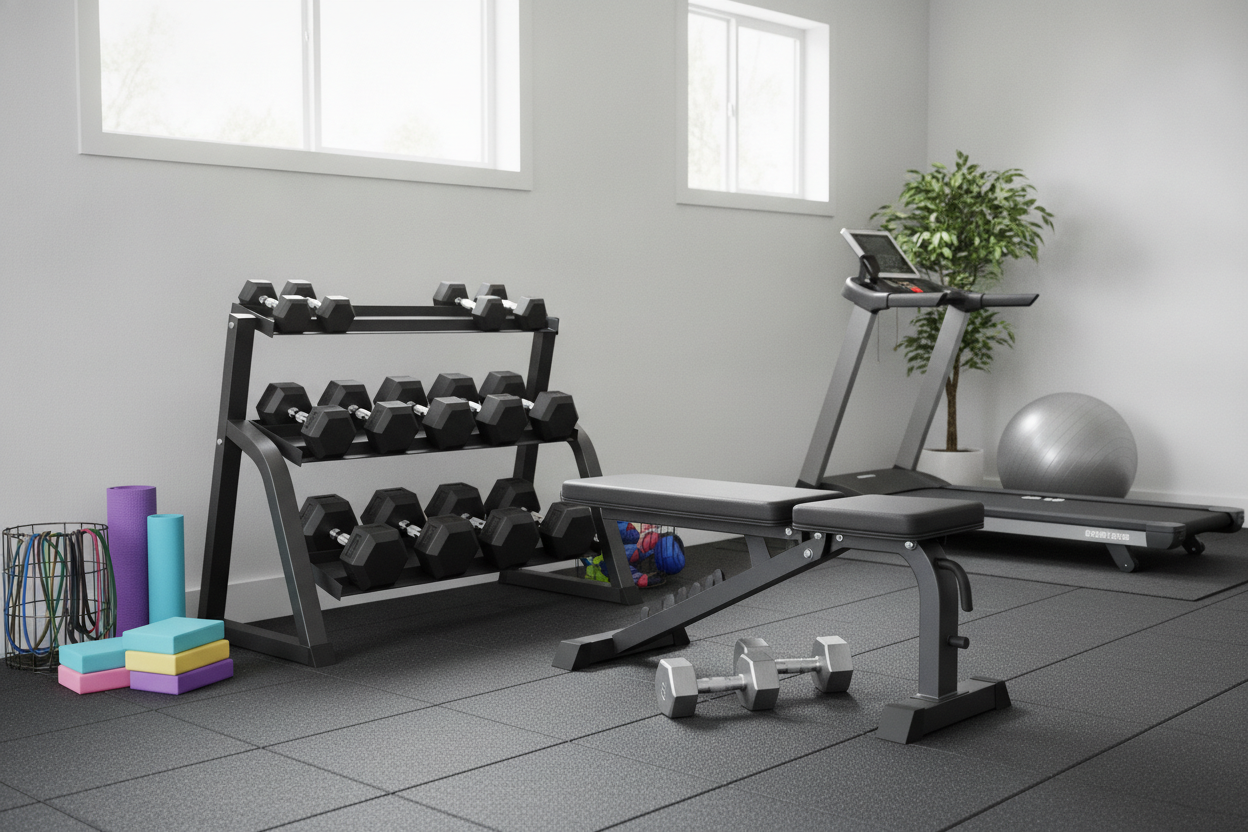
I started using a sturdy adjustable weight bench to perform extreme decline push-ups. By getting my feet high enough, I was essentially performing a weighted overhead press using nothing but my own frame. You can apply this to everything. A lunge becomes a pistol squat. A pull-up becomes a front lever tuck. You are not losing weight; you are just making the weight you have much harder to move.
Explosive Intent: The Plymouth Rock of Power
If you want to know how to build strength without weights, you have to talk about Rate of Force Development (RFD). This is how fast you can go from zero to one hundred. Heavy lifting builds this, but so does moving your body with maximum velocity. Think of it as 'explosive intent.'
When I was away from my rack, I replaced heavy squats with max-effort box jumps and broad jumps. Because I was trying to move my bodyweight as fast as humanly possible, my nervous system adapted in a way that mimics a heavy 1-rep max. This is how to gain strength without weights that actually translates to the real world. You are training your fast-twitch fibers to wake up and work.
The Protocol: How to Build Strength Without Weights
To increase strength without weights, you need to ditch the 'circuit' mentality. We are staying in the 3-5 rep range for maximum effort. My 3-day split focused on three pillars: pushing, pulling, and legs, with a heavy emphasis on 'the hardest version possible.'
- Monday: Handstand push-up progressions (against a wall) and Archer pull-ups. 5 sets of 3-5 reps.
- Wednesday: Pistol squat progressions and explosive tuck jumps. Focus on a 3-second descent on the squats.
- Friday: Pseudo-planche push-ups and chin-up holds (isometric strength).
The goal here is not a 'pump.' The goal is to finish a set feeling like your brain just did a math test. If you can do more than 8 reps, the movement is too easy and you need to adjust your leverage to increase the resistance.
Translating Your New Power Back to the Barbell
When the drywall dust finally settled and I got back under a bar, I was shocked. My core felt like a solid block of granite. Because I had spent a month stabilizing my entire bodyweight in mid-air, the barbell actually felt more stable. This is the ultimate proof of how to increase strength without weights—it fills the gaps that machines and even some free weights leave behind.
If you are making the jump back to the iron after a bodyweight cycle, take it slow. You will likely need to re-evaluate your numbers. I highly recommend checking out how to find the right weights for strength training without guessing to make sure you are not overshooting your new RPE. You might find that while your absolute max is the same, your 'pop' off the chest or out of the hole is significantly faster.
Personal Experience: The Handstand Reality Check
I will be honest: the first week was a massive ego blow. I can bench 275 lbs for reps, but I could not do a single clean handstand push-up. I looked like a flailing turtle. It turns out my 'strength' was highly specific to lying on a padded bench. By week three, something clicked. My shoulders stopped shaking, and I felt a level of control I had never experienced. The downside? My wrists were not used to the pressure, so I had to start using parallettes. Don't ignore the small joints when you switch to high-leverage bodyweight work.
FAQ
Can you actually get 'strong' without lifting heavy?
Yes, but you have to stop thinking in high reps. You must choose movements that are so difficult you can only do 3 to 5 of them. That is the only way to trigger the neurological adaptations required for raw strength.
Will I lose muscle mass?
If you keep the intensity high and your protein intake up, no. You might lose some of the 'puffiness' associated with high-volume bodybuilding, but the functional density of the muscle usually improves.
Is bodyweight training harder on the joints?
It can be, especially on the wrists and elbows, because you are often in extreme ranges of motion. Always warm up your joints specifically—don't just jump into a handstand cold.