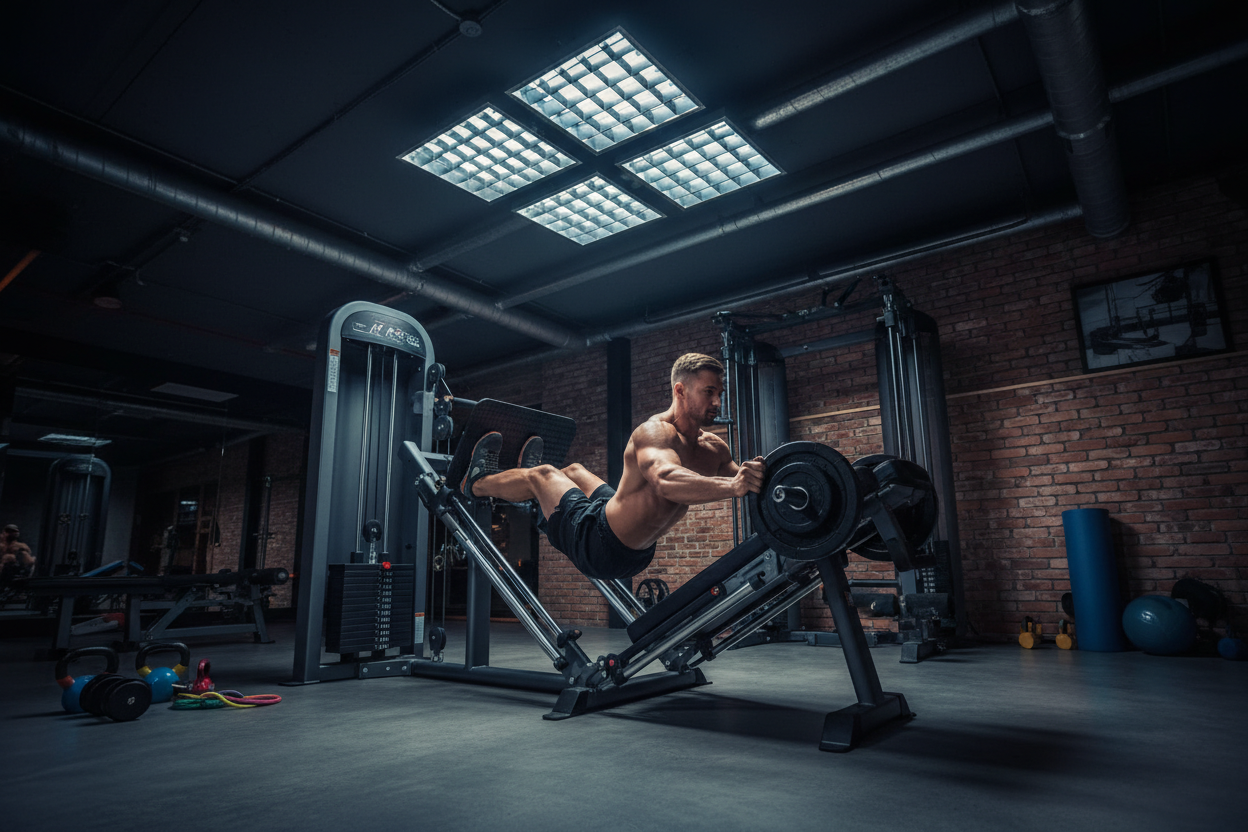
Multi Gym Leg Press: The Ultimate Space-Saving Guide
If you have ever tried to build a comprehensive home gym, you already know the classic dilemma: upper body equipment is easy to fit, but lower body machines demand serious square footage. For years, home lifters have settled for dumbbell lunges and goblet squats, sacrificing the heavy, isolated volume that a commercial gym provides. That is exactly where a multi gym leg press changes the game.
By integrating a heavy-duty lower body station into a functional trainer or all-in-one selectorized machine, you can finally blast your quads, hamstrings, and glutes without needing a massive, standalone 45-degree sled taking up half your garage. In this guide, we will break down exactly what to look for, how to measure your space, and whether this upgrade is truly worth your hard-earned money.
Key Takeaways
- Space Efficiency: A multi gym leg press consolidates your footprint, offering commercial-grade lower body training in a fraction of the space.
- Cable Ratios Matter: Most high-quality units use a 2:1 cable ratio, meaning a standard 200-pound weight stack provides up to 400 pounds of leg press resistance.
- Adjustability is Crucial: Look for models with adjustable back pads and oversized footplates to accommodate different heights and foot placements.
- Safety First: Unlike barbell squats, a cable-driven leg press allows you to train to absolute failure safely without needing a spotter.
Why You Need a Dedicated Lower Body Station
Overcoming the Home Gym Leg Day Problem
Barbell squats and deadlifts are the undisputed kings of lower body training, but they have limitations in a home setting. Heavy barbell work requires a power rack, bumper plates, and ideally, a spotter. A multi gym with leg press allows you to add safe, high-volume hypertrophy work to your routine. Because the weight is on a fixed track or cable system, you can push your muscles to absolute failure without the fear of getting pinned under a heavy bar.
Versatility Beyond the Press
Modern leg press attachments on multi gyms are not one-trick ponies. By adjusting your foot placement on the plate—high, low, wide, or narrow—you can shift the emphasis from your quads to your glutes and hamstrings. Many setups also allow for single-leg presses and calf raises, making it a comprehensive lower body powerhouse.
Space Planning: Will It Fit Your Setup?
Footprint vs. Functional Clearance
A common mistake buyers make is measuring only the static footprint of the machine. While the base of a multi gym might measure 6 feet by 6 feet, the leg press station often extends outward. You need to account for the 'functional clearance'—the space required when the leg press is fully extended, plus enough room for you to comfortably get in and out of the seat. As a rule of thumb, leave at least 3 feet of empty space in front of the footplate.
Specs That Actually Matter
The Weight Stack and Cable Ratios
If you are an experienced lifter, a 160-pound weight stack might sound far too light for a leg press. However, you must check the machine's cable ratio. High-end home multi gyms utilize a 2:1 or even 3:1 pulley ratio on the leg press station. This mechanical advantage doubles or triples the effective resistance, turning a modest weight stack into a serious challenge for your lower body.
Build Quality and Pivot Points
The smoothness of your leg press dictates the quality of your workout. Avoid machines that use cheap plastic bushings at the pivot points. Instead, look for heavy-gauge steel construction and sealed linear bearings. Sealed bearings ensure a buttery-smooth travel path that will not catch or jerk under heavy loads, closely mimicking the feel of a commercial gym machine.
From Our Gym: Honest Take
We recently spent three months testing a premium multi gym leg press in our own 400-square-foot garage facility. The sealed bearings on the press arm provided a remarkably smooth push, and the 2:1 ratio on the 210-pound stack gave us over 400 pounds of resistance—more than enough for high-rep quad sweeps.
However, I want to be completely honest about the sizing. At 6'2", I found that on the factory setting, my knees came uncomfortably close to my chest at the bottom of the movement, slightly limiting my range of motion. Upgrading to a model with an adjustable back pad solved this completely, allowing me to slide the seat back and find the perfect starting angle. The takeaway? If you are over 6 feet tall, an adjustable seat back is not a luxury; it is an absolute necessity. Also, be prepared for a marathon assembly session—it took two of us nearly 6 hours to route the cables and bolt the frame together.
Frequently Asked Questions
Is a multi gym leg press worth the investment?
Yes, especially if your primary goal is hypertrophy and you train alone. It provides a safe, space-efficient way to perform heavy lower body volume without the need for a spotter or a massive standalone machine.
How much space do I need for a multi gym with leg press?
While dimensions vary by brand, a standard multi gym with a side-mounted leg press typically requires a minimum room size of 10x10 feet. This ensures you have adequate functional clearance to fully extend the press and load accessories safely.
Can I build real muscle on a home leg press?
Absolutely. Muscle growth is driven by mechanical tension and progressive overload. As long as the machine's weight stack and cable ratio provide enough resistance to challenge you in the 8-to-15 rep range, you will stimulate significant lower body muscle growth.