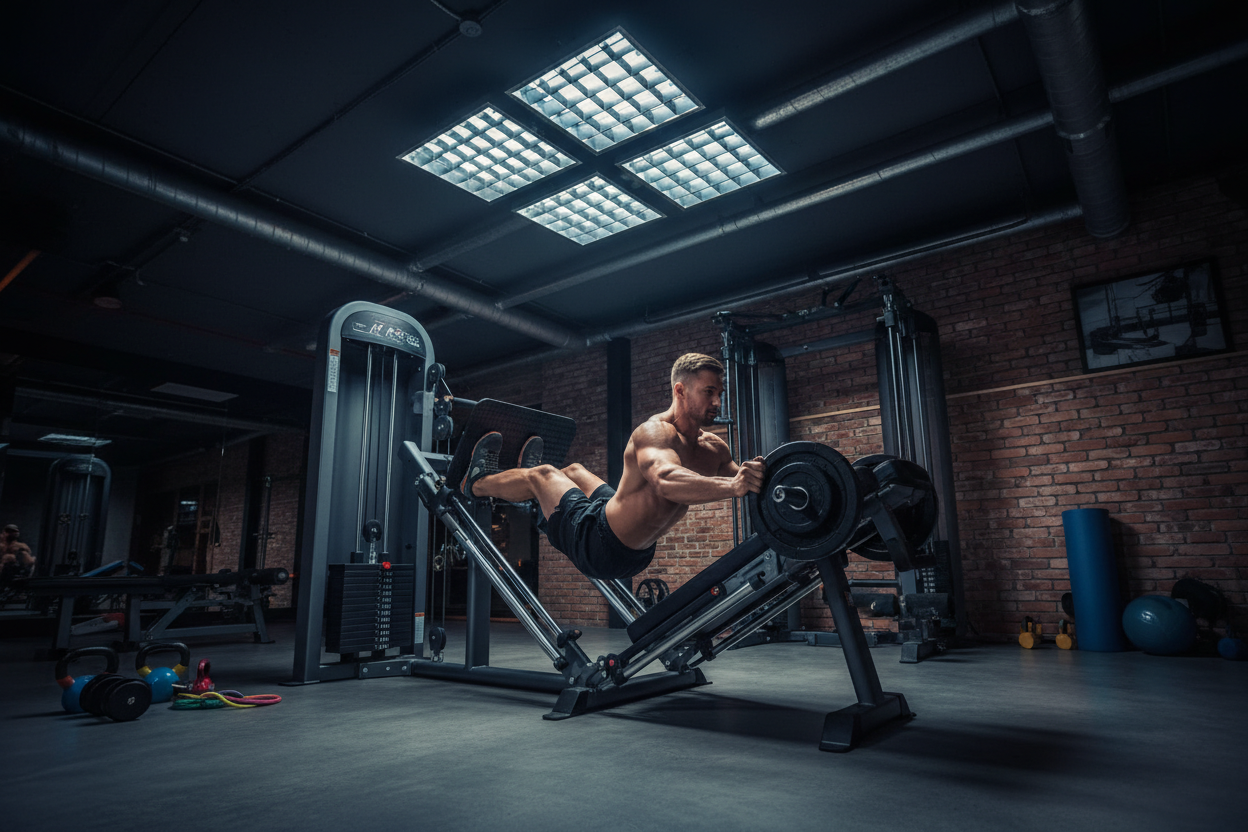
Circuit Training With Machines: The Secret to Faster Workouts
If you're struggling to balance a demanding schedule with your fitness goals, you aren't alone. One of the most common pain points we hear from home gym owners is the sheer amount of time wasted loading and unloading barbells. That's exactly where circuit training with machines changes the game.
By seamlessly moving from one exercise to the next with minimal rest, you can ignite your metabolism, build lean muscle, and cut your workout time in half. But designing the perfect setup for your garage or basement requires strategic planning. In this guide, we'll break down how to optimize your space and equipment for high-efficiency training.
Key Takeaways
- Time Efficiency: Pin-loaded systems eliminate plate-math, keeping your heart rate elevated.
- Built-in Safety: Fixed movement paths mean you can push to failure without a spotter.
- Space Optimization: Modern functional trainers allow for full-body routines in a compact footprint.
- Progressive Overload: Easy weight adjustments make drop sets and supersets seamless.
Why a Machine Circuit Workout Makes Sense at Home
Maximizing Limited Space with Multi-Stations
When people think of a gym machine circuit, they often picture massive commercial facilities with dozens of single-use stations. In a home setting, the strategy shifts. By investing in a high-quality functional trainer or a multi-station home gym, you can perform dozens of exercises in a single footprint. This makes circuit training machine workouts entirely viable even in a spare bedroom or a cramped garage.
Safety and Speed (No Spotter Needed)
Free weights are fantastic, but pushing for that final rep on a bench press while home alone is risky. A weight machine circuit removes this danger. Because the weight is guided by rails or cables, you can train to muscular failure safely. Furthermore, adjusting a selectorized weight stack takes two seconds, allowing you to maintain the rapid pace required for true machine circuit training.
Structuring Circuit Training Workouts With Machines
The Upper/Lower Alternating Method
To keep your heart rate up and avoid localized muscle fatigue, alternate between upper and lower body movements. For example, move directly from a seated leg press to a cable chest press, then to hamstring curls, and finally to lat pulldowns. This circuit machine workout style forces your cardiovascular system to work overtime pumping blood back and forth across your body.
Incorporating Hypertrophy
Don't fall for the myth that circuits are only for cardio. Circuit training with weight machines is highly effective for hypertrophy if you keep the resistance heavy and the rep range between 8 and 12. Focus on slow, controlled eccentrics on every machine to maximize time under tension.
From Our Gym: Honest Take
When I transitioned my own two-car garage setup to prioritize a circuit machine workout, I swapped my standalone squat stand for a commercial-grade functional trainer with dual 200lb weight stacks. The difference in my training density was immediate. The pin-loaded weight stacks saved me at least 15 minutes of transition time per session. My heart rate stayed in zone 3 effortlessly.
However, there is a caveat. I quickly realized that cable crossovers require a wide wingspan. At 6'1", I needed a full 85 inches of lateral clearance to perform chest flies without hitting my storage shelves—a dimension that wasn't clearly listed on the product page. If you're building a home setup for a gym machine circuit, always measure your functional wingspan, not just the static footprint of the machine.
Frequently Asked Questions
Is circuit training with weight machines effective for weight loss?
Absolutely. By minimizing rest periods between stations, you elevate your heart rate, combining cardiovascular conditioning with resistance training. This increases your overall caloric burn both during and after the workout.
Can I build a home gym machine circuit in a basement?
Yes, provided you check your ceiling height. Many functional trainers and Smith machines require 80 to 85 inches of vertical clearance. Look for low-profile multi-gym models specifically designed for basement ceilings.
How many stations do I need for a good machine circuit training routine?
You don't need a room full of equipment. A single dual-stack functional trainer with adjustable pulleys allows you to quickly transition between squats, rows, presses, and core work, serving as a complete circuit training machine on its own.