Most Gym Machines Are Useless for Working Out the Legs
I walked into a big-box commercial gym last week for the first time in years. It was a sea of chrome, cables, and selectorized stacks that looked more like a cockpit than a training floor. I saw three people waiting in line for a leg press while the squat racks sat empty. It reminded me why I started my own garage gym in the first place. working out the legs shouldn't feel like navigating a maze of overpriced circuit equipment that limits your range of motion and drains your intensity.
Quick Takeaways
- Compound free-weight movements offer more bang for your buck than any machine.
- Most isolation machines create 'junk volume' rather than actual muscle growth.
- The lying hamstring curl and seated calf raise are the only two machines worth the wait.
- Stability is the foundation of leg power—invest in your floor before your equipment.
The Illusion of Choice on the Gym Floor
Commercial gyms love shiny things. They buy twenty different lower body stations because it looks impressive on a tour, not because it helps you build a better physique. When you see a row of specialized machines, it’s easy to think you need to hit every single one to have a 'complete' session. In reality, this just leads to decision fatigue and a lot of wasted energy on movements that don't challenge your central nervous system.
I’ve seen guys spend two hours hitting every lever and pulley in the building, yet their legs look like they’ve never seen a day of hard work. Most seasoned lifters ignore half the machines because they understand that mechanical tension and progressive overload are what drive growth, not the variety of the upholstery. If you aren't shaking after your first two movements, you aren't training; you're just moving weights through a pre-determined track.
Finding the Best Exercise for Legs at Gym (It's Not a Machine)
If I could only pick one movement to do for the rest of my life, it wouldn't be on a rail. The best exercise for legs at gym is, and always will be, the barbell back squat. I know, it’s not flashy. It’s hard. It makes you want to quit halfway through the set. But the demand it places on your core, your stabilizers, and your entire posterior chain is something a machine cannot mimic. When you squat, your body has to manage the load in 3D space, which recruits significantly more muscle fibers than sitting in a chair and pushing a platform.
If your back can't handle a heavy barbell, don't run to the leg press. Grab a pair of heavy dumbbells and do Bulgarian split squats. I hate them as much as the next guy, but they are arguably the most effective way to build unilateral strength and fix imbalances. A $5,000 leg press might feel heavy, but it’s often just an ego boost. You're moving a weight on a fixed path with half the effort required to stabilize a free-weight load. Stop looking for the easy way out and get under some iron.
Why You Can Skip the Leg Extension
The seated leg extension is a staple in most people's routines, but I haven't touched one in years. From a biomechanical standpoint, it’s an open-chain movement that puts a massive amount of shear force directly on the patellar tendon. I used to think I needed them for that 'quad sweep,' but all I ended up with was a nagging pain in my knees that took months to clear up. Your quads are designed to work in tandem with your hips and glutes to move your body through space. Isolating them while sitting in a chair is unnatural and, for many of us with older joints, a recipe for chronic inflammation. Stick to front squats or high-bar back squats if you want to torch your quads without the surgical bill.
The 2 Machines Actually Worth Waiting in Line For
I’m not a total machine hater. There are two pieces of equipment that I genuinely miss when I'm training in a bare-bones setup. The first is the lying hamstring curl. While the Romanian Deadlift is the king of hamstring builders, it mostly targets the hips. The hamstrings also function to flex the knee, and it is incredibly difficult to load that function heavily with just free weights. A high-quality lying curl machine allows you to isolate the hamstrings through a full range of motion that you just can't get with a dumbbell between your feet.
The second is the seated calf raise. Trying to build calves with just standing bodyweight raises is like trying to build a chest with just push-ups—eventually, you need more load. The seated version specifically targets the soleus muscle by taking the gastrocnemius out of the equation through knee flexion. It’s a specialized tool that actually does its job well. If these two machines are open, use them. If not, don't sweat it, but they are the only ones I’d actually consider 'value-add' to a serious leg day.
Structuring the Best Gym Leg Workout
A savage leg day doesn't need ten exercises. It needs four or five done with absolute intensity. Start with your primary mover—the barbell squat or a heavy lunging variation. This is where you move the most weight and expend the most energy. Follow that up with a hinge movement, like a stiff-leg deadlift or a kettlebell swing, to hit the hamstrings and glutes. This combination forms the backbone of the best gym leg workout you can possibly run.
After the heavy lifting is done, then you can look at the machines. Hit three sets on the hamstring curl and finish with some high-rep calf work. If you still have gas in the tank, do some walking lunges across the gym floor until your legs give out. You don't need a complex circuit or a 'leg day finisher' machine. You need to get comfortable being uncomfortable with basic movements. If you can walk out of the gym without holding onto the handrail, you probably left some gains on the table.
Bringing the Intensity Back to Your Garage
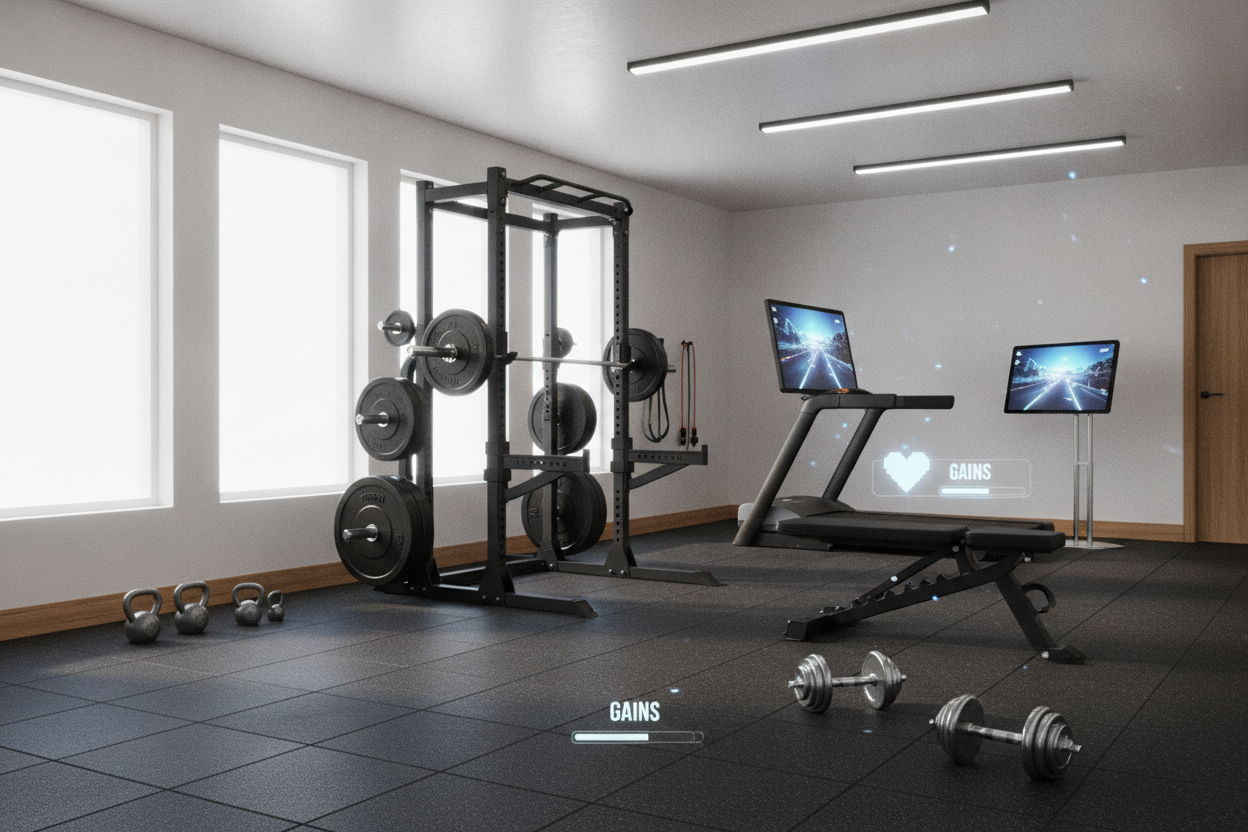
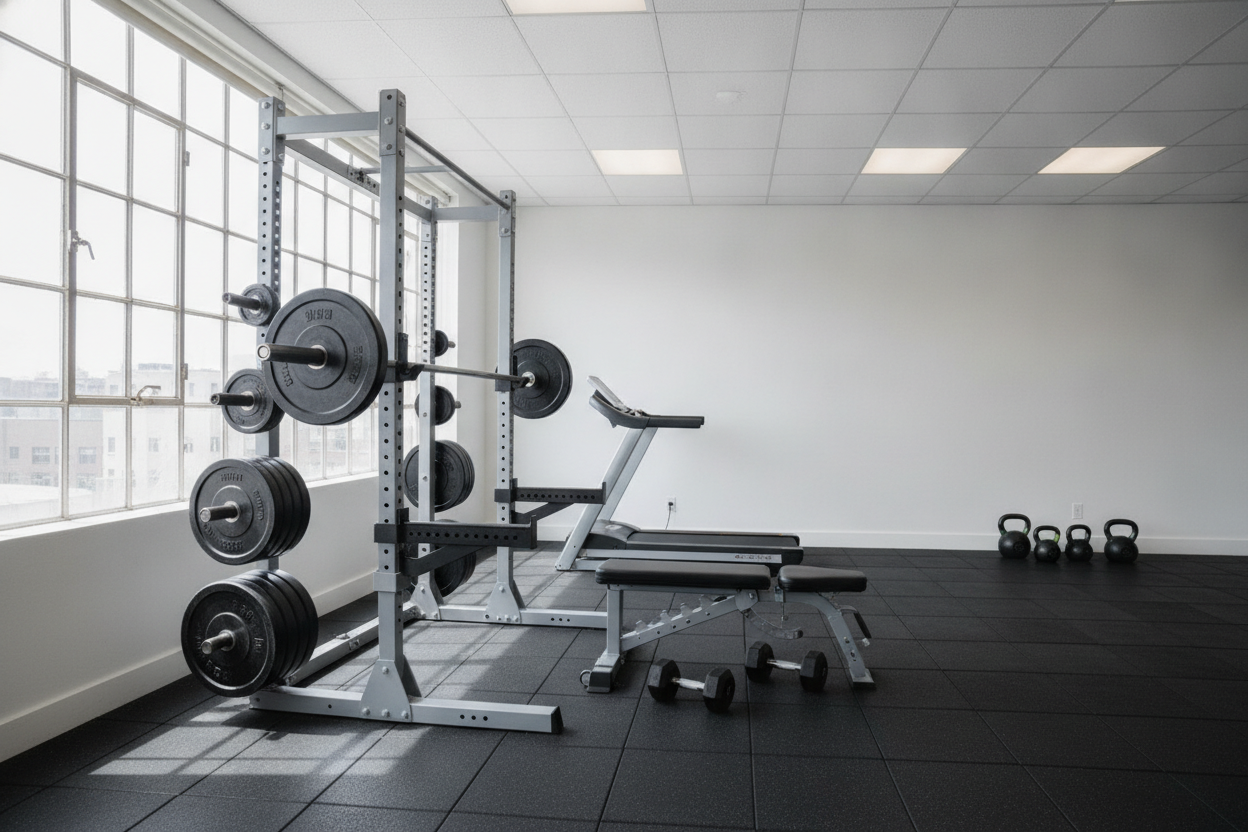
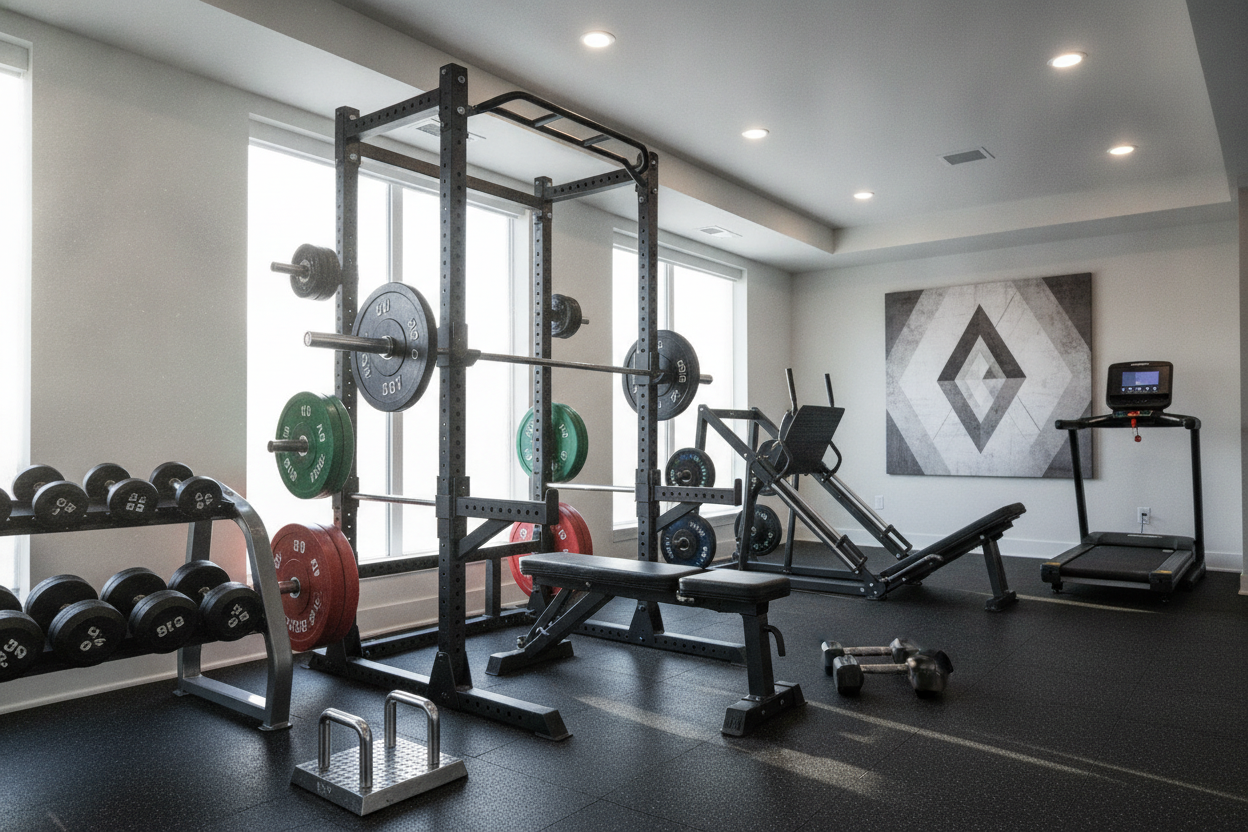
The beauty of realizing most machines are junk is that it makes home training much more viable. You don't need a 3,000-square-foot facility to build massive legs; you need a rack, a bar, and a floor that can take a beating. When I moved my training to my garage, the first thing I realized was that stability is everything. You can't squat 405 lbs on a slippery concrete floor or a cheap yoga mat.
I always tell people to invest in a large exercise mat for home gym use before they buy their next set of plates. Having a dedicated, high-traction surface changes the way you move. A heavy-duty 6x8ft exercise mat gives you the same stable footprint as a commercial lifting platform, allowing you to drive through your heels without worrying about your feet sliding out during a heavy set of lunges. Build your foundation on stability and heavy iron, and you'll never miss those chrome machines again.
Personal Experience: The Machine Trap
I spent my first three years of lifting following a 'pro' bodybuilder's machine-heavy routine. I was doing leg presses, hack squats, extensions, and curls—probably six machines a session. I felt a great pump, but my actual strength was pathetic. When I finally decided to man up and move to the squat rack, I was humbled. I couldn't even squat 185 lbs to depth because my stabilizers were so weak from years of using tracks and rails. It took me a year of basic, boring barbell work to fix the mess those machines made. Don't make my mistake; build the engine with free weights first.
FAQ
Is the leg press completely useless?
No, but it's an accessory, not a primary lift. Use it after your squats to add extra volume to your quads without taxing your lower back. Just don't make it the center of your universe.
How often should I train legs?
Twice a week is the sweet spot for most people. It allows for enough recovery between heavy sessions while still providing enough frequency to trigger hypertrophy and strength gains.
Can I build big legs with just a rack and a bar?
Absolutely. Some of the best legs in history were built with nothing but squats, lunges, and deadlifts. Machines are a luxury, not a necessity.