Most Exercise Accessories Are Junk (But I Swear by These 3)
I’ve spent more money on fitness junk than I’d like to admit. You know the feeling—it’s late, you’re scrolling through a feed, and some 'revolutionary' piece of gear pops up with a flashy video. Most exercise accessories are designed to look cool in a 15-second clip but fail the moment you actually start sweating on them in a real garage gym.
- Most gadgets are plastic landfill fodder designed for aesthetics, not athletics.
- Density is the most underrated spec when buying floor protection.
- Layered latex bands outlast molded rubber every single time.
- Simplicity in recovery tools prevents injury better than 'high-tech' gimmicks.
The Trap of Buying Every Gimmick on the Internet
Social media is a graveyard of 'exercise things' that promised a six-pack but delivered a headache. I see these 'new exercise products' all the time—collapsible ab rollers that feel like they’ll snap under a 200-lb man or weighted vests with sand leaking out of the seams after three sessions. It’s an endless cycle of buying cheap, gimmicky fitness props that don't move the needle on your squat or your deadlift.
Real strength training isn't about novelty; it's about consistency. If an exercise product requires a 10-minute setup and a proprietary app just to function, it’s going to end up gathering dust under your rack. I look for gear that survives being tossed across a concrete floor.
Accessory #1: A Legit, High-Density Mat (Not a Flimsy Yoga Pad)
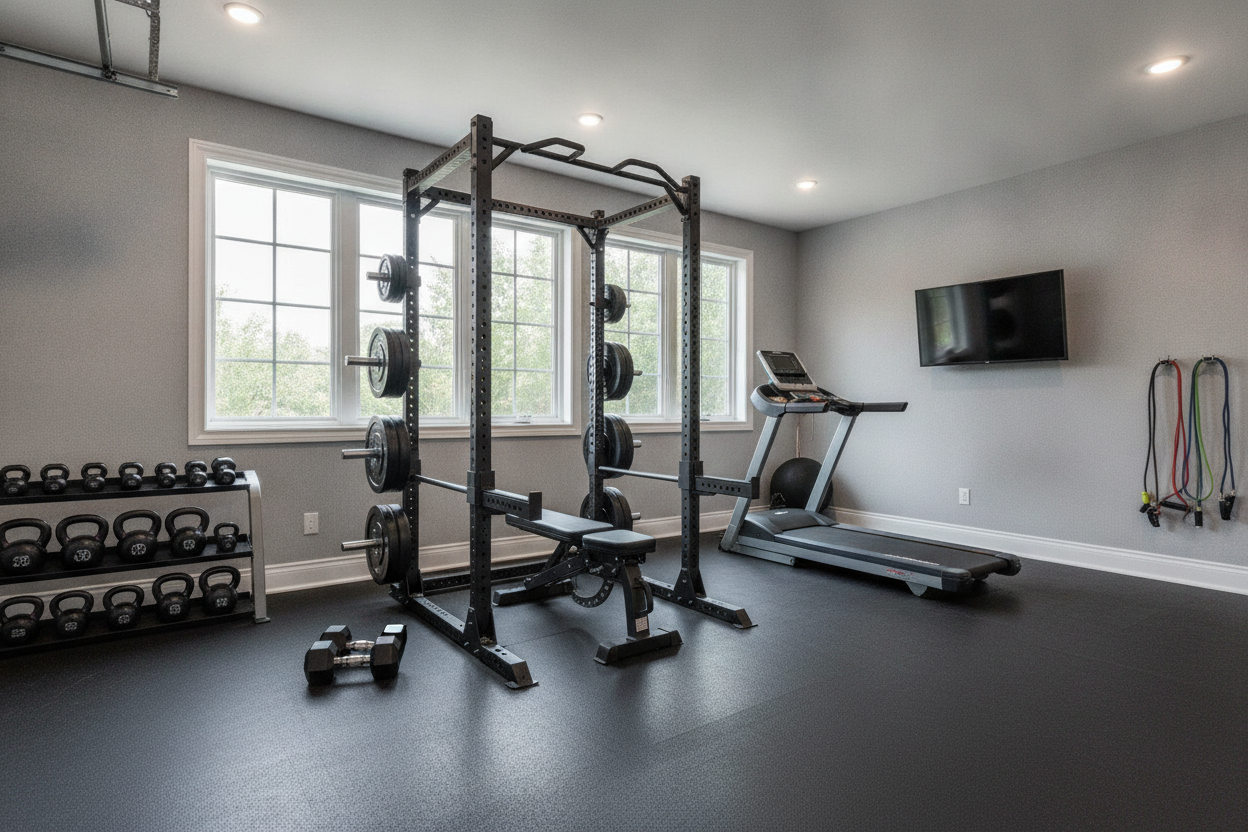
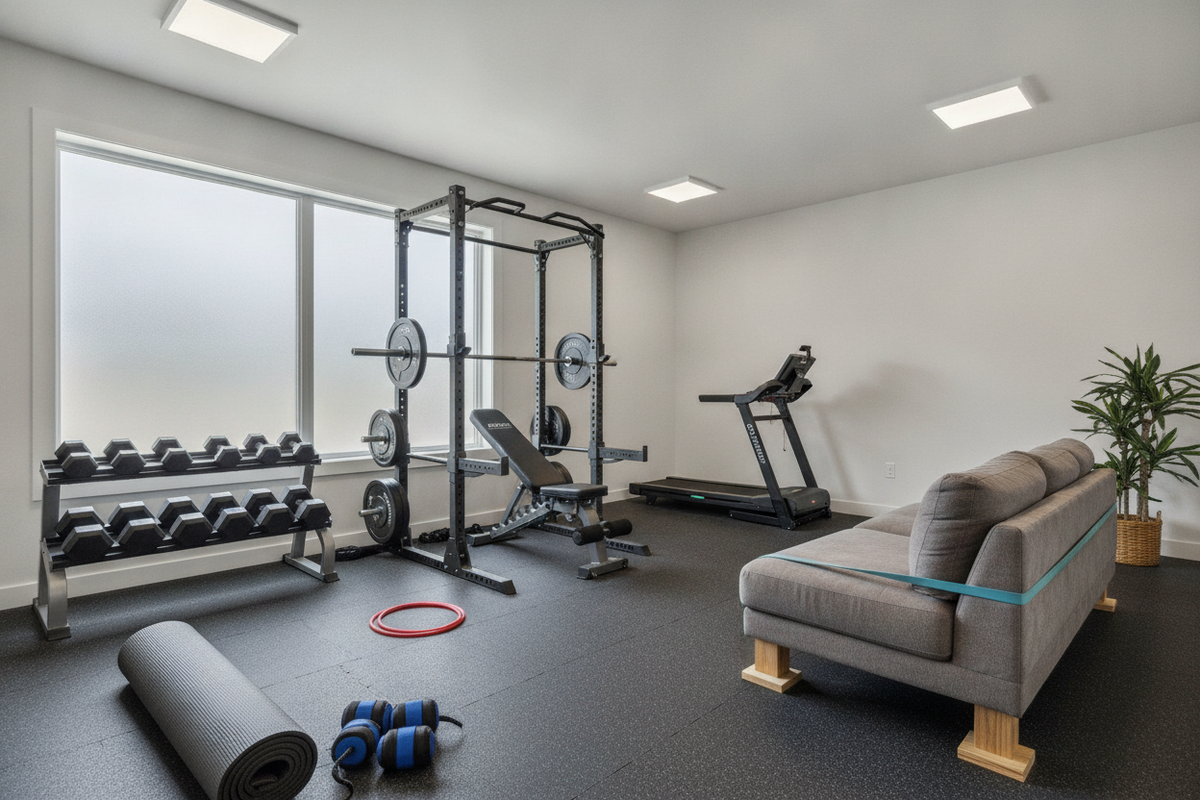
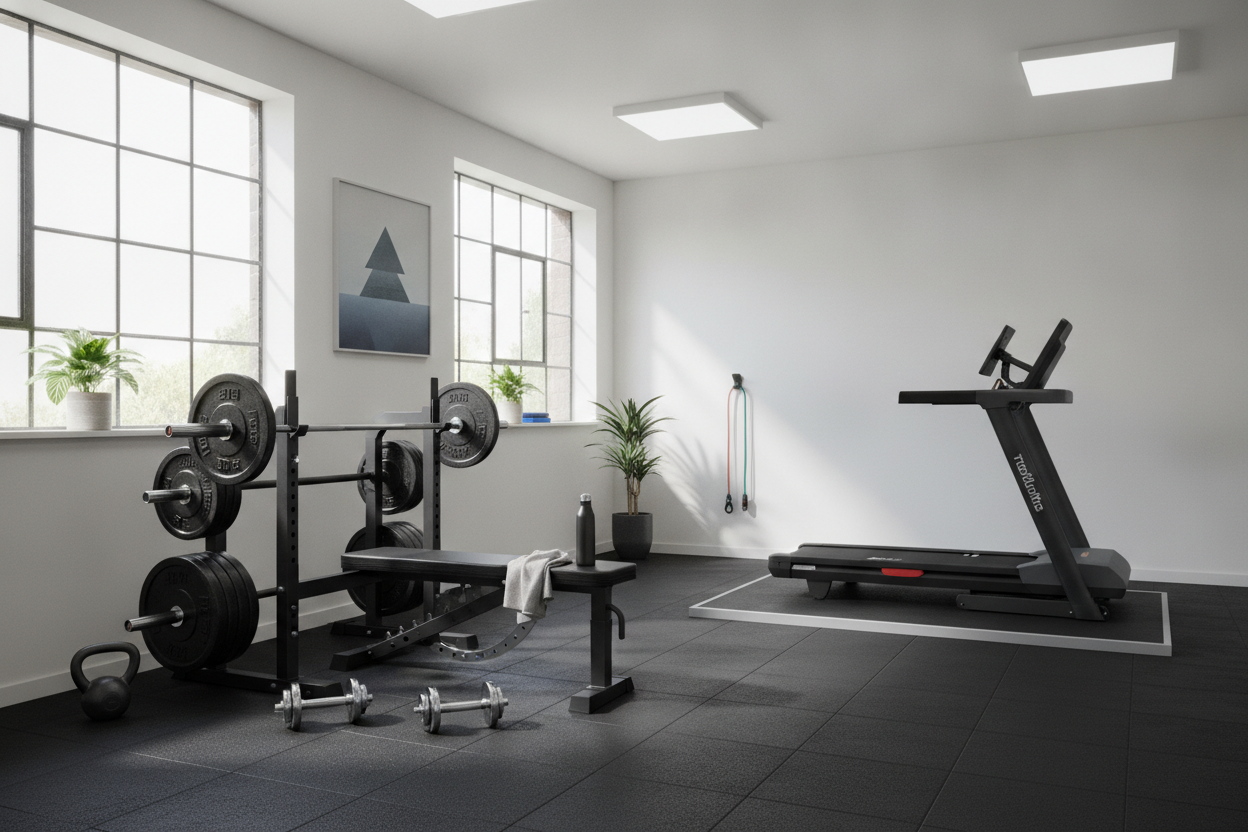
A flimsy yoga pad is fine for a studio, but if you're dropping a 70-lb kettlebell or doing heavy burpees, you need real ground support. Cheap foam is just air and broken promises. You want high-density large exercise mat 6x4 specs because it stays put when you move and doesn't shred under the weight of a power rack.
Proper exercise materials should protect both your joints and your subfloor. I’ve seen cheap mats compress to the thickness of a sheet of paper the second a heel touches them. A real mat should be dense enough to provide a stable platform for split squats while being thick enough to dampen the vibration of a dropped dumbbell.
Accessory #2: Heavy-Duty Resistance Bands That Actually Last
I’ve had cheap 'exercise devices' snap and whip me across the back during a face-pull. It isn't just annoying; it’s dangerous. Don't buy the multi-colored sets that look like they belong in a physical therapy office from 1994. Look for thick, layered latex bands that can handle being looped around a pull-up bar or a squat rack peg.
These are vital for warming up the rotator cuffs or adding accommodating resistance to your big lifts. When the band is stretched to 200% of its length, you need to know that the exercise unit isn't going to fail. Layered latex wears down slowly, showing visible nicks before it snaps, unlike molded rubber which fails instantly.
Accessory #3: A Serious Foam Roller (Forget the Spiky Torture Devices)
Stop buying the exercise items that look like medieval torture devices. Those spiky rollers are pure marketing. They bruise your soft tissue rather than releasing it, which actually makes your muscles tighten up in defense. A simple, smooth, high-density foam roller—one of those basic exercise props—is all you really need.
I prefer a roller that is 36 inches long so I can lay on it vertically to open up the chest. If the roller feels like a pool noodle, throw it away. It needs to be firm enough to maintain its circular shape even when you put your full body weight on it. These are the exercise supplies that actually help you recover for tomorrow’s session.
How to Put These to Use Without Wasting Your Time
Don't turn your warmup into a second workout. Use these three tools to prime the pump and get out. I usually spend exactly two minutes rolling the thoracic spine and quads, followed by three sets of band pull-aparts to wake up the rear delts. It’s about blood flow, not fatigue.
I always make sure to include some hip mobility exercises with a new exercise mat from Gxmmat to open up the hips before I even think about touching a barbell. If you can't hit depth in a bodyweight squat on a stable mat, you have no business putting 315 on your back. Use these tools to earn the right to lift heavy.
Personal Experience: The 11 PM Amazon Regret
I once bought a 'revolutionary' glute trainer that was basically a plastic board with some bungee cords attached. It looked great in the ad. On the third rep of my first set, the plastic base cracked right under my heel. I almost rolled an ankle and felt like an idiot for falling for the hype. Now, if it isn't made of heavy-duty rubber, steel, or thick latex, it doesn't get past my gym door. Stick to the basics; they're the basics for a reason.
FAQ
Do I really need a 6x4 mat?
If you have the space, yes. Smaller mats slide around and force you to constantly adjust your stance. A 6x4 mat gives you enough 'runway' for lunges and lateral movements without stepping onto cold concrete.
Are cloth resistance bands better than latex?
For lower body 'glute activation,' cloth bands are great because they don't roll up. But for upper body work and stretching, they lack the range of motion and versatility of a standard latex loop band.
How often should I replace my foam roller?
A high-density roller should last years. If it starts looking like an oval instead of a circle, or if it feels 'mushy' in the middle, it’s time to swap it out for a fresh one.