Mats Rubber Explained: Stop Ruining Your Home Gym Floor
Nothing kills the vibe of a heavy lifting session quite like the sound of a barbell cracking your concrete foundation. Whether you are dropping deadlifts in a garage or setting up a quiet yoga corner in a spare bedroom, the right flooring is your first line of defense. Investing in high-quality mats rubber is the single most important decision you will make for your home gym's longevity and your family's sanity.
But not all flooring is created equal. From cheap foam puzzle pieces that compress under pressure to heavy-duty commercial rolls, navigating the options can be overwhelming. This guide breaks down exactly what you need to know to protect your subfloor and elevate your training space.
Key Takeaways
- Thickness matters: Aim for at least 3/8-inch to 1/2-inch thickness for general strength training, and 3/4-inch for heavy Olympic lifting.
- Density over depth: High-density vulcanized rubber absorbs shock better than thicker, porous alternatives.
- Location dictates type: A rubber mat indoor setup requires low-odor materials, whereas garage gyms can handle standard recycled rubber.
- Seamless is safer: Interlocking edges or heavy straight-edge mats prevent shifting during lateral movements.
Choosing the Right Thickness and Density
The 3/8-Inch vs. 3/4-Inch Debate
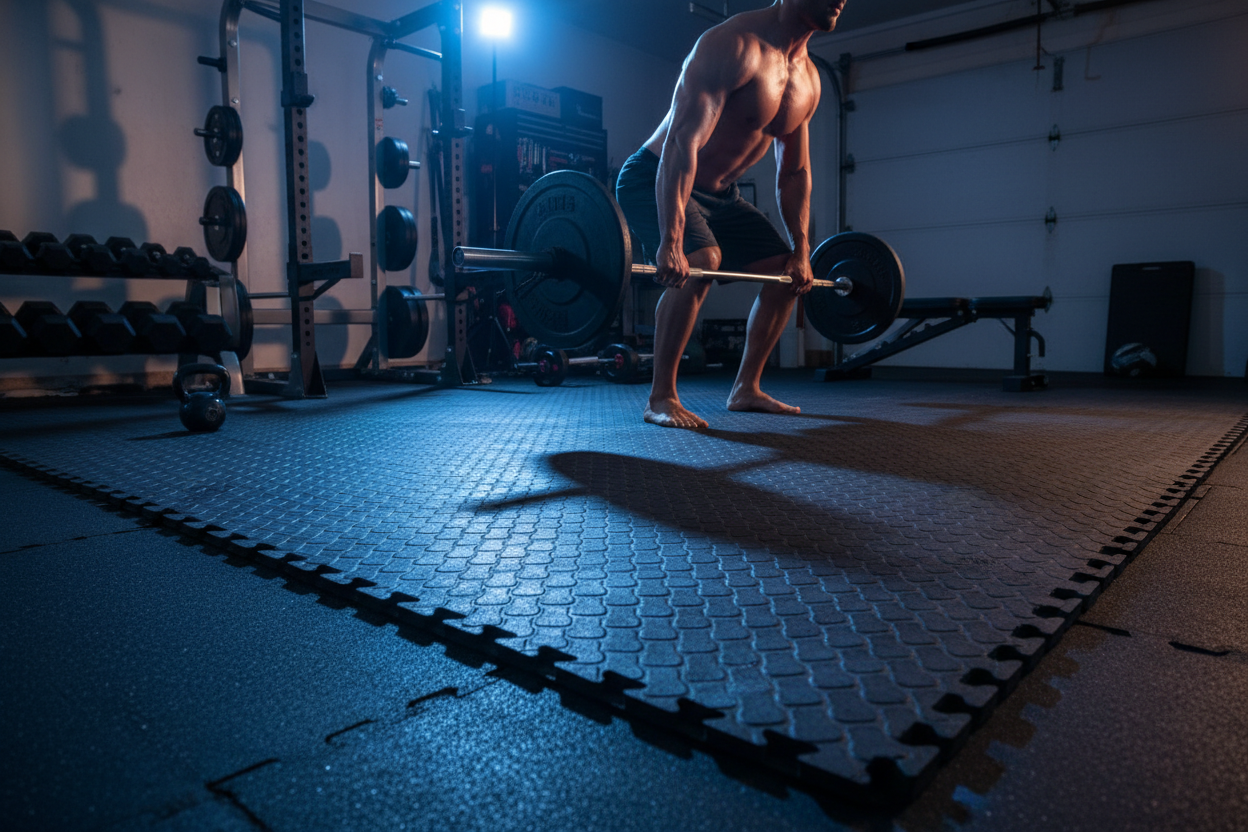
When shopping for matting rubber, thickness is usually the first spec people look at. If your primary routine involves dumbbells, kettlebells, and a power rack, a 3/8-inch thick mat provides ample protection for your subfloor and joints. However, if you are regularly dropping loaded barbells from waist height or above, you need to step up to 3/4-inch thick rubberised floor mats to prevent concrete micro-fractures and deaden the heavy acoustic impact.
Space Planning: Garage vs. Spare Room
Ventilation and the Off-Gassing Factor
Where you place your equipment changes your flooring requirements entirely. If you are building a basement or spare bedroom sanctuary, off-gassing (that strong, tire-like smell) is a major concern. For these spaces, a virgin rubber floor mat home solution or specially treated low-odor recycled mats are non-negotiable. A premium rubber mat indoor option will keep your house smelling clean while providing commercial-grade grip.
Sizing Your Space
For garage setups, heavy 4x6 foot straight-edge stall mats are a popular, budget-friendly choice. Just keep in mind that these require precise cutting with a utility knife to fit around drywall corners. If you are laying down rubber house floor mats in a finished room, precision-cut interlocking tiles offer a cleaner aesthetic without the need for heavy adhesives or complex installation.
From Our Gym: Honest Take
We have tested dozens of flooring options over the years, and I can tell you firsthand that skimping on your foundation will cost you more in the long run. Two years ago, I outfitted a section of our testing facility with cheap, low-density foam-backed mats. Within three months of heavy squat sessions, the mats permanently compressed under the power rack, creating an uneven lifting surface that visibly threw off my form.
I eventually ripped them out and replaced them with 1/2-inch vulcanized rubber rolls. The grip difference was night and day—my feet stayed perfectly planted during heavy bench presses without any sliding. The only minor con? The installation was brutal. Moving 150-pound rolls of rubber takes at least two people, and cutting it to fit around the baseboards chewed through three utility knife blades. But once it is down, it is basically indestructible.
Frequently Asked Questions
Is 8mm rubber thick enough for a home gym?
An 8mm (approx. 5/16-inch) mat is great for cardio equipment, bodyweight exercises, and light dumbbell work. However, it is not thick enough to fully protect your subfloor from dropped barbells or heavy kettlebells.
How do I clean rubber house floor mats?
Keep it simple. Vacuum up dust and chalk regularly, and mop with a pH-neutral cleaner mixed with warm water. Avoid harsh chemicals like bleach or ammonia, which can dry out and degrade the rubber over time.
Can I put rubber mats directly over carpet?
It is not recommended for heavy lifting. Placing mats over plush carpet creates an unstable, squishy surface that can lead to rolled ankles or uneven squats. If you must build over carpet, lay down a layer of rigid 3/4-inch plywood first, then place your mats on top.