
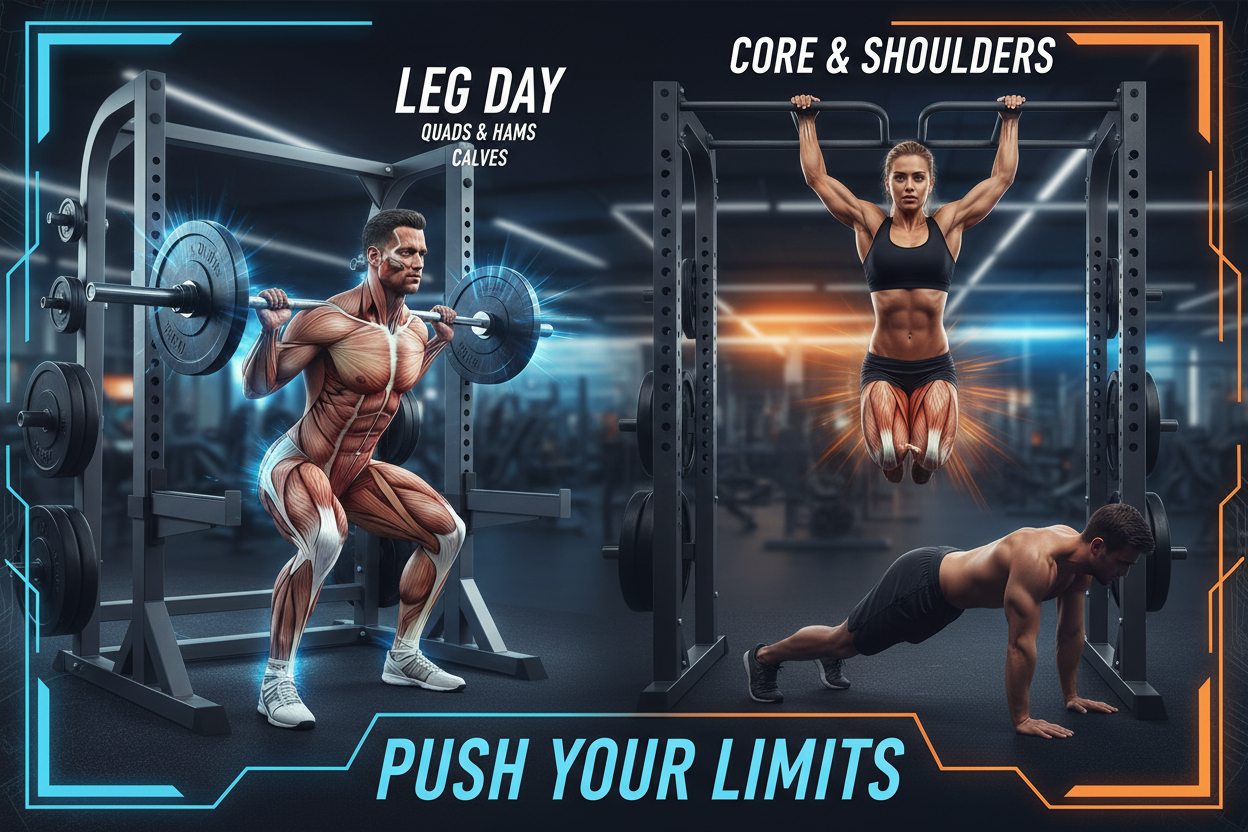
Mastering the Split: The Best Muscle Groups to Pair with Leg Day
Leg day is arguably the most taxing session in any training cycle. It demands more from your central nervous system and metabolic reserves than bench pressing or curling ever will. Because of the sheer intensity required to properly stimulate the quadriceps, hamstrings, and glutes, the most honest answer to what to workout with legs is often "nothing else." However, real-world schedules don't always allow for a dedicated day just for the lower body. If you are trying to optimize a training split and need to combine muscle groups, you have to be strategic to avoid burnout or injury.
The Best Candidates for Pairing
When you look at your weekly schedule and ask what should i workout with legs, you need to look for muscle groups that don't mechanically interfere with your squats or deadlifts. The goal is to find a body part that can be trained effectively even when your systemic fatigue is high.
Shoulders are widely considered the best upper-body group to pair with legs. The logic here is biomechanical. Leg movements are primarily driven by the hips and knees, while shoulder movements are vertical presses or lateral raises. There is very little overlap. Unlike back training, which requires spinal stability and grip strength that might be exhausted from heavy deadlifts, shoulder isolation exercises allow you to remain seated or supported, taking the load off your tired legs.
I learned this lesson the hard way a few years ago. I tried to combine a heavy back workout with leg day to save time. I started with squats, then moved to barbell rows. My lower back was so pumped and fatigued from stabilization during the squats that I couldn't hold form on the rows. I ended up tweaking a muscle and walking funny for a week. Since switching to a Legs/Shoulders or Legs/Abs structure, I haven't had that issue since. The energy systems just clash less.
Abdominal and Core Work
Another excellent option is pairing legs with core training. While your core is certainly active during compound lifts like the squat and lunge, direct abdominal work at the end of the session is a great way to finish. Since you generally don't need fresh legs to perform hanging leg raises or cable crunches, this pairing is seamless. Just ensure you do the ab work after your heavy leg lifts; pre-exhausting your core before squatting is a recipe for a collapsed torso and potential injury.
Combinations to Avoid
Understanding what not to do is just as important as knowing what to do. You generally want to avoid pairing legs with large, taxing muscle groups like the back or chest, unless you are following a specific Full Body routine where the volume for each part is low. In a standard hypertrophy split (bodybuilding style), doing 15 sets of legs followed by 15 sets of chest is going to result in "junk volume." By the time you get to the second muscle group, your glycogen stores are depleted, and your mental focus is shot.
Grip-heavy movements are also a poor choice. If your leg day includes Romanian Deadlifts (RDLs) or heavy lunges, your forearms are taking a beating. trying to hit biceps or back immediately after can be frustrating because your grip will fail before the target muscle does.
Structuring the Recovery: The Day After
Once you survive the session, the next logistical hurdle is deciding what body part to workout after leg day. This is where many lifters mess up their recovery curve. Leg training induces significant systemic fatigue and often leaves you with Delayed Onset Muscle Soreness (DOMS) that can impede stability.
The ideal follow-up session is usually a "Push" day focusing on Chest and Triceps. Here is why this works: bench pressing and tricep extensions require almost no leg drive compared to standing overhead presses or bent-over rows. Your legs can essentially remain dormant while you hammer the upper body pushing muscles. The spinal loading is also significantly less on a chest day (assuming you are benching) compared to a back day.
Avoid scheduling a heavy back session the day immediately following legs. If your hamstrings and glutes are sore, getting into the proper position for a bent-over row or a rack pull will be uncomfortable and potentially dangerous. Your lower back acts as a stabilizer for both leg and back days, so it needs a 24 to 48-hour buffer to recover. If you must train back soon after legs, stick to chest-supported variations or pulldowns to minimize lumbar stress.
Sample Split Scenarios
To put this into practice, here are two ways to organize your week depending on your frequency.
The 4-Day Split (Shoulder Pairing)
- Monday: Chest and Triceps
- Tuesday: Back and Biceps
- Wednesday: Rest
- Thursday: Legs and Shoulders (Start with Legs)
- Friday: Rest or Active Recovery
- Saturday/Sunday: Upper Body Pump or Weak Point Training
The Push/Pull/Legs Rotation
This is the gold standard for many because it solves the interference issue naturally.
- Day 1: Push (Chest, Shoulders, Triceps)
- Day 2: Pull (Back, Biceps, Rear Delts)
- Day 3: Legs (Quads, Hamstrings, Calves, Abs)
- Day 4: Rest
- Day 5: Repeat
In this rotation, the question of what to workout with legs is answered by "Abs," and the question of what body part to workout after leg day is answered by the rest day. The rest day is crucial. It allows the inflammation to settle before you start the cycle over with Push.
Managing Central Nervous System Fatigue
We often focus solely on muscle soreness, but leg day drains your nervous system. Heavy compound movements require high-threshold motor unit recruitment. If you find yourself feeling foggy, lethargic, or weaker than usual the day after legs, it is a sign that your CNS is still recovering.
If you notice this happening frequently, consider reducing the volume of your leg session or ensuring that your post-leg day workout is lower intensity. You might focus on isolation movements for the chest and triceps rather than attempting a one-rep max on the bench press. Listen to your body's feedback loop. If your performance on the upper body day consistently suffers because it follows leg day, swap the days. There is no law that says legs must be done on a specific day, though Monday is often humorously avoided to skip the squat rack lines.
Ultimately, the best split is one that allows you to hit every muscle group with high intensity while fully recovering before the next session. Treat your leg training with respect, pair it with low-impact muscle groups like shoulders or abs, and give your spine a break the following day. Your gains will thank you.
Frequently Asked Questions
Should I do cardio on the same day as legs?
It is generally better to separate high-intensity cardio from leg training to maximize muscle growth. If you must do them on the same day, perform your weight training first and keep the cardio low-impact (like walking or cycling) to assist with blood flow and recovery rather than adding more fatigue.
Can I train legs twice a week?
Yes, training legs twice a week is very effective for hypertrophy, but you should adjust the volume per session. Instead of one massive "obliteration" session, split the volume across two days (e.g., a Quad-focused day and a Hamstring/Glute-focused day) to manage fatigue and recovery better.
Is it okay to skip the workout after leg day if I'm too sore?
If the soreness is debilitating or you feel systemic fatigue (flu-like symptoms), taking an extra rest day is smarter than forcing a bad workout. However, light movement or a "pump" workout can actually help alleviate soreness by increasing blood flow to the recovering tissues.


