Machines vs Free Weights for Hypertrophy: What Science Says
If you've hit a muscle-building plateau in your garage gym, you've probably stared at your power rack and wondered if you're missing out. The debate over machines vs free weights for hypertrophy is as old as iron itself. Should you invest in a bulky functional trainer, or just keep loading up the barbell?
Whether you are outfitting a new basement setup or trying to maximize your current footprint, choosing the right tools for muscle growth is critical. This guide breaks down the science, the practical home gym applications, and what actually drives results when space and budget are on the line.
Key Takeaways
- Both modalities are highly effective for hypertrophy when taken close to muscular failure.
- Free weights recruit more stabilizing muscles and offer unmatched versatility for small spaces.
- Machines provide superior isolation and stability, making it easier to train safely without a spotter.
- Recent free weights vs machines studies show no significant difference in overall muscle volume gained when volume and intensity are matched.
- A hybrid approach is the most practical solution for home gym owners aiming for maximum growth.
The Science of Muscle Growth
What the Data Shows
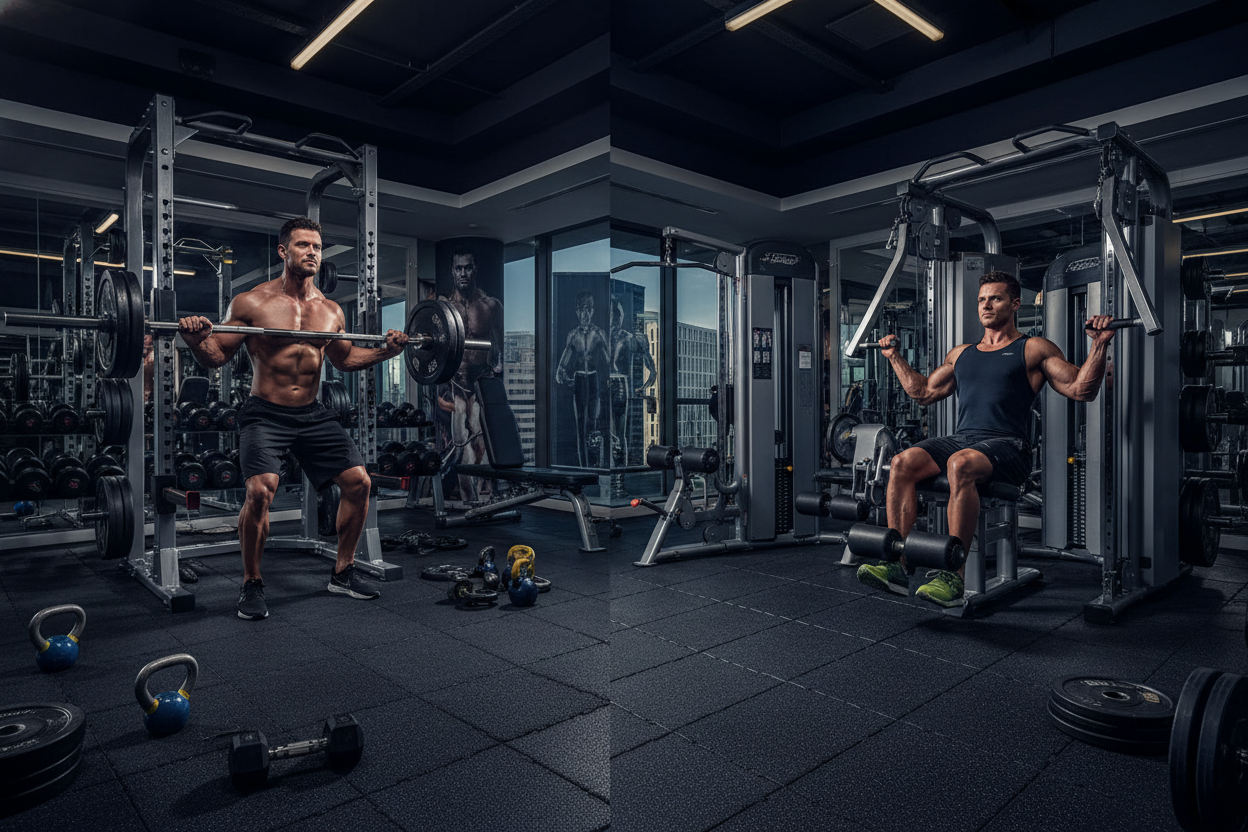
When it comes to pure muscle growth, mechanical tension is king. Your pecs don't know if you're holding a dumbbell or pushing a selectorized chest press; they only recognize the tension and the stretch. Looking closely at recent free weights vs machines studies, researchers consistently find that muscle hypertrophy is virtually identical between the two, provided the effort level is the same.
However, the nervous system demands differ. Barbell squats require immense core stabilization and balance, which can sometimes fatigue your central nervous system before your quads are fully exhausted. A leg press machine removes the balance equation, allowing you to push your quads to absolute failure safely.
Equipping Your Home Gym
Space and Budget Constraints
For North American garage and basement gyms, space is the ultimate currency. A heavy-duty power rack, a barbell, and a set of bumper plates take up roughly 8x8 feet of floor space but allow for hundreds of exercises. Free weights win the budget and footprint categories hands down.
Versatility vs Isolation
Single-station machines are a luxury in a home setting. If you want the isolation benefits of machines without sacrificing the garage parking spot, consider versatile alternatives. Functional trainers (cable machines) or plate-loaded leverage systems offer the guided resistance of a machine while maintaining a relatively compact footprint.
From Our Gym: Honest Take
I used to be a barbell purist. For years, my garage gym consisted solely of a power rack and a deadlift platform. But as I chased specific hypertrophy goals, I found my lower back was giving out before my legs during heavy squat cycles. I eventually added a compact, plate-loaded hack squat and leg press combo to the corner of the shop.
The difference was immediate. Being able to lock my back in place and just grind out quad extensions to failure without worrying about getting crushed changed my leg days entirely. That said, the machine takes up a massive 80x40-inch footprint and only trains the lower body. If you have less than 150 square feet to work with, stick to dumbbells and a rack—the space trade-off for a single-use machine just isn't worth it for most home gym owners.
Frequently Asked Questions
Can you get big with just machines?
Absolutely. Because machines provide excellent stability, they allow you to isolate specific muscle groups and push them close to failure safely, which is the primary driver of hypertrophy.
Are free weights better for beginners?
Free weights are excellent for beginners because they teach fundamental movement patterns, balance, and coordination. Starting with dumbbells and barbells builds a strong baseline of functional strength before moving to heavy isolation.
Do I need machines in my home gym to build muscle?
No, you do not need machines. You can achieve elite levels of muscular development using just barbells, dumbbells, and an adjustable bench. However, adding a simple cable pulley system can provide machine-like continuous tension for very little money and space.