Custom Gym Mat Explained: Is Premium Flooring Worth It?
We've all been there. You're midway through a heavy set of kettlebell swings, and suddenly the cheap foam puzzle pieces under your feet start sliding apart. Nothing kills a workout faster than unstable footing. If you're tired of tripping over curled edges or worrying about cracking your concrete foundation, investing in a custom gym mat is the ultimate game-changer. This guide breaks down exactly what you need to know before upgrading your sanctuary.
Key Takeaways
- Custom sizing eliminates dangerous gaps and shifting during high-intensity workouts.
- High-density rubber protects both your subfloor and expensive iron from drops.
- Adding custom gym flooring with logo branding elevates your space from a basic garage to a professional-grade facility.
- Thickness matters: 3/8-inch is standard for general use, but heavy lifters need 1/2-inch or more.
The Anatomy of Premium Custom Gym Flooring
Perfecting Your Space with Custom Size Gym Mats
Most North American home gyms aren't perfectly square. Whether you're working around basement support pillars or a sloped garage floor, standard 4x6 stall mats often leave awkward, unprotected gaps. Ordering custom size gym mats ensures wall-to-wall coverage. This seamless approach not only looks cleaner but prevents sweat and chalk from seeping into the subfloor, which can cause long-term odor and moisture issues.
Making It Yours: The Personalized Gym Mat
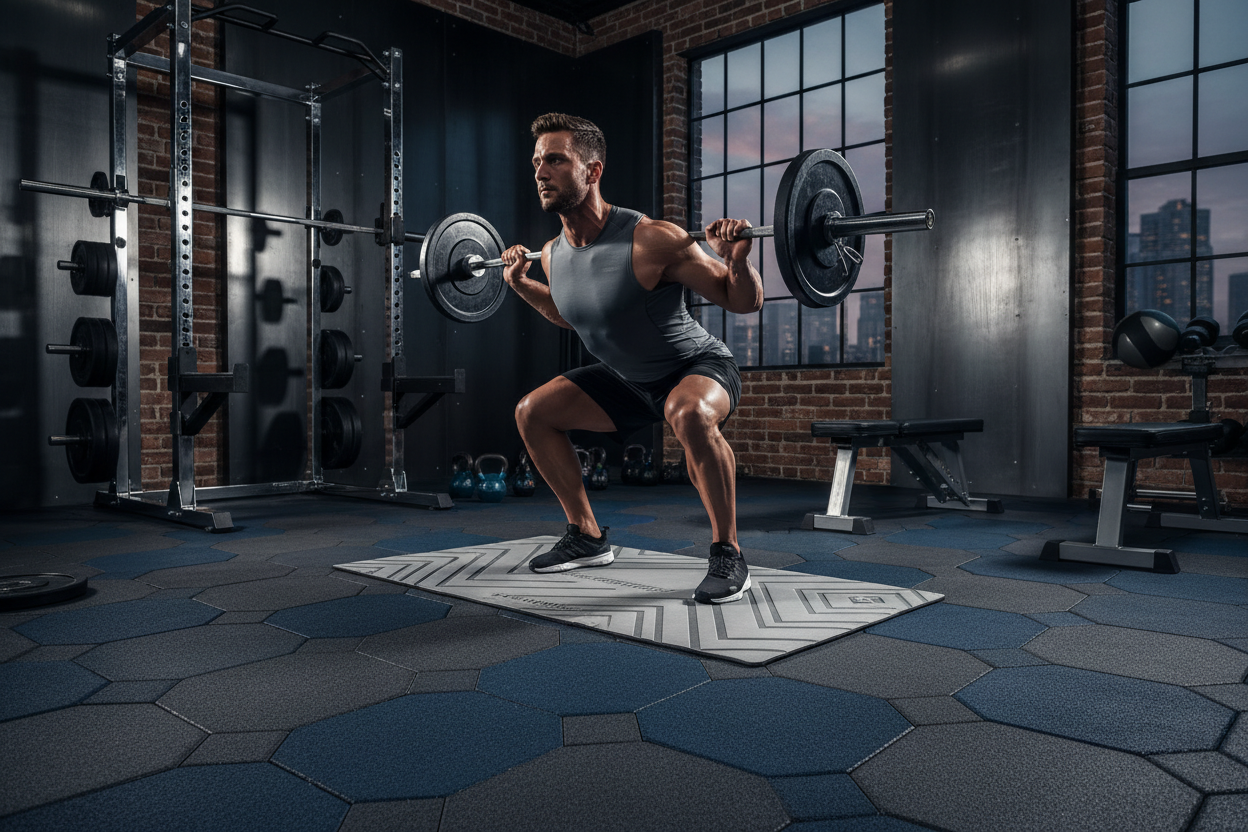
A home gym is a personal retreat. Many lifters are now opting for a personalized gym mat to make the space truly their own. Whether it's a family crest, a motivational quote, or just a sleek design, integrating custom gym flooring with logo work brings a commercial-gym aesthetic right to your house. It's an excellent way to boost motivation every time you step into the room.
Choosing the Right Custom Workout Mat Material
Density and Thickness Guidelines
Not all custom gym floor mats are created equal. For general fitness and a reliable custom exercise mat, a 3/8-inch thick rolled rubber is the gold standard. It absorbs shock well and supports heavy power racks without compressing or leaving permanent indentations. However, if you are regularly dropping Olympic weights or doing heavy deadlifts, you'll want to step up to 1/2-inch or even 3/4-inch vulcanized rubber to fully protect your foundation.
From Our Gym: Honest Take
When we outfitted our 400-square-foot testing facility, we initially tried piecing together standard stall mats to save a few bucks. It was a nightmare. They expanded in the summer heat, creating tripping hazards right next to our power racks. We finally bit the bullet and ordered a single-piece, custom home gym flooring roll cut to our exact dimensions. The difference was night and day. My chalked lifters felt instantly more planted during 400lb deadlifts, and the seamless finish made sweeping up chalk dust take two minutes instead of twenty. The only downside? Moving a 300lb roll of custom-cut rubber into a basement requires at least three strong friends and a lot of patience.
Frequently Asked Questions
Is a custom gym mat worth the extra cost?
Yes, especially if your space has irregular dimensions. The elimination of shifting seams and the upgraded durability make it a long-term investment that outlasts standard foam or cheap rubber options.
How do I clean and maintain custom gym flooring?
Maintenance is incredibly simple. Vacuum loose dirt and chalk regularly, and mop weekly with a pH-neutral cleaner mixed with water. Avoid harsh chemicals like bleach, which can break down the rubber over time.
Can I install custom size gym mats myself?
Absolutely. While heavy, rolled rubber can be unrolled and kicked into place. For wall-to-wall installations, you can easily trim excess edges using a sharp utility knife and a straight edge. Double-sided carpet tape is usually enough to secure the edges.