Lower Leg Exercises: The Ultimate Guide to Bulletproof Ankles
Most athletes treat the lower leg as an afterthought. You might throw in a few half-hearted calf raises at the end of a heavy squat session, or perhaps you ignore them entirely until shin splints force you to pay attention. But if you want a foundation that supports heavy lifting and explosive running, you need a dedicated strategy for lower leg exercises.
The lower leg is the first point of contact with the ground. If this link in the kinetic chain is weak, force leaks out before it ever reaches your quads or glutes. We aren't just talking about aesthetics here; we are talking about structural integrity.
Key Takeaways: The Lower Leg Protocol
If you are looking for a quick summary of the most effective methods, here is the core framework for complete development:
- Posterior Chain (The Drive): Standing Calf Raises (Gastrocnemius) and Seated Calf Raises (Soleus).
- Anterior Chain (The Brakes): Tibialis Raises to prevent shin splints and improve deceleration.
- Stability Work: Single-leg isometric holds to improve proprioception.
- Volume Strategy: The lower leg muscles are endurance-dominant; they respond best to higher repetition ranges (15–25 reps) and slow eccentrics.
The Anatomy of Lower Leg Strength
To understand the best exercise for lower legs, you have to understand what you are actually training. It isn't just one muscle group.
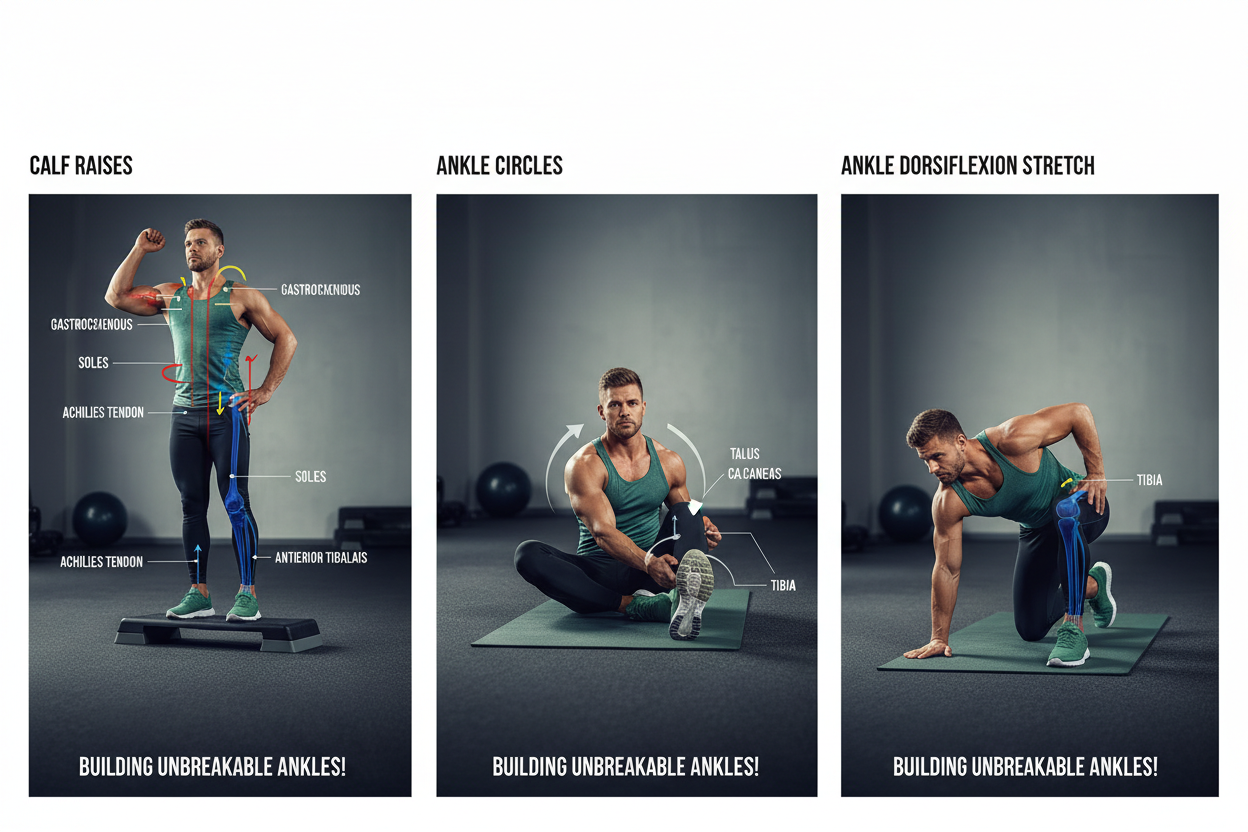
The calf comprises two main muscles: the gastrocnemius and the soleus. The gastrocnemius is the large, diamond-shaped muscle visible when you flex. It crosses the knee joint, meaning it works best when your leg is straight. The soleus sits underneath and works primarily when the knee is bent.
Then there is the tibialis anterior, the muscle running down the front of your shin. This is the primary shock absorber of the leg. If you neglect this, you are inviting knee pain and stress fractures.
How to Strengthen Lower Legs Correctly
Building lower leg strength requires hitting all three areas mentioned above. Here is the breakdown of the movements you need.
1. The Straight-Leg Focus (Gastrocnemius)
Standard standing calf raises are the bread and butter here. However, most people bounce through the reps using their Achilles tendon rather than the muscle.
The Fix: Pause for a full two seconds at the bottom of the stretch and one second at the top squeeze. This eliminates the elastic energy and forces the muscle fibers to do the work. This is a fundamental exercise to strengthen lower legs for power output.
2. The Bent-Knee Focus (Soleus)
The soleus is often called the "second heart" because of its role in pumping blood back up to the upper body. It is also essential for endurance running.
Perform seated calf raises. If you don't have a machine, you can sit on a bench with dumbbells resting on your knees. Because the soleus is largely slow-twitch fiber, it can handle significant volume. Do not be afraid to push sets into the 20-30 rep range.
3. The Anterior Focus (Tibialis)
This is the underrated lower leg exercises technique no one talks about enough. Strengthening the front of the shin balances the powerful pull of the calf muscles.
Lean your back against a wall, walk your feet out about two feet, and lift your toes toward your shins while keeping your heels on the ground. You will feel a deep burn along the shin bone almost immediately. This is critical for deceleration and preventing knee issues.
The "Well Leg" Phenomenon
If you are currently rehabbing an injury, you should know about well leg exercises. This concept relies on the "cross-education effect." Neurophysiologically, training the uninjured (well) leg can actually maintain strength in the immobilized limb by keeping the neural pathways active. If you have one leg in a cast, train the other one hard. You will atrophy less.
My Training Log: Real Talk
I used to think my lower legs were fine because I squatted heavy. Then I started adding dedicated tibialis work, and it was a humbling reality check.
I remember the first time I did a simple bodyweight tibialis raise against the wall. I walked my feet out maybe 24 inches—nothing crazy. By rep 12, I felt this specific, searing heat running vertically down the front of my shin bone, like a hot wire. It wasn't the dull ache of a squat; it was a sharp, localized fatigue.
The next morning, stepping out of bed felt weirdly stable. The most distinct change, however, was during my running sessions. I usually feel a slight jarring impact in my knees when running on concrete. After three weeks of focusing on the front of the shin, that impact softened. It felt like I had upgraded the suspension system in my legs. The wobble I usually felt in my ankles during the bottom of a pistol squat also vanished.
Conclusion
Lower leg strength exercises are not glamorous. They won't get you the same compliments as a big bench press. But they are the insurance policy for your knees and ankles. By balancing the posterior calf work with anterior tibialis training, you build a lower leg that is functional, durable, and athletic.
Frequently Asked Questions
What is the single best exercise for lower legs?
While no single movement covers everything, the standing single-leg calf raise on a step is superior. It allows for a full range of motion (deep stretch) and addresses strength imbalances between the left and right sides simultaneously.
How often should I train my lower legs?
The calves and shins recover relatively quickly compared to larger muscle groups like the hamstrings. You can train them 3 to 4 times a week. High frequency works well because these muscles are accustomed to the constant load of walking.
Can I strengthen my lower legs at home without weights?
Absolutely. Single-leg heel raises on a staircase step are incredibly effective for the calves. For the front of the leg, wall toe raises require zero equipment and provide an intense workout for the tibialis anterior.