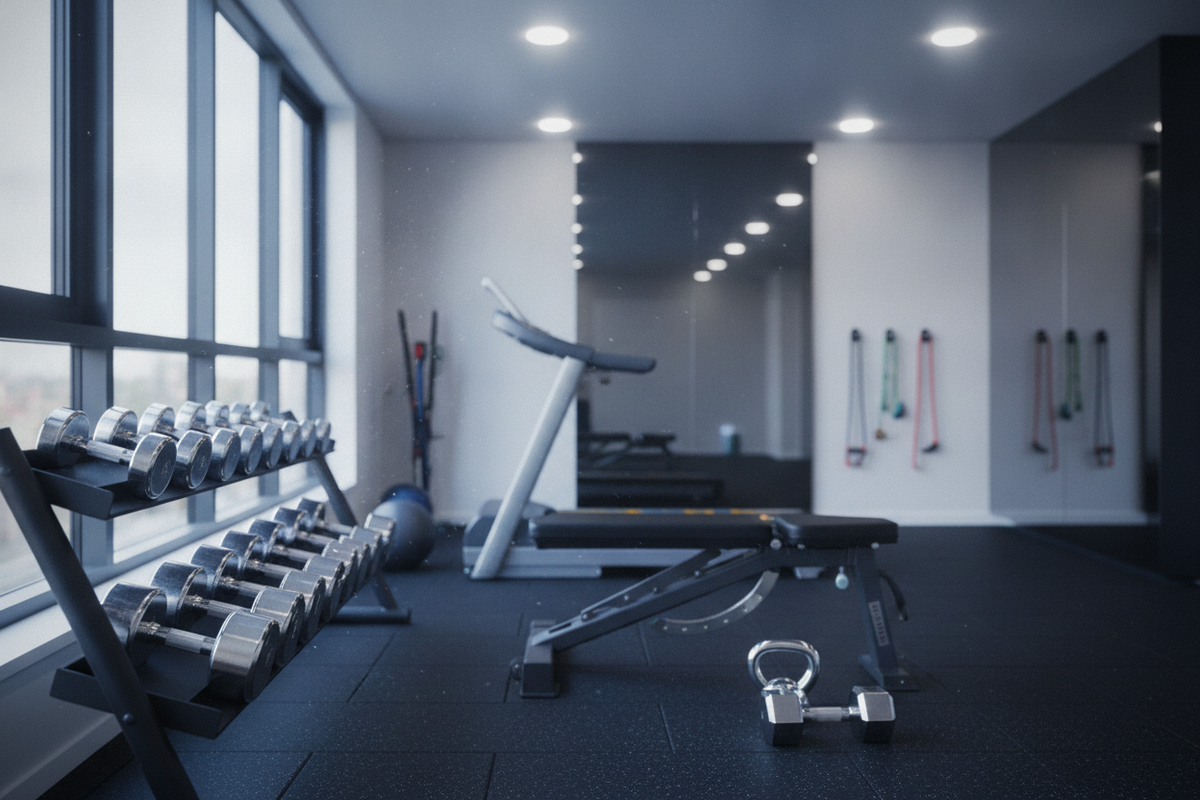
Lower Body Squat Blueprint: 6 Essential Variations, Biomechanical Form Cues, and Home Gym Floor Staging
Biomechanical Foundations of the Lower Body Squat
The lower body squat serves as a cornerstone movement pattern across athletic conditioning, general fitness, and power development. At its core, squatting represents a closed kinetic chain movement involving synchronized flexion and extension across the hip, knee, and ankle joints. Executing a sound squat requires balanced force distribution through the entire kinetic chain rather than isolating a single muscle group.
A critical element of squat mechanics is establishing a solid base of support via the tripod foot concept. This cue directs lifters to distribute downward pressure evenly across three contact points: the base of the big toe, the base of the small toe, and the center of the heel. Maintaining this tripod contact preserves the natural arch of the foot, promotes external hip rotation torque, and prevents the knees from collapsing inward during the descent and ascent phases.
Simultaneously, intra-abdominal pressure and spinal bracing provide the torso rigidity required to transfer force from the floor to the load. Inhaling deeply into the diaphragm and engaging the core musculature before beginning the descent keeps the pelvis and spine aligned, minimizing unnecessary shearing forces. Ankle dorsiflexion mobility also dictates torso angle; adequate mobility allows the knees to track over the toes naturally without forcing premature forward leaning or heel elevation.
6 Essential Lower Body Squat Exercises for Strength and Stability
Varying movement planes, bar positions, and stance widths allows lifters to target specific muscle groups, address bilateral imbalances, and develop complete leg strength. Integrating diverse lower body squat exercises provides a well-rounded foundation for home training.
- Goblet Squat: Holding a dumbbell or kettlebell against the chest naturally shifts the center of mass forward, making it easier to maintain an upright torso while reinforcing deep hip flexion. It serves as an exceptional movement screen and warm-up exercise.
- Barbell Back Squat: Positioned across the upper back (high bar) or across the rear deltoids (low bar), the back squat allows for progressive overload across the quadriceps, glutes, and spinal erectors.
- Front Squat: Resting the barbell across the anterior deltoids demands high thoracic extension and upright posture, placing direct emphasis on anterior chain recruitment, particularly the quadriceps.
- Bulgarian Split Squat: Placing the rear foot on an elevated surface challenges unilateral balance, hip stability, and glute medius activation, helping resolve single-leg strength discrepancies.
- Sumo Squat: A wider stance with toes pointed outward increases recruitment of the adductor complex and gluteal musculature while shortening the moment arm at the lower back.
- Pause Squat: Pausing for two to three seconds at the bottom of the movement eliminates the stretch-shortening cycle, building starting strength and spatial awareness in the deepest point of flexion.
For additional movement selections and complementary leg movements, lifters can consult our broader lower body exercise guide to structure balanced training days.
Home Gym Floor Staging: Creating a Rigid, Non-Slip Squat Platform
Executing heavy or explosive squatting patterns requires an uncompromising foundation beneath your feet. Domestic floors—such as hardwood, tile, or standard carpet—often present severe limitations for strength training. Soft surfaces cause the heels to compress unevenly, creating instability at the ankle joint that ripples upward through the knees and hips. Conversely, bare hard surfaces risk damage from dropped dumbbells or loaded plates.
High-density rubber gym flooring creates a firm, non-compressible surface that supports full force transmission. When driving through the floor during a heavy lower body squat, dense rubber prevents energy loss by maintaining a level contact plane. The textured top surface provides essential mechanical grip, keeping athletic shoes from slipping during wide-stance sumo squats or dynamic unilateral lunges. Exploring our lower body collection offers further equipment pairings designed to integrate seamlessly onto dedicated gym mats.
Programming Framework: Integrating Squat Variations into Weekly Splits
Structuring squat patterns across a training cycle requires balancing volume, intensity, and unilateral versus bilateral demands. Rather than performing identical squatting movements in every session, rotating variations helps manage fatigue across joints and connective tissues while stimulating continuous adaptation.
A typical weekly setup may incorporate a primary bilateral squat day focused on moderate-to-heavy loads, paired with a secondary session emphasizing unilateral or tempo-focused variations such as Bulgarian split squats or paused goblet squats. Dynamic warm-up protocols—including bodyweight hip openers, ankle mobility drills, and glute activation bridges—should precede every working session to prepare the nervous system and joint structures for loaded ranges of motion.
Mat Maintenance, Grip Care, and Home Gym Space Organization
Maintaining the structural integrity and surface grip of home gym mats ensures long-term usability and training consistency. Over time, dust, sweat, and shoe debris can accumulate on rubber surfaces, reducing traction and compromising footing during heavy lifts.
Routine cleaning involves sweeping away loose dirt followed by wiping the surface with a damp mop and a neutral, mild detergent solution. Avoiding petroleum-based or harsh solvent cleaners prevents the rubber from degrading or developing slippery residues. Additionally, organizing the perimeter around the squat staging area—keeping free weights, resistance bands, and collars stored in dedicated racks—ensures an unobstructed pathway for stepping into and out of squat stands safely.