Leg Extension Machine: The Ultimate Guide to Quad Isolation
Squats and lunges are often hailed as the kings of leg day, but they demand immense systemic energy and spinal stability. Sometimes, you just want to torch your quads without taxing your lower back. This is where the leg extension machine shines.
It is one of the few pieces of equipment that allows for complete isolation of the quadriceps muscles. Despite some controversy in the fitness community regarding knee health, when used correctly, this machine is a powerful tool for hypertrophy and rehabilitation. Let’s break down the mechanics, the setup, and how to use it safely.
Key Takeaways
- Primary Function: It is an open-kinetic chain exercise that isolates the quadriceps, specifically targeting the rectus femoris.
- Safety First: Aligning your knee joint with the machine's pivot point is crucial to prevent shear force on the knee.
- Equipment Types: You can choose between selectorized (pin-loaded) stacks or plate-loaded variations depending on your budget and space.
- Technique: Control the eccentric (lowering) phase to maximize muscle growth and minimize joint stress.
Why the Leg Extension Is Indispensable
Many lifters overlook this machine, labeling it as "non-functional." That is a mistake. The primary benefit of gym equipment leg extension setups is the ability to target the rectus femoris.
During a squat, your hips extend while your knees extend. Because the rectus femoris crosses both joints, it stays relatively constant in length during a squat. The extension machine fixes the hip in place, allowing the rectus femoris to fully shorten and contract. If you want that deep separation in your thigh muscles, you need this isolation.
Mastering the Setup
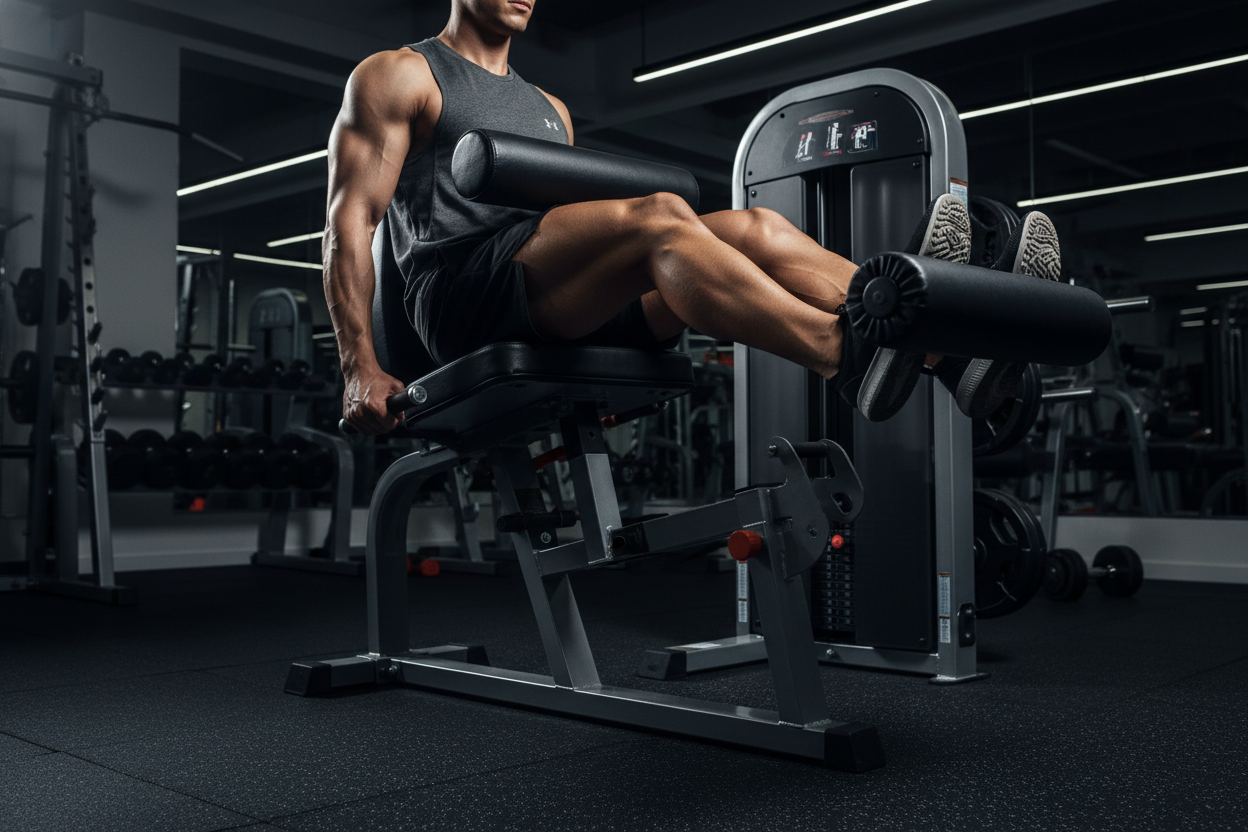
Most injuries associated with this movement stem from improper alignment, not the exercise itself. Before you touch the leg extension machine weights, you must adjust the seat.
1. The Pivot Point
Look at the side of the machine. There is usually a cam or a bolt that acts as the axis of rotation. Your knee joint needs to be perfectly in line with this point. If your knees are too far back or forward, you create unnecessary torque on the joint capsule.
2. The Shin Pad
Adjust the lower pad so it rests comfortably on your lower shin, just above the ankle. If it is too low (on the foot), you risk ankle strain. If it is too high (on the shin), you lose leverage and range of motion.
3. The Back Pad
Set the backrest so that your knees are at the edge of the seat. Your lower back should be pressed firmly against the pad throughout the entire movement.
Buying Guide: Adding One to Your Home Gym
If you are looking to make a leg extension machine buy for your garage gym, you have two main categories to consider.
Selectorized vs. Plate Loaded
A leg extension weight machine with a built-in stack (selectorized) is convenient. You just move the pin and go. However, these are heavy, expensive, and difficult to ship.
For home gyms, a plate-loaded machine is often better. These use standard Olympic plates you likely already own. They have a smaller footprint and are significantly cheaper, though the resistance curve feels slightly different—usually heaviest at the top of the movement.
My Training Log: Real Talk
I’ve spent years grinding away on various leg machines, and I want to share a specific nuance about the leg extension that manuals don't tell you. It’s about the "seat float."
When I’m pushing near failure—let's say rep 12 or 15—my body naturally wants to cheat. The specific tell is that my butt tries to lift off the seat to engage my hips. I remember vividly using an older machine with slippery vinyl upholstery; I had to physically grip the side handles so hard my knuckles turned white just to keep my hips glued down.
If you don't anchor yourself, you aren't isolating the quads anymore. I actually found that wearing shorts with a bit of grip (or even putting a yoga mat strip on the seat) made a massive difference in my ability to isolate the VMO (the teardrop muscle). If you feel your hips rising, drop the weight. You're just ego-lifting at that point.
Conclusion
The leg extension machine is not a replacement for the squat, but it is the perfect partner for it. Whether you are a bodybuilder chasing aesthetics or an athlete rehabilitating a knee, this tool offers value that free weights simply cannot match. Focus on your setup, control the tempo, and respect the isolation.
Frequently Asked Questions
Are leg extension machines bad for your knees?
Not inherently. They become dangerous when the user uses excessive weight, jerky momentum, or fails to align their knee with the machine's pivot point. Controlled movement is safe for most healthy knees.
Can I build big legs with just a leg extension machine?
You can build significant quad size, but you will miss the hamstrings, glutes, and adductors. For complete leg development, leg extensions should be a supplement to compound movements like squats or leg presses.
How often should I do leg extensions?
Because it is an isolation exercise that causes less systemic fatigue than squats, you can perform them 2-3 times per week. They work well as a finisher at the end of a leg workout or as a pre-exhaust movement.