Leg Day Without Limits: How to Crush Your Lower Body in Your Living Room
You might be skeptical that a killer home leg workout is possible without a squat rack, a leg press machine, or a heavy barbell. The common misconception is that leg growth requires hundreds of pounds of iron. While heavy loads are certainly effective for mechanical tension, your muscles cannot read the numbers on a weight plate. They only understand tension, fatigue, and metabolic stress.
To stimulate growth and strength in your quads, hamstrings, and glutes without a gym, you have to trade heavy weight for volume, tempo manipulation, and unilateral training. If you perform the standard three sets of ten bodyweight squats, you won't see much change. But if you slow those reps down, remove the pause at the top, and introduce plyometrics, you can generate an intensity that rivals any heavy back squat session.
I learned this lesson the hard way a few years ago. I was traveling through remote parts of Southeast Asia with zero access to a gym for three months. I was terrified of losing the leg size I had spent years building. I started experimenting with high-volume pistol squats and single-leg hip thrusts using my luggage for resistance. To my surprise, my legs didn't shrink. In fact, the definition in my vastus medialis (the teardrop muscle) improved significantly. I remember barely being able to walk down a flight of stairs after a session in a tiny hotel room. That experience taught me that intensity is a choice, not a piece of equipment.
The Cornerstone: Unilateral Training
The secret to a killer at home leg workout lies in single-leg movements. When you stand on two legs, your bodyweight is distributed evenly, making the load relatively light for strong leg muscles. By lifting one leg, you immediately double the load on the working limb. You also engage the stabilizers in your hips and core to maintain balance, recruiting more muscle fibers.
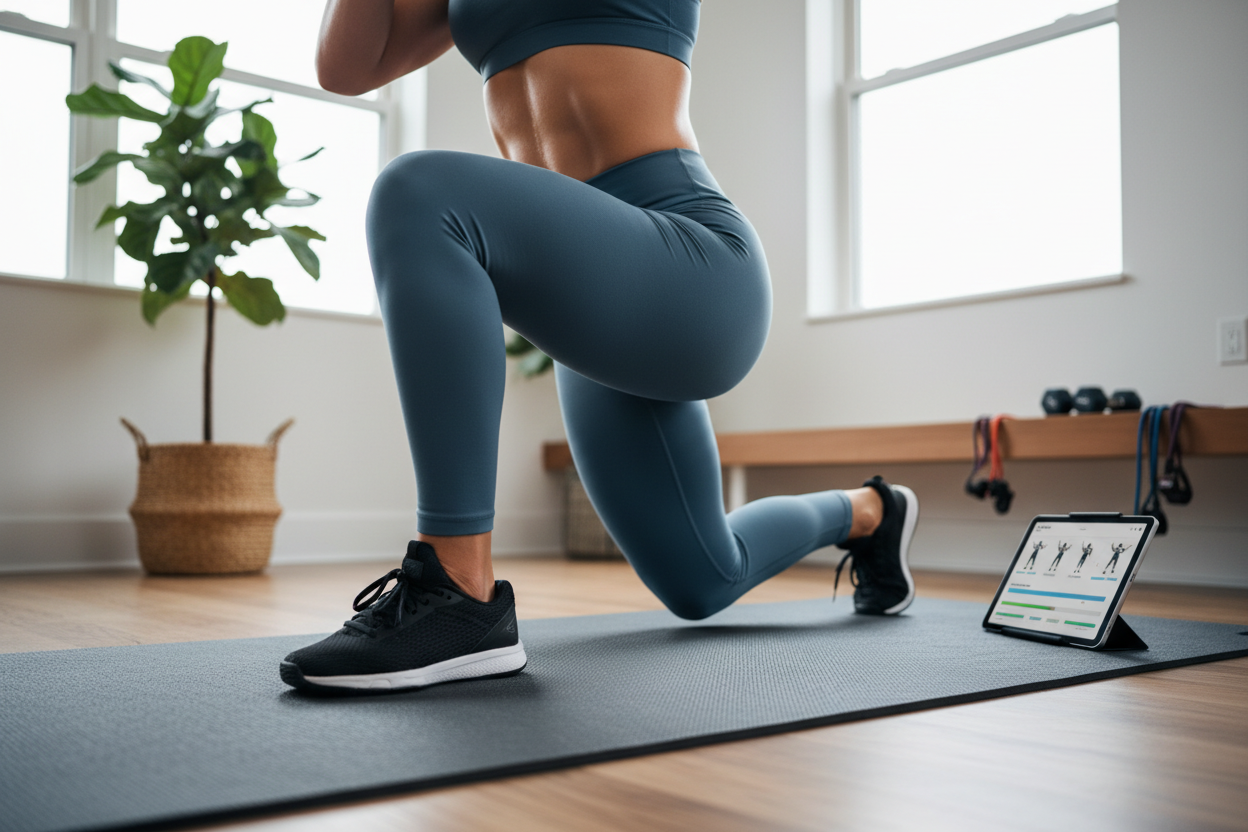
The Bulgarian Split Squat is the king of this category. It places the quadriceps and glutes under immense tension while stretching the hip flexor of the rear leg. To perform this correctly, place your rear foot on a couch, chair, or coffee table. Step your front foot out far enough so that your front shin stays relatively vertical as you descend. Lower your hips until your back knee hovers just an inch off the floor. Drive back up through the front heel. If you aren't grimacing by rep eight, you aren't doing it right.
Another vital movement is the Single-Leg Romanian Deadlift (RDL). This targets the posterior chain—the hamstrings and glutes—which often get neglected in home routines. Stand on one leg with a slight bend in the knee. Hinge at the hips, sending your back leg straight behind you like a lever. Keep your back flat. You should feel a deep stretch in the hamstring of the standing leg. If you have a water jug or a backpack, hold it in the hand opposite to the working leg to increase the challenge.
Tempo and Tension: Making Light Weight Feel Heavy
Since we lack external load, we must increase the time under tension (TUT). In a gym setting, you might explode up and lower the weight over one second. For a killer leg workout at home, you need to slow down. Try a 3-1-1 tempo: three seconds down, a one-second hold at the bottom, and one second up. The pause at the bottom removes the stretch reflex (the bounce), forcing your muscles to generate force from a dead stop.
You can also utilize "1.5 reps." This technique is brutal for the quadriceps. Descend into a full squat, come up only halfway, go back down to the bottom, and then stand up fully. That counts as one repetition. This keeps the muscle under tension for longer and increases the accumulation of metabolic waste products like lactate, which is a key driver for hypertrophy (muscle growth).
Explosive Power with Plyometrics
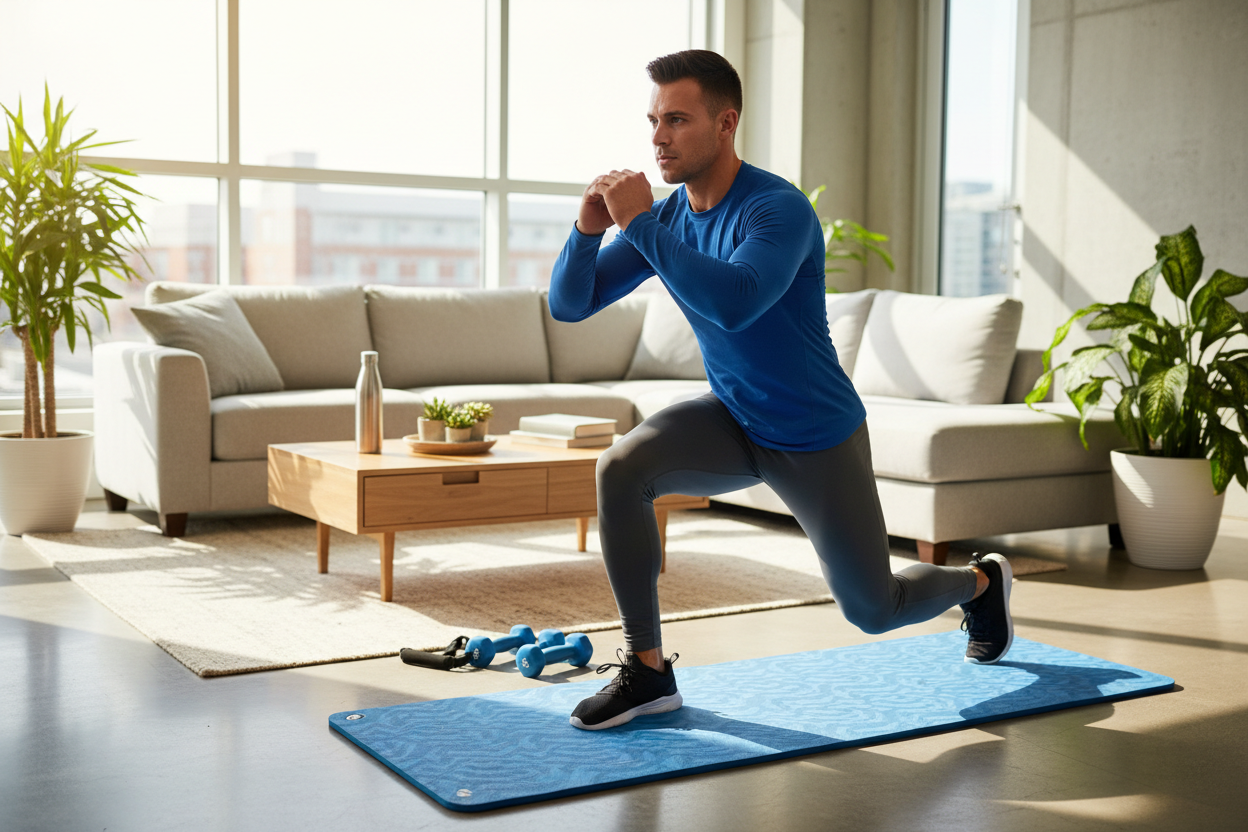
Once you have pre-exhausted your muscles with slow, controlled movements, it is time to turn up the heat with plyometrics. Jump squats and alternating jump lunges recruit fast-twitch muscle fibers that might not be fully activated during slower bodyweight movements. These exercises spike your heart rate and push your legs to absolute failure.
Form is paramount here. Land softly. You want to absorb the impact with your muscles, not your joints. If you hear a loud thud when you land, you aren't controlling the deceleration. Think of yourself as a ninja—silent and controlled.
The Routine Breakdown
Here is a structured routine designed to hit every major muscle group in the lower body. Perform this circuit with minimal rest between exercises to maximize metabolic stress.
Warm-up
Spend 5 minutes doing bodyweight glute bridges, leg swings, and air squats to lubricate the joints.
The Circuit (Repeat 3-4 times)
- Bulgarian Split Squats: 12-15 reps per leg. (Focus on a slow descent).
- Single-Leg Glute Bridges: 15 reps per leg. (Squeeze hard at the top for 1 second).
- 1.5 Rep Bodyweight Squats: 20 reps. (Keep your chest up and core tight).
- Sliding Hamstring Curls: 12 reps. (Lie on a smooth floor with socks or a towel under your heels. Bridge up, slide heels out, and pull them back in).
- Jump Lunges: 20 total reps (10 per leg). (Explosive movement to finish).
Rest for 90 seconds between rounds. If you finish the fourth round and can still walk normally, you didn't push the tempo or the range of motion hard enough.
Progressive Overload Without Weights
The principle of progressive overload states that you must continually increase the demands on the musculoskeletal system to make gains. In the gym, you add 5 pounds to the bar. At home, you add reps, reduce rest times, or increase the range of motion. If 15 reps of split squats become easy, go for 20. If 20 is easy, wear a backpack filled with books. Never let the workout become comfortable. Growth lives in the discomfort zone.
Recovery and Frequency
Home workouts can be deceptive. Because they don't crush your central nervous system the same way a 400-pound deadlift does, you might feel ready to go again the next day. However, connective tissue and muscle fibers still need repair. Training legs with high intensity 2 to 3 times a week is generally the sweet spot for most people. This frequency allows for sufficient volume while ensuring you are fully recovered for the next session. Listen to your body; if your soreness impedes your movement pattern, take an extra rest day or focus on mobility work.
FAQ
Can I really build muscle mass with just bodyweight leg exercises?
Yes, but it requires high effort. While heavy weights are efficient for strength, hypertrophy (size) can be achieved with lighter loads if you train close to failure. You must push your sets until you cannot complete another rep with good form to stimulate the same growth response as heavy lifting.
How do I protect my knees during home leg workouts?
Knee pain often stems from poor hip mobility or weak glutes. Ensure your knees track over your toes (not collapsing inward) during squats and lunges. Strengthening the posterior chain with glute bridges and hamstring curls will also provide better stability for the knee joint.
What household items can I use to add weight?
A sturdy backpack loaded with books or water bottles is the most ergonomic option for squats and lunges. You can also use gallon water jugs (approx. 8 lbs each) like dumbbells for lunges or single-leg deadlifts. Resistance bands are also an inexpensive way to add significant tension to bodyweight movements.