Building Steel Legs at Home: Why the Darebee System Actually Works
Finding a fitness routine that balances accessibility with genuine intensity is often the hardest part of getting in shape. Most people assume that building a powerful lower body requires a squat rack, heavy plates, and a gym membership. However, the Darebee leg workout database proves that assumption wrong. By utilizing high-volume bodyweight training, functional movements, and a unique gamified structure, this resource has changed how many home-fitness enthusiasts approach leg day. It cuts through the noise of expensive programs and offers a straightforward, visual way to train.
The core appeal lies in the structure. A typical darebee leg day isn't just a random list of exercises; it is a carefully calculated sequence designed to fatigue muscle fibers through repetition and reduced rest times rather than heavy external loads. Whether you are looking to build endurance, tone your thighs, or increase explosive power, understanding how to navigate and utilize these visual workout charts is key to seeing results without stepping foot in a commercial gym.
My Experience: The Burn of High Volume
I used to be a gym purist. If I wasn't loading a barbell with at least my body weight, I didn't think it counted as a workout. Then, a busy work schedule and a lack of nearby gym facilities forced me to look for alternatives. I stumbled upon a leg workout darebee chart titled "Leg Shred." It looked deceptively simple—just squats, lunges, and calf raises. I figured I would breeze through it.
I was wrong. The sheer volume caught me off guard. By the time I reached the third set of lunge variations, my legs were shaking in a way they rarely did even after heavy weighted squats. The lack of long rest periods kept my heart rate elevated, turning a strength session into a metabolic conditioning workout. That session shifted my perspective. I realized that darebee legs routines weren't "easy" alternatives; they were a different kind of beast entirely, focusing on muscular endurance and functional stability that heavy lifting sometimes neglects.
Decoding the Darebee Lower Body Philosophy
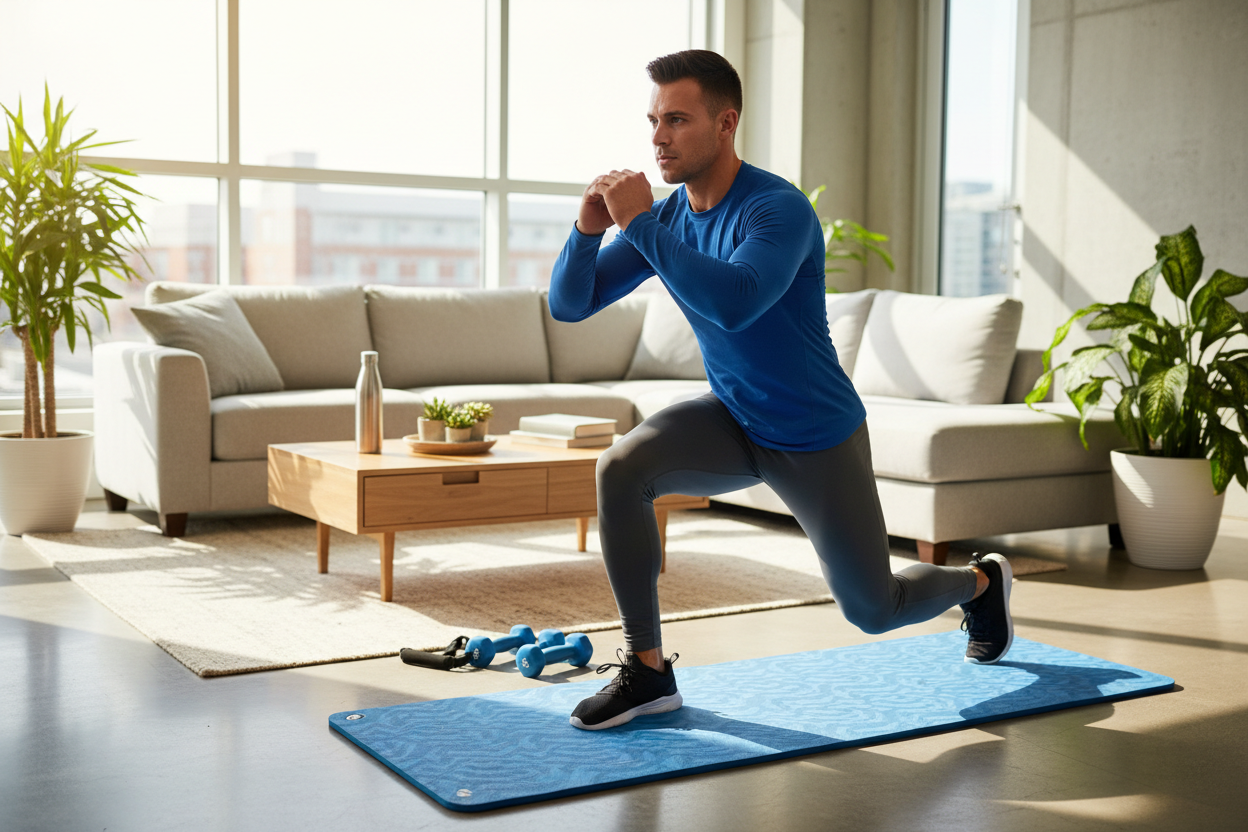
The platform operates on a distinct philosophy: fitness should be accessible to everyone, everywhere. A standard darebee lower body workout usually requires zero equipment. Instead of relying on machines to isolate muscles, you use your body weight and gravity. This forces you to engage stabilizer muscles that machines often support for you. When you perform a shrimp squat or a lunge pulse from one of their charts, you aren't just working the quad; you are fighting to maintain balance, engaging your core and ankles simultaneously.
Another defining feature is the "Level" system. Most charts allow you to choose your difficulty based on the number of sets—Level I, II, or III. This scalability is brilliant because it allows a beginner to do the same routine as an advanced athlete, just at a different volume. You don't need to hunt for a new program every week; you simply aim to reach Level III on your current darebee workout legs sheet.
Targeting Specific Areas
Many users come looking for a specific aesthetic or performance goal, such as toning the inner thighs or building glute strength. A targeted darebee thigh workout often incorporates lateral movements like side lunges, clam shells, and wide-stance squats. These movements hit the adductors and abductors, areas often ignored in standard running or cycling routines. Because the reps are generally higher—often in the 20 to 40 range per set—the metabolic stress on the muscle is high, leading to that "burn" associated with toning and endurance building.
Integrating Darebee into a Split Routine
One common mistake is treating these visual guides as one-off challenges rather than parts of a cohesive plan. To get the most out of a leg day darebee session, it helps to slot it into a broader weekly schedule. Since these workouts can be taxing on the central nervous system due to the high rep counts, you need to allow for recovery.
If you are following a push/pull/legs split, a darebee lower body sheet fits perfectly on your leg day. However, because there is no heavy spinal loading (like with a heavy back squat), you might find you can train legs more frequently—perhaps twice a week—without the same joint fatigue associated with powerlifting. A Monday/Thursday split works well for many, allowing enough time for delayed onset muscle soreness (DOMS) to subside.
The Role of Agility and Plyometrics
Static strength isn't the only focus. Many legs darebee programs incorporate plyometrics—jump squats, high knees, and skater hops. These explosive movements recruit fast-twitch muscle fibers. If you are a runner or play field sports, selecting a chart that emphasizes these dynamic moves can significantly improve your power output.
When performing these plyometric variations, form is paramount. The visual nature of the charts is helpful, but you must ensure you are landing softly to protect your knees. If a workout calls for 20 jump squats and you can only do 10 with perfect form, stop at 10. The goal of a darebee leg workout is sustainable progress, not injury.
Consistency Over Intensity
The greatest advantage of this system is the removal of friction. There is no commute to the gym, no waiting for equipment, and no subscription fee. This removes the excuses that usually kill progress. You can pull up a darebee legs chart on your phone in your living room and be done in 20 minutes. This consistency is what ultimately builds the physique and strength most people desire. It is not about one heroic workout; it is about showing up for the daily tasks, set after set.
Frequently Asked Questions
Can I really build muscle mass with just Darebee bodyweight leg workouts?
Yes, but up to a point. You can build significant muscle size (hypertrophy) by utilizing high volume and decreasing rest times to maximize metabolic stress. To continue growing past a certain plateau, you may eventually need to add external weight (like a backpack or dumbbells) to the movements or switch to more difficult unilateral variations like pistol squats.
How often should I do a Darebee leg day?
For most people, training legs 2 to 3 times a week is effective, provided you allow at least 48 hours of rest between sessions. Because bodyweight exercises are generally less taxing on the joints than heavy weightlifting, you might recover faster, allowing for slightly higher frequency compared to heavy gym sessions.
Are these workouts safe for bad knees?
Many of the workouts are low-impact, but you should always choose routines that match your mobility levels. Avoid high-impact plyometric charts (jumping) if you have knee issues, and focus on "tendon strength" or floor-based glute workouts available on the platform. Always consult a medical professional before starting a new regimen if you have pre-existing injuries.